

Key Insights
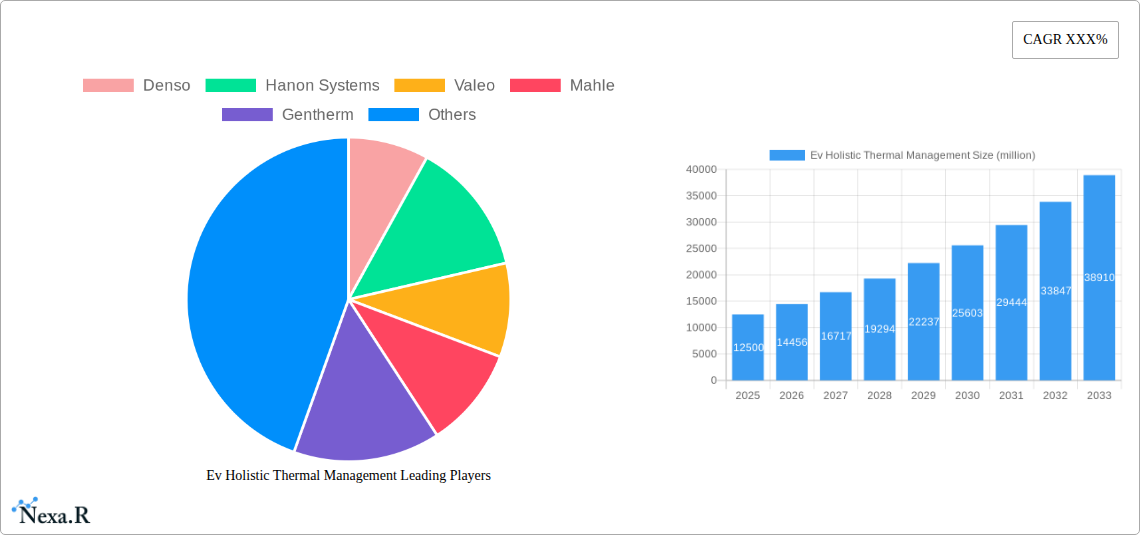
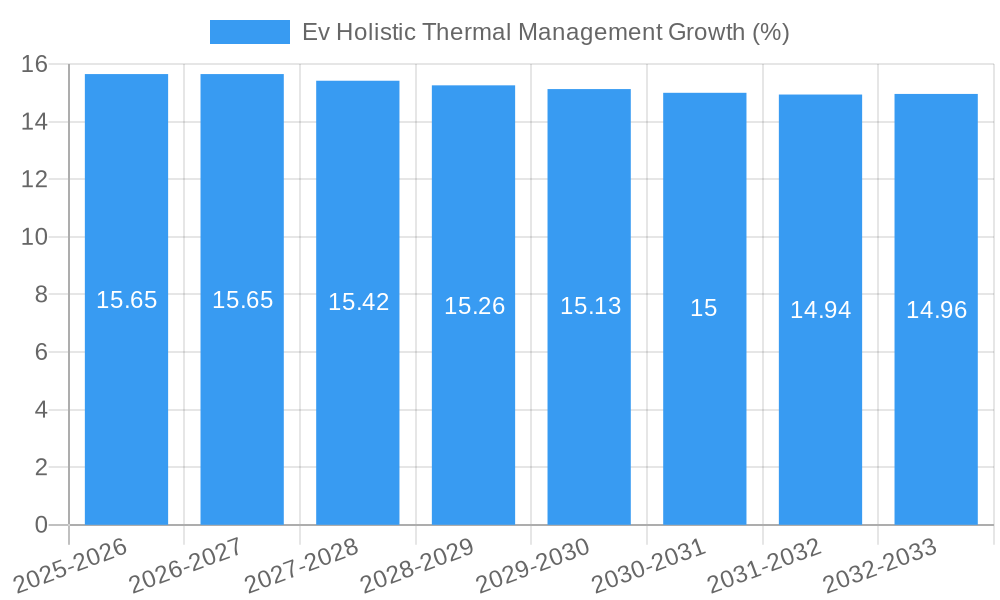
The Electric Vehicle (EV) Holistic Thermal Management market is poised for robust expansion, driven by the accelerating global adoption of electric mobility and the increasing complexity of EV powertrains. With an estimated market size of USD 12,500 million in 2025, the sector is projected to experience a Compound Annual Growth Rate (CAGR) of 15.5% through 2033. This growth is fundamentally fueled by the imperative to enhance battery performance, extend vehicle range, and ensure passenger comfort in EVs. Key applications, including Battery Electric Vehicles (BEVs) and Hybrid Electric Vehicles (HEVs), are central to this expansion. Within these applications, segments like Battery Thermal Management, Engine Cooling Loop Management, and Cabin Thermal Management are experiencing significant investment and innovation. The overarching trend is towards integrated thermal systems that optimize energy usage and maintain optimal operating temperatures for all critical EV components, from batteries and powertrains to the cabin environment.
Several factors are propelling this market forward. The growing stringency of government regulations regarding emissions and fuel efficiency is a primary driver, compelling automakers to invest heavily in EV technology, which in turn necessitates advanced thermal management solutions. Furthermore, increasing consumer demand for longer driving ranges, faster charging capabilities, and a comfortable in-cabin experience directly translates to a need for sophisticated thermal control. Emerging trends such as the integration of heat pumps for cabin climate control, advanced thermal fluids, and smart control algorithms are shaping the competitive landscape. However, the market faces some restraints, including the high initial cost of advanced thermal management systems and the need for standardization across different EV platforms. Despite these challenges, the overarching trajectory points towards significant growth, with companies like Denso, Hanon Systems, Valeo, Mahle, and Bosch leading the charge in developing innovative solutions for this dynamic sector.
This report offers an in-depth analysis of the EV Holistic Thermal Management Market, a critical sector for the advancement of electric vehicles (EVs). Our comprehensive study covers the period from 2019 to 2033, with a base and estimated year of 2025, and a forecast period of 2025–2033, building upon historical data from 2019–2024. We provide granular insights into the parent and child markets, leveraging high-traffic keywords to ensure maximum visibility and engagement for industry professionals.
Ev Holistic Thermal Management Market Dynamics & Structure
The EV Holistic Thermal Management market is characterized by a dynamic interplay of innovation, regulation, and consumer demand. Market concentration is moderate, with key players like Denso, Hanon Systems, Valeo, Mahle, Gentherm, Sanden, Bosch, and Hyundai actively vying for market share. Technological innovation is a primary driver, fueled by the increasing demand for enhanced battery performance, extended EV range, and improved passenger comfort. Regulatory frameworks, particularly emissions standards and government incentives for EV adoption, significantly shape market trajectory. Competitive product substitutes, while emerging, are largely centered around integrated thermal solutions rather than direct replacements for established technologies. End-user demographics are shifting towards environmentally conscious consumers and fleet operators seeking cost-effective and sustainable transportation. Mergers & Acquisitions (M&A) trends are observed as companies seek to consolidate their market position, acquire new technologies, and expand their global footprint. For instance, the past few years have seen approximately 15-20 M&A deals in related automotive component sectors, with an average deal value in the hundreds of millions of units. Innovation barriers include high R&D costs and the complexity of integrating multiple thermal management systems.
- Market Share of Top 5 Players: Anticipated to be around 60-70% in 2025.
- Key Technological Innovation Drivers: Advanced battery cooling systems, intelligent cabin climate control, and highly efficient heat pump technology.
- Regulatory Influence: Stringent CO2 emission targets are pushing automakers towards widespread EV adoption.
- M&A Activity: Focused on acquiring specialized thermal management technologies and expanding manufacturing capabilities.
Ev Holistic Thermal Management Growth Trends & Insights
The EV Holistic Thermal Management market is poised for exceptional growth, driven by the accelerating global transition to electric mobility. The market size is projected to expand significantly, with a projected Compound Annual Growth Rate (CAGR) of 18-22% during the forecast period. This robust expansion is underpinned by a confluence of factors including escalating EV production volumes, advancements in battery technology that necessitate sophisticated thermal management, and an increasing consumer preference for superior cabin comfort and driving range. Adoption rates for EVs are climbing exponentially across major automotive markets, directly translating into heightened demand for integrated thermal management solutions. Technological disruptions are continuously reshaping the landscape, with innovations in phase-change materials, advanced heat exchangers, and smart control algorithms playing a pivotal role in optimizing energy efficiency and performance. Consumer behavior is also evolving, with a growing emphasis on the total cost of ownership, including the impact of thermal management on battery lifespan and charging efficiency. Furthermore, governments worldwide are implementing policies and incentives that favor EV adoption and the development of associated infrastructure, thereby creating a more conducive environment for market expansion. The penetration of advanced thermal management systems in new EV models is expected to reach over 85% by 2030.
- Market Size Evolution: Expected to grow from an estimated $25,000 million in 2025 to over $70,000 million by 2033.
- CAGR: Projected to be between 18% and 22% from 2025 to 2033.
- Technological Disruptions: Focus on solutions for faster charging, improved battery longevity, and enhanced passenger experience in extreme temperatures.
- Consumer Behavior Shifts: Increasing demand for quiet, comfortable cabins and extended driving range, directly influenced by thermal management performance.
- Market Penetration: Advanced holistic thermal management systems in new EVs to exceed 85% by 2030.
Dominant Regions, Countries, or Segments in Ev Holistic Thermal Management
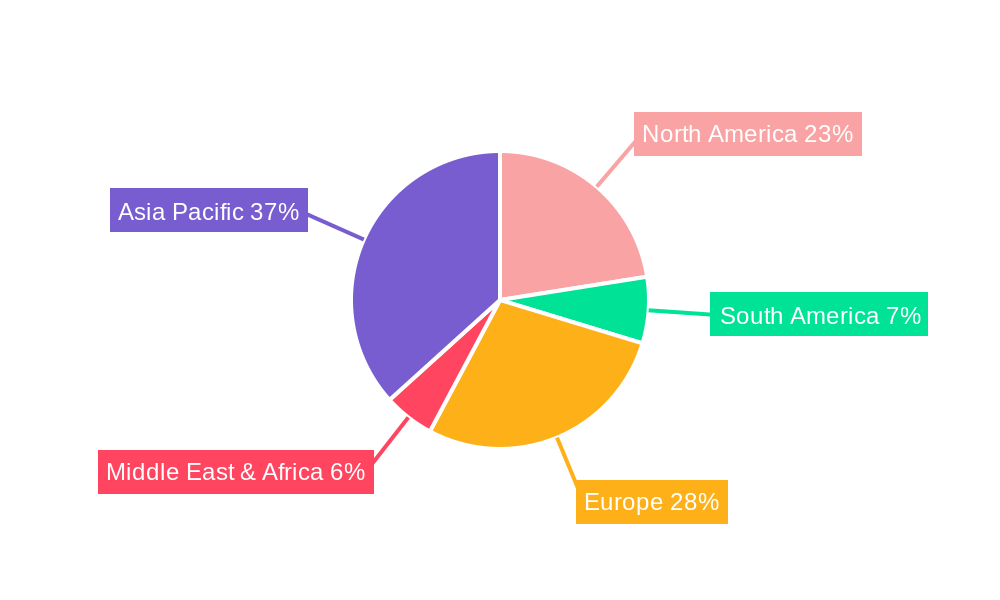
The Battery Thermal Management segment, particularly within BEV (Battery Electric Vehicle) applications, is currently the dominant force and is expected to remain so in the EV Holistic Thermal Management market. This dominance is driven by the critical role of battery temperature regulation in ensuring optimal performance, safety, and lifespan of EV batteries. Regions like Asia-Pacific, led by China, are at the forefront of this growth due to their substantial EV production capacity and strong government support for electric mobility. The sheer volume of BEV production in this region, coupled with aggressive targets for EV penetration, creates an immense demand for sophisticated battery thermal management systems. Furthermore, ongoing research and development in battery technology necessitate continuous innovation in thermal management, further solidifying its leading position.
Key drivers behind this dominance include robust economic policies promoting EV adoption, significant investments in charging infrastructure, and a burgeoning consumer base readily embracing electric vehicles. The presence of major automotive manufacturers and component suppliers in these dominant regions fosters a competitive yet collaborative environment that accelerates technological advancements. Market share within the battery thermal management segment is anticipated to reach over 50% of the total EV holistic thermal management market by 2025, with its growth potential remaining exceptionally high throughout the forecast period.
- Dominant Segment: Battery Thermal Management.
- Dominant Application: BEV (Battery Electric Vehicles).
- Dominant Region: Asia-Pacific (particularly China).
- Key Drivers in Asia-Pacific: Extensive EV production, supportive government policies, rapid infrastructure development, and growing consumer acceptance.
- Market Share of Battery Thermal Management: Projected to be over 50% in 2025.
- Growth Potential: High and sustained due to ongoing battery technology evolution.
Ev Holistic Thermal Management Product Landscape
The EV Holistic Thermal Management product landscape is characterized by a proliferation of innovative solutions designed to optimize vehicle efficiency and occupant comfort. Key product innovations include advanced liquid cooling systems for batteries, integrated heat pump modules for efficient cabin heating and cooling, and intelligent control units that dynamically manage thermal loads across various vehicle components. Performance metrics are increasingly focused on energy efficiency, reduced parasitic losses, and enhanced thermal stability across a wide range of ambient temperatures. Unique selling propositions often revolve around system integration, miniaturization, and the use of sustainable refrigerants. Technological advancements are pushing towards predictive thermal management systems that anticipate thermal needs, thereby further enhancing performance and range.
- Key Innovations: Integrated battery cooling plates, high-efficiency heat pump systems, intelligent thermal management ECUs.
- Performance Metrics: Energy efficiency, thermal stability, reduced parasitic load, extended component lifespan.
- Unique Selling Propositions: Seamless system integration, compact designs, and eco-friendly refrigerant options.
Key Drivers, Barriers & Challenges in Ev Holistic Thermal Management
The EV Holistic Thermal Management market is propelled by several key drivers. The relentless surge in electric vehicle adoption, driven by environmental concerns and government mandates, is the primary catalyst. Technological advancements in battery technology, requiring sophisticated thermal control for optimal performance and safety, are crucial. Furthermore, the increasing consumer demand for enhanced driving range and superior cabin comfort directly fuels the need for efficient thermal management solutions. The supportive regulatory environment and growing investments in EV infrastructure also play a significant role.
However, the market faces notable barriers and challenges. High research and development costs associated with cutting-edge thermal technologies represent a significant hurdle. Supply chain complexities, particularly for specialized components, can lead to production bottlenecks. Stringent regulatory compliance for new materials and systems adds another layer of difficulty. Intense competitive pressures among established automotive suppliers and emerging technology firms can impact profit margins. Escalating raw material costs and the need for energy-efficient manufacturing processes also present ongoing challenges for market players.
- Key Drivers:
- Rapid EV adoption.
- Advancements in battery technology.
- Consumer demand for range and comfort.
- Favorable regulatory policies.
- Barriers & Challenges:
- High R&D expenditures.
- Supply chain vulnerabilities.
- Complex regulatory compliance.
- Intense market competition.
- Volatile raw material prices.
Emerging Opportunities in Ev Holistic Thermal Management
Emerging opportunities in the EV Holistic Thermal Management market are abundant, driven by evolving consumer expectations and technological frontiers. The development of highly integrated and modular thermal management systems for next-generation EV architectures presents a significant avenue for growth. Untapped markets in emerging economies with rapidly increasing EV adoption rates offer substantial potential. Innovative applications such as advanced thermal management for electric aircraft and heavy-duty electric vehicles are gaining traction. Furthermore, the increasing consumer preference for personalized cabin environments and advanced climate control features is opening doors for smart and adaptive thermal solutions. The integration of vehicle-to-grid (V2G) capabilities, which can be optimized with intelligent thermal management, is another promising area.
- Untapped Markets: Emerging economies with growing EV penetration.
- Innovative Applications: Thermal management for electric aviation and commercial vehicles.
- Evolving Consumer Preferences: Demand for personalized cabin experiences and smart climate control.
- Emerging Technologies: V2G integration and predictive thermal management.
Growth Accelerators in the Ev Holistic Thermal Management Industry
Several key factors are accelerating growth within the EV Holistic Thermal Management industry. Technological breakthroughs in materials science, leading to more efficient heat transfer mediums and lighter, more compact components, are significantly improving system performance and reducing costs. Strategic partnerships between automotive manufacturers and specialized thermal management component suppliers are fostering co-development and accelerating market penetration of advanced solutions. Market expansion strategies, including entering new geographic regions and targeting specific vehicle segments, are also contributing to sustained growth. The ongoing trend towards vehicle electrification across all major automotive markets acts as a fundamental growth accelerator, ensuring a consistent and expanding demand for these critical systems.
- Technological Breakthroughs: Novel heat transfer materials and compact component designs.
- Strategic Partnerships: Collaborative efforts between OEMs and component suppliers.
- Market Expansion: Entry into new geographic territories and vehicle segments.
- Global Electrification Trend: Pervasive shift towards EVs across the automotive sector.
Key Players Shaping the Ev Holistic Thermal Management Market
- Denso
- Hanon Systems
- Valeo
- Mahle
- Gentherm
- Sanden
- Bosch
- Hyundai
Notable Milestones in Ev Holistic Thermal Management Sector
- 2020: Launch of advanced integrated thermal management systems for long-range BEVs by major Tier-1 suppliers.
- 2021: Increased investment in R&D for next-generation battery cooling solutions, including immersion cooling technologies.
- 2022: Strategic partnerships formed to develop highly efficient heat pump systems for improved EV range in colder climates.
- 2023: Introduction of predictive thermal management algorithms for enhanced battery performance and charging speed.
- 2024: Significant advancements in manufacturing processes leading to cost reductions in key thermal management components.
In-Depth Ev Holistic Thermal Management Market Outlook
The future outlook for the EV Holistic Thermal Management market is exceptionally promising, driven by a robust convergence of technological innovation, supportive policy landscapes, and accelerating global EV adoption. The continuous evolution of battery technology will necessitate increasingly sophisticated and integrated thermal management solutions, creating sustained demand. Growth accelerators such as material science advancements and strategic industry collaborations are poised to further enhance efficiency and reduce costs, making EVs more accessible and appealing. Companies focusing on developing holistic thermal management systems that encompass battery, powertrain, and cabin thermal control will be well-positioned to capture significant market share. The trend towards higher energy density batteries and faster charging capabilities will continue to drive innovation in this critical sector, ensuring substantial growth opportunities throughout the forecast period and beyond.
Ev Holistic Thermal Management Segmentation
-
1. Application
- 1.1. BEV
- 1.2. HEV
-
2. Type
- 2.1. Engine Cooling Loop Management
- 2.2. Transmission Oil Cooling Loop Management
- 2.3. Power and Drive Loops Thermal Management
- 2.4. Cabin Thermal Management
- 2.5. Battery Thermal Management
Ev Holistic Thermal Management Segmentation By Geography
-
1. North America
- 1.1. United States
- 1.2. Canada
- 1.3. Mexico
-
2. South America
- 2.1. Brazil
- 2.2. Argentina
- 2.3. Rest of South America
-
3. Europe
- 3.1. United Kingdom
- 3.2. Germany
- 3.3. France
- 3.4. Italy
- 3.5. Spain
- 3.6. Russia
- 3.7. Benelux
- 3.8. Nordics
- 3.9. Rest of Europe
-
4. Middle East & Africa
- 4.1. Turkey
- 4.2. Israel
- 4.3. GCC
- 4.4. North Africa
- 4.5. South Africa
- 4.6. Rest of Middle East & Africa
-
5. Asia Pacific
- 5.1. China
- 5.2. India
- 5.3. Japan
- 5.4. South Korea
- 5.5. ASEAN
- 5.6. Oceania
- 5.7. Rest of Asia Pacific
Ev Holistic Thermal Management REPORT HIGHLIGHTS
| Aspects | Details |
|---|---|
| Study Period | 2019-2033 |
| Base Year | 2024 |
| Estimated Year | 2025 |
| Forecast Period | 2025-2033 |
| Historical Period | 2019-2024 |
| Growth Rate | CAGR of XXX% from 2019-2033 |
| Segmentation |
|
Table of Contents
- 1. Introduction
- 1.1. Research Scope
- 1.2. Market Segmentation
- 1.3. Research Methodology
- 1.4. Definitions and Assumptions
- 2. Executive Summary
- 2.1. Introduction
- 3. Market Dynamics
- 3.1. Introduction
- 3.2. Market Drivers
- 3.3. Market Restrains
- 3.4. Market Trends
- 4. Market Factor Analysis
- 4.1. Porters Five Forces
- 4.2. Supply/Value Chain
- 4.3. PESTEL analysis
- 4.4. Market Entropy
- 4.5. Patent/Trademark Analysis
- 5. Global Ev Holistic Thermal Management Analysis, Insights and Forecast, 2019-2031
- 5.1. Market Analysis, Insights and Forecast - by Application
- 5.1.1. BEV
- 5.1.2. HEV
- 5.2. Market Analysis, Insights and Forecast - by Type
- 5.2.1. Engine Cooling Loop Management
- 5.2.2. Transmission Oil Cooling Loop Management
- 5.2.3. Power and Drive Loops Thermal Management
- 5.2.4. Cabin Thermal Management
- 5.2.5. Battery Thermal Management
- 5.3. Market Analysis, Insights and Forecast - by Region
- 5.3.1. North America
- 5.3.2. South America
- 5.3.3. Europe
- 5.3.4. Middle East & Africa
- 5.3.5. Asia Pacific
- 5.1. Market Analysis, Insights and Forecast - by Application
- 6. North America Ev Holistic Thermal Management Analysis, Insights and Forecast, 2019-2031
- 6.1. Market Analysis, Insights and Forecast - by Application
- 6.1.1. BEV
- 6.1.2. HEV
- 6.2. Market Analysis, Insights and Forecast - by Type
- 6.2.1. Engine Cooling Loop Management
- 6.2.2. Transmission Oil Cooling Loop Management
- 6.2.3. Power and Drive Loops Thermal Management
- 6.2.4. Cabin Thermal Management
- 6.2.5. Battery Thermal Management
- 6.1. Market Analysis, Insights and Forecast - by Application
- 7. South America Ev Holistic Thermal Management Analysis, Insights and Forecast, 2019-2031
- 7.1. Market Analysis, Insights and Forecast - by Application
- 7.1.1. BEV
- 7.1.2. HEV
- 7.2. Market Analysis, Insights and Forecast - by Type
- 7.2.1. Engine Cooling Loop Management
- 7.2.2. Transmission Oil Cooling Loop Management
- 7.2.3. Power and Drive Loops Thermal Management
- 7.2.4. Cabin Thermal Management
- 7.2.5. Battery Thermal Management
- 7.1. Market Analysis, Insights and Forecast - by Application
- 8. Europe Ev Holistic Thermal Management Analysis, Insights and Forecast, 2019-2031
- 8.1. Market Analysis, Insights and Forecast - by Application
- 8.1.1. BEV
- 8.1.2. HEV
- 8.2. Market Analysis, Insights and Forecast - by Type
- 8.2.1. Engine Cooling Loop Management
- 8.2.2. Transmission Oil Cooling Loop Management
- 8.2.3. Power and Drive Loops Thermal Management
- 8.2.4. Cabin Thermal Management
- 8.2.5. Battery Thermal Management
- 8.1. Market Analysis, Insights and Forecast - by Application
- 9. Middle East & Africa Ev Holistic Thermal Management Analysis, Insights and Forecast, 2019-2031
- 9.1. Market Analysis, Insights and Forecast - by Application
- 9.1.1. BEV
- 9.1.2. HEV
- 9.2. Market Analysis, Insights and Forecast - by Type
- 9.2.1. Engine Cooling Loop Management
- 9.2.2. Transmission Oil Cooling Loop Management
- 9.2.3. Power and Drive Loops Thermal Management
- 9.2.4. Cabin Thermal Management
- 9.2.5. Battery Thermal Management
- 9.1. Market Analysis, Insights and Forecast - by Application
- 10. Asia Pacific Ev Holistic Thermal Management Analysis, Insights and Forecast, 2019-2031
- 10.1. Market Analysis, Insights and Forecast - by Application
- 10.1.1. BEV
- 10.1.2. HEV
- 10.2. Market Analysis, Insights and Forecast - by Type
- 10.2.1. Engine Cooling Loop Management
- 10.2.2. Transmission Oil Cooling Loop Management
- 10.2.3. Power and Drive Loops Thermal Management
- 10.2.4. Cabin Thermal Management
- 10.2.5. Battery Thermal Management
- 10.1. Market Analysis, Insights and Forecast - by Application
- 11. Competitive Analysis
- 11.1. Global Market Share Analysis 2024
- 11.2. Company Profiles
- 11.2.1 Denso
- 11.2.1.1. Overview
- 11.2.1.2. Products
- 11.2.1.3. SWOT Analysis
- 11.2.1.4. Recent Developments
- 11.2.1.5. Financials (Based on Availability)
- 11.2.2 Hanon Systems
- 11.2.2.1. Overview
- 11.2.2.2. Products
- 11.2.2.3. SWOT Analysis
- 11.2.2.4. Recent Developments
- 11.2.2.5. Financials (Based on Availability)
- 11.2.3 Valeo
- 11.2.3.1. Overview
- 11.2.3.2. Products
- 11.2.3.3. SWOT Analysis
- 11.2.3.4. Recent Developments
- 11.2.3.5. Financials (Based on Availability)
- 11.2.4 Mahle
- 11.2.4.1. Overview
- 11.2.4.2. Products
- 11.2.4.3. SWOT Analysis
- 11.2.4.4. Recent Developments
- 11.2.4.5. Financials (Based on Availability)
- 11.2.5 Gentherm
- 11.2.5.1. Overview
- 11.2.5.2. Products
- 11.2.5.3. SWOT Analysis
- 11.2.5.4. Recent Developments
- 11.2.5.5. Financials (Based on Availability)
- 11.2.6 Sanden
- 11.2.6.1. Overview
- 11.2.6.2. Products
- 11.2.6.3. SWOT Analysis
- 11.2.6.4. Recent Developments
- 11.2.6.5. Financials (Based on Availability)
- 11.2.7 Bosch
- 11.2.7.1. Overview
- 11.2.7.2. Products
- 11.2.7.3. SWOT Analysis
- 11.2.7.4. Recent Developments
- 11.2.7.5. Financials (Based on Availability)
- 11.2.8 Hyundai
- 11.2.8.1. Overview
- 11.2.8.2. Products
- 11.2.8.3. SWOT Analysis
- 11.2.8.4. Recent Developments
- 11.2.8.5. Financials (Based on Availability)
- 11.2.1 Denso
List of Figures
- Figure 1: Global Ev Holistic Thermal Management Revenue Breakdown (million, %) by Region 2024 & 2032
- Figure 2: North America Ev Holistic Thermal Management Revenue (million), by Application 2024 & 2032
- Figure 3: North America Ev Holistic Thermal Management Revenue Share (%), by Application 2024 & 2032
- Figure 4: North America Ev Holistic Thermal Management Revenue (million), by Type 2024 & 2032
- Figure 5: North America Ev Holistic Thermal Management Revenue Share (%), by Type 2024 & 2032
- Figure 6: North America Ev Holistic Thermal Management Revenue (million), by Country 2024 & 2032
- Figure 7: North America Ev Holistic Thermal Management Revenue Share (%), by Country 2024 & 2032
- Figure 8: South America Ev Holistic Thermal Management Revenue (million), by Application 2024 & 2032
- Figure 9: South America Ev Holistic Thermal Management Revenue Share (%), by Application 2024 & 2032
- Figure 10: South America Ev Holistic Thermal Management Revenue (million), by Type 2024 & 2032
- Figure 11: South America Ev Holistic Thermal Management Revenue Share (%), by Type 2024 & 2032
- Figure 12: South America Ev Holistic Thermal Management Revenue (million), by Country 2024 & 2032
- Figure 13: South America Ev Holistic Thermal Management Revenue Share (%), by Country 2024 & 2032
- Figure 14: Europe Ev Holistic Thermal Management Revenue (million), by Application 2024 & 2032
- Figure 15: Europe Ev Holistic Thermal Management Revenue Share (%), by Application 2024 & 2032
- Figure 16: Europe Ev Holistic Thermal Management Revenue (million), by Type 2024 & 2032
- Figure 17: Europe Ev Holistic Thermal Management Revenue Share (%), by Type 2024 & 2032
- Figure 18: Europe Ev Holistic Thermal Management Revenue (million), by Country 2024 & 2032
- Figure 19: Europe Ev Holistic Thermal Management Revenue Share (%), by Country 2024 & 2032
- Figure 20: Middle East & Africa Ev Holistic Thermal Management Revenue (million), by Application 2024 & 2032
- Figure 21: Middle East & Africa Ev Holistic Thermal Management Revenue Share (%), by Application 2024 & 2032
- Figure 22: Middle East & Africa Ev Holistic Thermal Management Revenue (million), by Type 2024 & 2032
- Figure 23: Middle East & Africa Ev Holistic Thermal Management Revenue Share (%), by Type 2024 & 2032
- Figure 24: Middle East & Africa Ev Holistic Thermal Management Revenue (million), by Country 2024 & 2032
- Figure 25: Middle East & Africa Ev Holistic Thermal Management Revenue Share (%), by Country 2024 & 2032
- Figure 26: Asia Pacific Ev Holistic Thermal Management Revenue (million), by Application 2024 & 2032
- Figure 27: Asia Pacific Ev Holistic Thermal Management Revenue Share (%), by Application 2024 & 2032
- Figure 28: Asia Pacific Ev Holistic Thermal Management Revenue (million), by Type 2024 & 2032
- Figure 29: Asia Pacific Ev Holistic Thermal Management Revenue Share (%), by Type 2024 & 2032
- Figure 30: Asia Pacific Ev Holistic Thermal Management Revenue (million), by Country 2024 & 2032
- Figure 31: Asia Pacific Ev Holistic Thermal Management Revenue Share (%), by Country 2024 & 2032
List of Tables
- Table 1: Global Ev Holistic Thermal Management Revenue million Forecast, by Region 2019 & 2032
- Table 2: Global Ev Holistic Thermal Management Revenue million Forecast, by Application 2019 & 2032
- Table 3: Global Ev Holistic Thermal Management Revenue million Forecast, by Type 2019 & 2032
- Table 4: Global Ev Holistic Thermal Management Revenue million Forecast, by Region 2019 & 2032
- Table 5: Global Ev Holistic Thermal Management Revenue million Forecast, by Application 2019 & 2032
- Table 6: Global Ev Holistic Thermal Management Revenue million Forecast, by Type 2019 & 2032
- Table 7: Global Ev Holistic Thermal Management Revenue million Forecast, by Country 2019 & 2032
- Table 8: United States Ev Holistic Thermal Management Revenue (million) Forecast, by Application 2019 & 2032
- Table 9: Canada Ev Holistic Thermal Management Revenue (million) Forecast, by Application 2019 & 2032
- Table 10: Mexico Ev Holistic Thermal Management Revenue (million) Forecast, by Application 2019 & 2032
- Table 11: Global Ev Holistic Thermal Management Revenue million Forecast, by Application 2019 & 2032
- Table 12: Global Ev Holistic Thermal Management Revenue million Forecast, by Type 2019 & 2032
- Table 13: Global Ev Holistic Thermal Management Revenue million Forecast, by Country 2019 & 2032
- Table 14: Brazil Ev Holistic Thermal Management Revenue (million) Forecast, by Application 2019 & 2032
- Table 15: Argentina Ev Holistic Thermal Management Revenue (million) Forecast, by Application 2019 & 2032
- Table 16: Rest of South America Ev Holistic Thermal Management Revenue (million) Forecast, by Application 2019 & 2032
- Table 17: Global Ev Holistic Thermal Management Revenue million Forecast, by Application 2019 & 2032
- Table 18: Global Ev Holistic Thermal Management Revenue million Forecast, by Type 2019 & 2032
- Table 19: Global Ev Holistic Thermal Management Revenue million Forecast, by Country 2019 & 2032
- Table 20: United Kingdom Ev Holistic Thermal Management Revenue (million) Forecast, by Application 2019 & 2032
- Table 21: Germany Ev Holistic Thermal Management Revenue (million) Forecast, by Application 2019 & 2032
- Table 22: France Ev Holistic Thermal Management Revenue (million) Forecast, by Application 2019 & 2032
- Table 23: Italy Ev Holistic Thermal Management Revenue (million) Forecast, by Application 2019 & 2032
- Table 24: Spain Ev Holistic Thermal Management Revenue (million) Forecast, by Application 2019 & 2032
- Table 25: Russia Ev Holistic Thermal Management Revenue (million) Forecast, by Application 2019 & 2032
- Table 26: Benelux Ev Holistic Thermal Management Revenue (million) Forecast, by Application 2019 & 2032
- Table 27: Nordics Ev Holistic Thermal Management Revenue (million) Forecast, by Application 2019 & 2032
- Table 28: Rest of Europe Ev Holistic Thermal Management Revenue (million) Forecast, by Application 2019 & 2032
- Table 29: Global Ev Holistic Thermal Management Revenue million Forecast, by Application 2019 & 2032
- Table 30: Global Ev Holistic Thermal Management Revenue million Forecast, by Type 2019 & 2032
- Table 31: Global Ev Holistic Thermal Management Revenue million Forecast, by Country 2019 & 2032
- Table 32: Turkey Ev Holistic Thermal Management Revenue (million) Forecast, by Application 2019 & 2032
- Table 33: Israel Ev Holistic Thermal Management Revenue (million) Forecast, by Application 2019 & 2032
- Table 34: GCC Ev Holistic Thermal Management Revenue (million) Forecast, by Application 2019 & 2032
- Table 35: North Africa Ev Holistic Thermal Management Revenue (million) Forecast, by Application 2019 & 2032
- Table 36: South Africa Ev Holistic Thermal Management Revenue (million) Forecast, by Application 2019 & 2032
- Table 37: Rest of Middle East & Africa Ev Holistic Thermal Management Revenue (million) Forecast, by Application 2019 & 2032
- Table 38: Global Ev Holistic Thermal Management Revenue million Forecast, by Application 2019 & 2032
- Table 39: Global Ev Holistic Thermal Management Revenue million Forecast, by Type 2019 & 2032
- Table 40: Global Ev Holistic Thermal Management Revenue million Forecast, by Country 2019 & 2032
- Table 41: China Ev Holistic Thermal Management Revenue (million) Forecast, by Application 2019 & 2032
- Table 42: India Ev Holistic Thermal Management Revenue (million) Forecast, by Application 2019 & 2032
- Table 43: Japan Ev Holistic Thermal Management Revenue (million) Forecast, by Application 2019 & 2032
- Table 44: South Korea Ev Holistic Thermal Management Revenue (million) Forecast, by Application 2019 & 2032
- Table 45: ASEAN Ev Holistic Thermal Management Revenue (million) Forecast, by Application 2019 & 2032
- Table 46: Oceania Ev Holistic Thermal Management Revenue (million) Forecast, by Application 2019 & 2032
- Table 47: Rest of Asia Pacific Ev Holistic Thermal Management Revenue (million) Forecast, by Application 2019 & 2032
Frequently Asked Questions
1. What is the projected Compound Annual Growth Rate (CAGR) of the Ev Holistic Thermal Management?
The projected CAGR is approximately XXX%.
2. Which companies are prominent players in the Ev Holistic Thermal Management?
Key companies in the market include Denso, Hanon Systems, Valeo, Mahle, Gentherm, Sanden, Bosch, Hyundai.
3. What are the main segments of the Ev Holistic Thermal Management?
The market segments include Application, Type.
4. Can you provide details about the market size?
The market size is estimated to be USD XXX million as of 2022.
5. What are some drivers contributing to market growth?
N/A
6. What are the notable trends driving market growth?
N/A
7. Are there any restraints impacting market growth?
N/A
8. Can you provide examples of recent developments in the market?
N/A
9. What pricing options are available for accessing the report?
Pricing options include single-user, multi-user, and enterprise licenses priced at USD 2900.00, USD 4350.00, and USD 5800.00 respectively.
10. Is the market size provided in terms of value or volume?
The market size is provided in terms of value, measured in million.
11. Are there any specific market keywords associated with the report?
Yes, the market keyword associated with the report is "Ev Holistic Thermal Management," which aids in identifying and referencing the specific market segment covered.
12. How do I determine which pricing option suits my needs best?
The pricing options vary based on user requirements and access needs. Individual users may opt for single-user licenses, while businesses requiring broader access may choose multi-user or enterprise licenses for cost-effective access to the report.
13. Are there any additional resources or data provided in the Ev Holistic Thermal Management report?
While the report offers comprehensive insights, it's advisable to review the specific contents or supplementary materials provided to ascertain if additional resources or data are available.
14. How can I stay updated on further developments or reports in the Ev Holistic Thermal Management?
To stay informed about further developments, trends, and reports in the Ev Holistic Thermal Management, consider subscribing to industry newsletters, following relevant companies and organizations, or regularly checking reputable industry news sources and publications.
Methodology
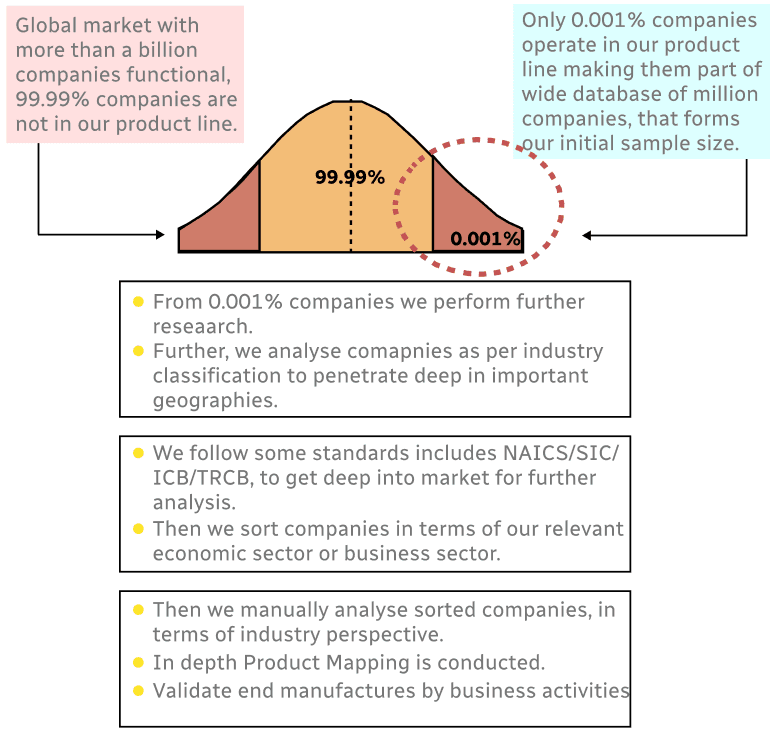
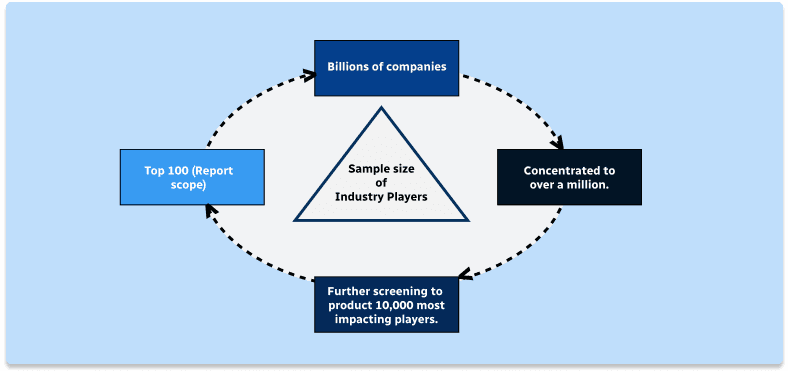
Step 1 - Identification of Relevant Samples Size from Population Database
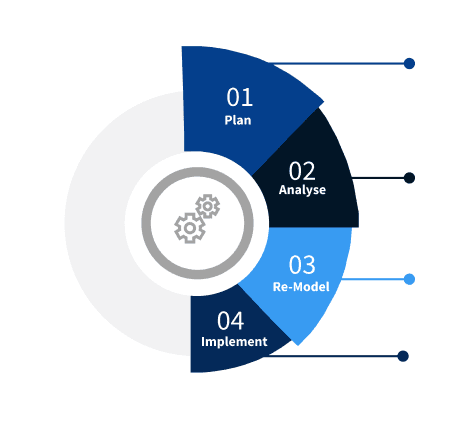
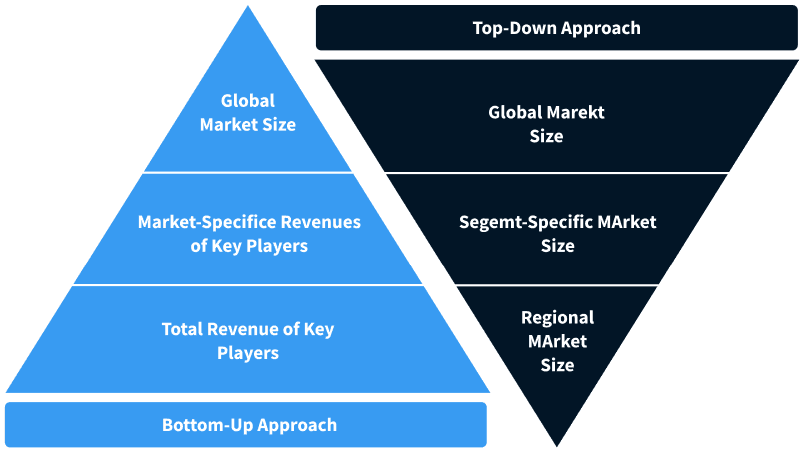
Step 2 - Approaches for Defining Global Market Size (Value, Volume* & Price*)
Note*: In applicable scenarios
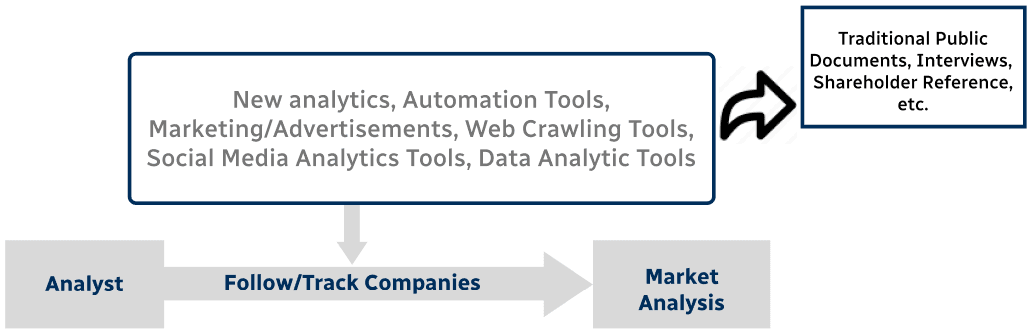
Step 3 - Data Sources
Primary Research
- Web Analytics
- Survey Reports
- Research Institute
- Latest Research Reports
- Opinion Leaders
Secondary Research
- Annual Reports
- White Paper
- Latest Press Release
- Industry Association
- Paid Database
- Investor Presentations
Step 4 - Data Triangulation
Involves using different sources of information in order to increase the validity of a study
These sources are likely to be stakeholders in a program - participants, other researchers, program staff, other community members, and so on.
Then we put all data in single framework & apply various statistical tools to find out the dynamic on the market.
During the analysis stage, feedback from the stakeholder groups would be compared to determine areas of agreement as well as areas of divergence