

Key Insights
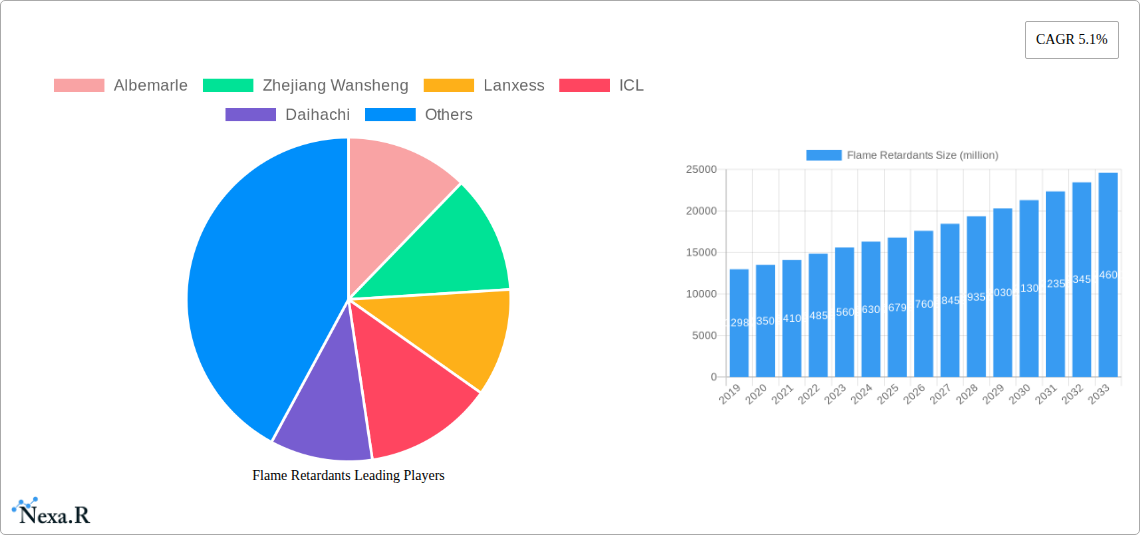
The global Flame Retardants market is poised for robust growth, projected to reach a substantial market size of USD 16,790 million by 2025. This expansion is driven by a compound annual growth rate (CAGR) of 5.1%, indicating a healthy and consistent upward trajectory for the industry. Key growth drivers include increasingly stringent fire safety regulations across various end-use industries, growing consumer awareness regarding fire hazards, and the continuous demand for enhanced material performance in applications like plastics, rubber, textiles, and coatings. The burgeoning construction and automotive sectors, coupled with the expanding electronics and electrical industries, are significant contributors to this demand. Furthermore, innovation in flame retardant chemistries, focusing on improved efficacy, reduced environmental impact, and halogen-free alternatives, is shaping market trends and catering to evolving industry needs.
The market is segmented by type into Organohalogen Flame Retardants, Organophosphorus Flame Retardants, and Inorganic Flame Retardants. While Organohalogen flame retardants have historically dominated due to their cost-effectiveness and performance, there's a discernible shift towards Organophosphorus and Inorganic alternatives, driven by environmental concerns and regulatory pressures regarding certain halogenated compounds. The Asia Pacific region is expected to lead market growth, fueled by rapid industrialization, expanding manufacturing capabilities, and increasing investments in infrastructure and fire safety measures in countries like China and India. North America and Europe also represent significant markets, with a strong emphasis on high-performance and eco-friendly flame retardant solutions. Despite the positive outlook, potential restraints include the fluctuating raw material prices and the ongoing research and development efforts to find sustainable and cost-competitive alternatives. Nevertheless, the overall market landscape for flame retardants remains highly dynamic and promising, with numerous opportunities for both established players and new entrants.
Flame Retardants Market Report: Navigating Safety, Innovation, and Global Growth (2019-2033)
This comprehensive report offers an in-depth analysis of the global flame retardants market, a critical sector driven by increasing safety regulations, technological advancements, and diverse end-use applications. Covering the historical period from 2019 to 2024 and projecting growth through 2033, this study provides invaluable insights for stakeholders across the plastic flame retardants, rubber flame retardants, textile flame retardants, and coating flame retardants industries. We dissect market dynamics, growth trends, regional dominance, product innovations, key drivers, challenges, and emerging opportunities, presenting a holistic view of this dynamic market. This report also explores the parent and child market nuances, offering a granular understanding of market segmentation and growth potential.
Flame Retardants Market Dynamics & Structure
The global flame retardant market exhibits a moderately consolidated structure, with leading players like Albemarle, Zhejiang Wansheng, Lanxess, and ICL holding significant market shares. Technological innovation remains a primary driver, fueled by the demand for more efficient, environmentally friendly, and versatile flame retardant solutions across various applications. Regulatory frameworks, particularly stringent fire safety standards in regions like North America and Europe, are paramount in shaping market demand and product development. The competitive landscape is characterized by the presence of both established chemical giants and emerging specialized manufacturers, fostering innovation and price competition.
- Market Concentration: Moderately consolidated with top players accounting for over 50% of the market revenue.
- Technological Innovation: Driven by the development of halogen-free flame retardants, intumescent systems, and bio-based alternatives.
- Regulatory Frameworks: Strict fire safety codes and environmental regulations (e.g., REACH, RoHS) are pivotal, impacting product formulation and market access.
- Competitive Product Substitutes: While direct substitutes are limited, advancements in inherently flame-resistant materials pose a long-term competitive consideration.
- End-User Demographics: Growing demand from sectors like electronics, construction, automotive, and textiles, driven by enhanced safety requirements.
- M&A Trends: Strategic acquisitions and partnerships are observed as companies aim to expand product portfolios, geographical reach, and technological capabilities. For instance, in the historical period, there were an estimated 15-20 M&A deals annually focused on specialty chemical segments, including flame retardants.
Flame Retardants Growth Trends & Insights
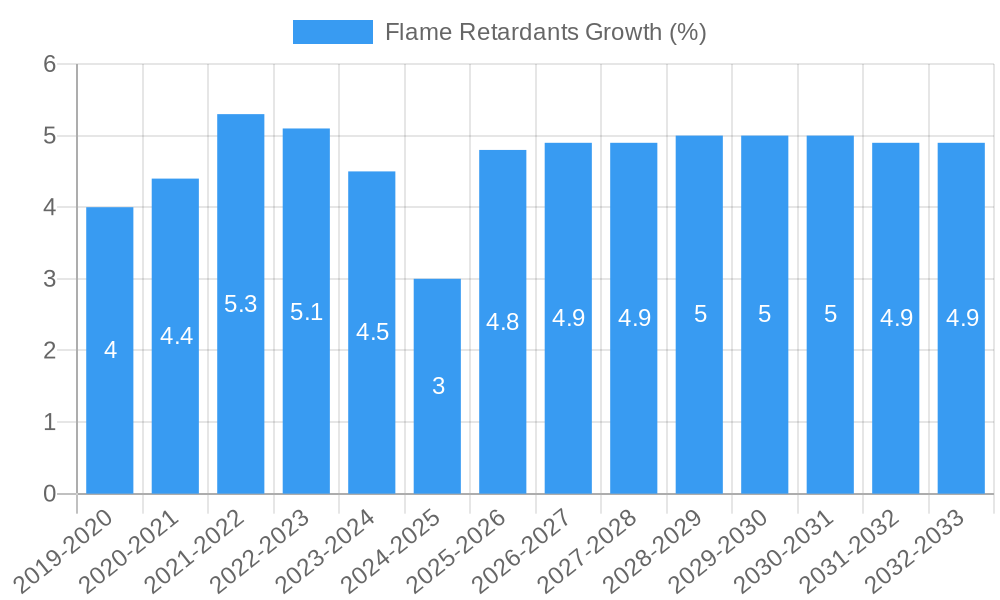
The flame retardant market is poised for robust expansion, projected to witness a Compound Annual Growth Rate (CAGR) of approximately 5.8% from 2025 to 2033. This growth is underpinned by escalating safety concerns and increasingly stringent fire safety regulations globally, mandating the use of flame retardants in a wide array of consumer and industrial products. The plastic flame retardants market, in particular, is expected to be a major contributor, driven by its widespread use in electronics, automotive components, and construction materials. The adoption of organophosphorus flame retardants and inorganic flame retardants is rising due to their favorable environmental profiles compared to traditional organohalogen flame retardants. Consumer behavior is also shifting towards products with enhanced safety features, indirectly boosting demand for effective flame retardant solutions.
Market penetration of advanced flame retardant technologies is steadily increasing. For example, the market penetration for halogen-free flame retardants is estimated to have grown from 45% in 2019 to approximately 65% in 2024, and this trend is expected to continue. Technological disruptions are focused on developing flame retardants with improved thermal stability, reduced smoke emission, and minimal impact on the mechanical properties of materials. The estimated market size for flame retardants was valued at approximately $5,500 million in 2024 and is projected to reach around $8,900 million by 2033. Innovations in nanotechnology and the development of multifunctional flame retardants are also key areas of research and development, promising to unlock new applications and market segments. The increasing awareness of indoor air quality and potential health impacts of certain flame retardant chemicals is also driving innovation towards safer and more sustainable alternatives, further influencing consumer preferences and regulatory decisions.
Dominant Regions, Countries, or Segments in Flame Retardants
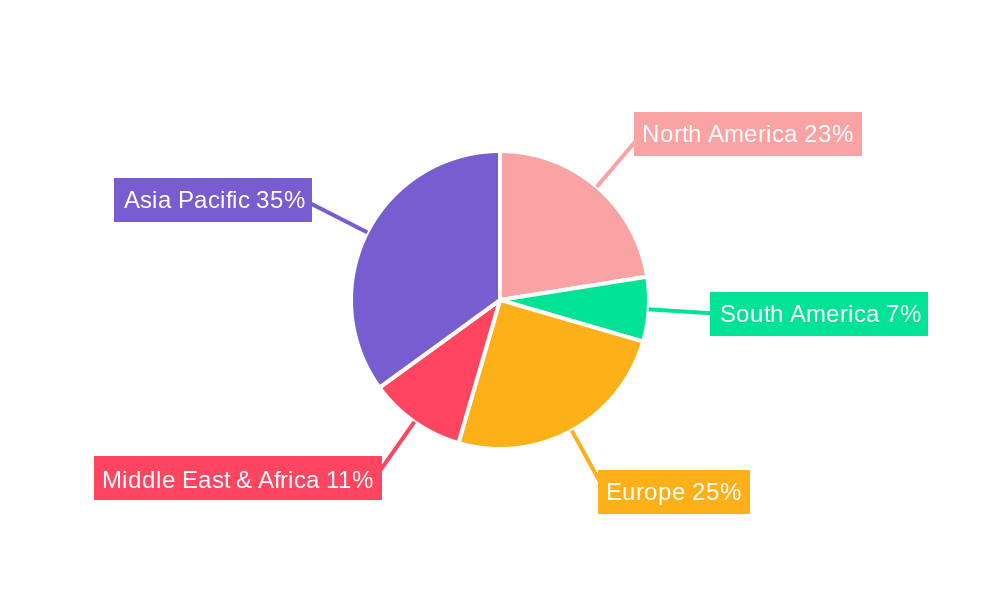
Asia Pacific currently dominates the flame retardant market, driven by its burgeoning manufacturing sector, rapid industrialization, and increasing investments in construction and electronics. China, as the world's largest producer and consumer of plastics and textiles, plays a pivotal role in this regional dominance. The stringent fire safety standards being implemented across various Asian countries, coupled with government initiatives promoting safer products, are significant growth catalysts. The sheer volume of production in segments like plastic flame retardants and textile flame retardants within this region significantly influences global market dynamics.
- Dominant Region: Asia Pacific, accounting for an estimated 38% of the global market share in 2025.
- Key Drivers:
- Massive manufacturing base for electronics, automotive, and textiles.
- Increasing disposable income leading to higher demand for consumer goods with enhanced safety features.
- Government investments in infrastructure and construction projects requiring fire-resistant materials.
- Growing adoption of stricter fire safety regulations, aligning with international standards.
- Key Drivers:
- Dominant Country: China, holding approximately 25% of the global market share in 2025.
- Dominance Factors:
- Leading producer of various polymer resins and synthetic fibers that require flame retardants.
- Significant domestic demand for flame retardant-treated materials in construction, automotive, and consumer electronics.
- Presence of key manufacturers like Zhejiang Wansheng, Shouguang Weidong Chemical, and Jiangsu Yoke, contributing to both production and innovation.
- Dominance Factors:
- Dominant Segment (Application): Plastic Flame Retardants, expected to capture over 45% of the total market revenue in 2025.
- Growth Potential: The ever-increasing use of plastics in automotive (lightweighting), electronics (casings, cables), and construction (insulation, pipes) necessitates effective fire protection. The demand for flame retardants in high-performance engineering plastics and recycled plastics is also a significant contributor.
- Dominant Segment (Type): Organophosphorus Flame Retardant, projected to hold a substantial market share due to its growing preference as a halogen-free alternative.
- Market Drivers:
- Environmental concerns and regulations favoring non-halogenated solutions.
- Versatility and effectiveness in various polymer matrices.
- Innovation in reactive and additive organophosphorus flame retardants offering enhanced performance.
- Market Drivers:
Flame Retardants Product Landscape
The flame retardant product landscape is characterized by continuous innovation aimed at meeting evolving safety standards and environmental concerns. Key product developments include the expansion of high-performance organophosphorus flame retardants that offer excellent thermal stability and low smoke generation, particularly for demanding applications in electronics and automotive. The emergence of novel inorganic flame retardants, such as advanced metal hydroxides and phosphorus-based compounds, is also significant, offering synergistic effects and improved processing characteristics. Furthermore, there is a growing focus on bio-based and sustainable flame retardant solutions derived from renewable resources, catering to the increasing demand for eco-friendly materials across all applications, including plastic, rubber, and textile sectors.
Key Drivers, Barriers & Challenges in Flame Retardants
Key Drivers:
- Stringent Fire Safety Regulations: Mandates for enhanced fire safety in construction, automotive, and electronics industries are the primary growth engine.
- Growing Demand for Halogen-Free Solutions: Environmental concerns and health advisories are pushing the adoption of organophosphorus and inorganic flame retardants.
- Technological Advancements: Development of more efficient, versatile, and eco-friendly flame retardants, including intumescent systems and nano-additives.
- Urbanization and Infrastructure Development: Increased construction activities globally necessitate fire-resistant materials.
- Growth in End-Use Industries: Expansion in electronics, automotive, aerospace, and textiles fuels demand for specialized flame retardant solutions.
Barriers & Challenges:
- Cost Volatility of Raw Materials: Fluctuations in the prices of key raw materials can impact profitability and pricing strategies.
- Regulatory Hurdles and Compliance Costs: Evolving global regulations and the cost associated with ensuring compliance can be a significant challenge. For example, the estimated compliance cost for new REACH registrations can range from $50,000 to $500,000 per substance.
- Performance Trade-offs: Balancing flame retardancy with the physical and mechanical properties of the end material, such as impact strength or UV resistance.
- Supply Chain Disruptions: Geopolitical events and logistical issues can impact the availability and timely delivery of raw materials and finished products. Estimated supply chain disruptions have led to an average of 3-5% increase in production costs for specialty chemicals in the past two years.
- Competition from Inherently Flame-Resistant Materials: Development of materials with intrinsic flame-resistant properties can pose a long-term challenge.
Emerging Opportunities in Flame Retardants
Emerging opportunities in the flame retardant market lie in the development and adoption of advanced, sustainable, and multifunctional flame retardant systems. The growing demand for high-performance engineering plastics in electric vehicles, for instance, presents a significant opportunity for specialized organophosphorus flame retardants and synergistic inorganic systems. Furthermore, the increasing focus on circular economy principles is driving innovation in flame retardants compatible with recycled plastics and polymers. The untapped potential in emerging economies, coupled with the development of bio-based flame retardants derived from renewable sources, offers considerable growth prospects.
Growth Accelerators in the Flame Retardants Industry
The flame retardants industry is experiencing growth acceleration through key catalysts such as significant investments in research and development for next-generation, environmentally benign flame retardant chemistries. Strategic partnerships and collaborations between chemical manufacturers and end-users are crucial for tailoring solutions to specific application needs and accelerating market adoption. Furthermore, market expansion strategies targeting underdeveloped regions with rapidly growing industrial sectors are acting as significant growth accelerators. The increasing emphasis on product stewardship and life cycle assessment is also pushing companies to innovate towards more sustainable and compliant flame retardant solutions.
Key Players Shaping the Flame Retardants Market
- Albemarle
- Zhejiang Wansheng
- Lanxess
- ICL
- Daihachi
- Adeka
- Clariant
- Shouguang Weidong Chemical
- BASF
- Jiangsu Yoke
- Teijin
- Nihon Seiko
- Thor
- Shandong Haiwang
- Shandong Morui
- Shandong Taixing
- Jinan Enter Chemical
- Stahl
- Hangzhou JLS
- Jiangyin Suli
- Weifang Faretar
- Shandong Brother Technology
- Qingyuan Presafer
- Shandong Tianyi
- ZC-New Material
- Aluminum Corporation of China (Chinalco)
- Shandong Zhongshun New Material
- Zibo Pengfeng New Material Technology
Notable Milestones in Flame Retardants Sector
- 2019: Increased regulatory scrutiny on certain brominated flame retardants led to a surge in R&D for halogen-free alternatives.
- 2020: Launch of several new generation organophosphorus flame retardants by key players, offering improved thermal stability and reduced environmental impact.
- 2021: Growing emphasis on bio-based and sustainable flame retardants with several pilot projects announced by research institutions and chemical companies.
- 2022: Major acquisitions and mergers within the specialty chemical sector, impacting the competitive landscape of the flame retardants market.
- 2023: Introduction of intumescent flame retardant systems with enhanced performance for construction and automotive applications.
- 2024: Intensified focus on flame retardants for electric vehicle battery safety and electronic components.
In-Depth Flame Retardants Market Outlook
The future market outlook for flame retardants is exceptionally strong, driven by persistent and evolving safety demands across a multitude of industries. Growth accelerators such as the rapid adoption of electric vehicles, the expansion of smart electronics, and stricter building codes worldwide will continue to fuel demand. Strategic investments in innovative, high-performance, and eco-friendly flame retardant chemistries, particularly those that are halogen-free and derived from sustainable sources, will be critical for market leaders. Expansion into emerging economies with growing industrial bases and a heightened awareness of fire safety will unlock significant future market potential. Collaborations and partnerships aimed at developing tailor-made solutions for specific material challenges will be key to capitalizing on evolving consumer preferences and regulatory landscapes.
Flame Retardants Segmentation
-
1. Application
- 1.1. Plastic
- 1.2. Rubber
- 1.3. Textile
- 1.4. Coating
- 1.5. Others
-
2. Type
- 2.1. Organohalogen Flame Retardant
- 2.2. Organophosphorus Flame Retardant
- 2.3. Inorganic Flame Retardant
Flame Retardants Segmentation By Geography
-
1. North America
- 1.1. United States
- 1.2. Canada
- 1.3. Mexico
-
2. South America
- 2.1. Brazil
- 2.2. Argentina
- 2.3. Rest of South America
-
3. Europe
- 3.1. United Kingdom
- 3.2. Germany
- 3.3. France
- 3.4. Italy
- 3.5. Spain
- 3.6. Russia
- 3.7. Benelux
- 3.8. Nordics
- 3.9. Rest of Europe
-
4. Middle East & Africa
- 4.1. Turkey
- 4.2. Israel
- 4.3. GCC
- 4.4. North Africa
- 4.5. South Africa
- 4.6. Rest of Middle East & Africa
-
5. Asia Pacific
- 5.1. China
- 5.2. India
- 5.3. Japan
- 5.4. South Korea
- 5.5. ASEAN
- 5.6. Oceania
- 5.7. Rest of Asia Pacific
Flame Retardants REPORT HIGHLIGHTS
| Aspects | Details |
|---|---|
| Study Period | 2019-2033 |
| Base Year | 2024 |
| Estimated Year | 2025 |
| Forecast Period | 2025-2033 |
| Historical Period | 2019-2024 |
| Growth Rate | CAGR of 5.1% from 2019-2033 |
| Segmentation |
|
Table of Contents
- 1. Introduction
- 1.1. Research Scope
- 1.2. Market Segmentation
- 1.3. Research Methodology
- 1.4. Definitions and Assumptions
- 2. Executive Summary
- 2.1. Introduction
- 3. Market Dynamics
- 3.1. Introduction
- 3.2. Market Drivers
- 3.3. Market Restrains
- 3.4. Market Trends
- 4. Market Factor Analysis
- 4.1. Porters Five Forces
- 4.2. Supply/Value Chain
- 4.3. PESTEL analysis
- 4.4. Market Entropy
- 4.5. Patent/Trademark Analysis
- 5. Global Flame Retardants Analysis, Insights and Forecast, 2019-2031
- 5.1. Market Analysis, Insights and Forecast - by Application
- 5.1.1. Plastic
- 5.1.2. Rubber
- 5.1.3. Textile
- 5.1.4. Coating
- 5.1.5. Others
- 5.2. Market Analysis, Insights and Forecast - by Type
- 5.2.1. Organohalogen Flame Retardant
- 5.2.2. Organophosphorus Flame Retardant
- 5.2.3. Inorganic Flame Retardant
- 5.3. Market Analysis, Insights and Forecast - by Region
- 5.3.1. North America
- 5.3.2. South America
- 5.3.3. Europe
- 5.3.4. Middle East & Africa
- 5.3.5. Asia Pacific
- 5.1. Market Analysis, Insights and Forecast - by Application
- 6. North America Flame Retardants Analysis, Insights and Forecast, 2019-2031
- 6.1. Market Analysis, Insights and Forecast - by Application
- 6.1.1. Plastic
- 6.1.2. Rubber
- 6.1.3. Textile
- 6.1.4. Coating
- 6.1.5. Others
- 6.2. Market Analysis, Insights and Forecast - by Type
- 6.2.1. Organohalogen Flame Retardant
- 6.2.2. Organophosphorus Flame Retardant
- 6.2.3. Inorganic Flame Retardant
- 6.1. Market Analysis, Insights and Forecast - by Application
- 7. South America Flame Retardants Analysis, Insights and Forecast, 2019-2031
- 7.1. Market Analysis, Insights and Forecast - by Application
- 7.1.1. Plastic
- 7.1.2. Rubber
- 7.1.3. Textile
- 7.1.4. Coating
- 7.1.5. Others
- 7.2. Market Analysis, Insights and Forecast - by Type
- 7.2.1. Organohalogen Flame Retardant
- 7.2.2. Organophosphorus Flame Retardant
- 7.2.3. Inorganic Flame Retardant
- 7.1. Market Analysis, Insights and Forecast - by Application
- 8. Europe Flame Retardants Analysis, Insights and Forecast, 2019-2031
- 8.1. Market Analysis, Insights and Forecast - by Application
- 8.1.1. Plastic
- 8.1.2. Rubber
- 8.1.3. Textile
- 8.1.4. Coating
- 8.1.5. Others
- 8.2. Market Analysis, Insights and Forecast - by Type
- 8.2.1. Organohalogen Flame Retardant
- 8.2.2. Organophosphorus Flame Retardant
- 8.2.3. Inorganic Flame Retardant
- 8.1. Market Analysis, Insights and Forecast - by Application
- 9. Middle East & Africa Flame Retardants Analysis, Insights and Forecast, 2019-2031
- 9.1. Market Analysis, Insights and Forecast - by Application
- 9.1.1. Plastic
- 9.1.2. Rubber
- 9.1.3. Textile
- 9.1.4. Coating
- 9.1.5. Others
- 9.2. Market Analysis, Insights and Forecast - by Type
- 9.2.1. Organohalogen Flame Retardant
- 9.2.2. Organophosphorus Flame Retardant
- 9.2.3. Inorganic Flame Retardant
- 9.1. Market Analysis, Insights and Forecast - by Application
- 10. Asia Pacific Flame Retardants Analysis, Insights and Forecast, 2019-2031
- 10.1. Market Analysis, Insights and Forecast - by Application
- 10.1.1. Plastic
- 10.1.2. Rubber
- 10.1.3. Textile
- 10.1.4. Coating
- 10.1.5. Others
- 10.2. Market Analysis, Insights and Forecast - by Type
- 10.2.1. Organohalogen Flame Retardant
- 10.2.2. Organophosphorus Flame Retardant
- 10.2.3. Inorganic Flame Retardant
- 10.1. Market Analysis, Insights and Forecast - by Application
- 11. Competitive Analysis
- 11.1. Global Market Share Analysis 2024
- 11.2. Company Profiles
- 11.2.1 Albemarle
- 11.2.1.1. Overview
- 11.2.1.2. Products
- 11.2.1.3. SWOT Analysis
- 11.2.1.4. Recent Developments
- 11.2.1.5. Financials (Based on Availability)
- 11.2.2 Zhejiang Wansheng
- 11.2.2.1. Overview
- 11.2.2.2. Products
- 11.2.2.3. SWOT Analysis
- 11.2.2.4. Recent Developments
- 11.2.2.5. Financials (Based on Availability)
- 11.2.3 Lanxess
- 11.2.3.1. Overview
- 11.2.3.2. Products
- 11.2.3.3. SWOT Analysis
- 11.2.3.4. Recent Developments
- 11.2.3.5. Financials (Based on Availability)
- 11.2.4 ICL
- 11.2.4.1. Overview
- 11.2.4.2. Products
- 11.2.4.3. SWOT Analysis
- 11.2.4.4. Recent Developments
- 11.2.4.5. Financials (Based on Availability)
- 11.2.5 Daihachi
- 11.2.5.1. Overview
- 11.2.5.2. Products
- 11.2.5.3. SWOT Analysis
- 11.2.5.4. Recent Developments
- 11.2.5.5. Financials (Based on Availability)
- 11.2.6 Adeka
- 11.2.6.1. Overview
- 11.2.6.2. Products
- 11.2.6.3. SWOT Analysis
- 11.2.6.4. Recent Developments
- 11.2.6.5. Financials (Based on Availability)
- 11.2.7 Clariant
- 11.2.7.1. Overview
- 11.2.7.2. Products
- 11.2.7.3. SWOT Analysis
- 11.2.7.4. Recent Developments
- 11.2.7.5. Financials (Based on Availability)
- 11.2.8 Shouguang Weidong Chemical
- 11.2.8.1. Overview
- 11.2.8.2. Products
- 11.2.8.3. SWOT Analysis
- 11.2.8.4. Recent Developments
- 11.2.8.5. Financials (Based on Availability)
- 11.2.9 BASF
- 11.2.9.1. Overview
- 11.2.9.2. Products
- 11.2.9.3. SWOT Analysis
- 11.2.9.4. Recent Developments
- 11.2.9.5. Financials (Based on Availability)
- 11.2.10 Jiangsu Yoke
- 11.2.10.1. Overview
- 11.2.10.2. Products
- 11.2.10.3. SWOT Analysis
- 11.2.10.4. Recent Developments
- 11.2.10.5. Financials (Based on Availability)
- 11.2.11 Teijin
- 11.2.11.1. Overview
- 11.2.11.2. Products
- 11.2.11.3. SWOT Analysis
- 11.2.11.4. Recent Developments
- 11.2.11.5. Financials (Based on Availability)
- 11.2.12 Nihon Seiko
- 11.2.12.1. Overview
- 11.2.12.2. Products
- 11.2.12.3. SWOT Analysis
- 11.2.12.4. Recent Developments
- 11.2.12.5. Financials (Based on Availability)
- 11.2.13 Thor
- 11.2.13.1. Overview
- 11.2.13.2. Products
- 11.2.13.3. SWOT Analysis
- 11.2.13.4. Recent Developments
- 11.2.13.5. Financials (Based on Availability)
- 11.2.14 Shandong Haiwang
- 11.2.14.1. Overview
- 11.2.14.2. Products
- 11.2.14.3. SWOT Analysis
- 11.2.14.4. Recent Developments
- 11.2.14.5. Financials (Based on Availability)
- 11.2.15 Shandong Morui
- 11.2.15.1. Overview
- 11.2.15.2. Products
- 11.2.15.3. SWOT Analysis
- 11.2.15.4. Recent Developments
- 11.2.15.5. Financials (Based on Availability)
- 11.2.16 Shandong Taixing
- 11.2.16.1. Overview
- 11.2.16.2. Products
- 11.2.16.3. SWOT Analysis
- 11.2.16.4. Recent Developments
- 11.2.16.5. Financials (Based on Availability)
- 11.2.17 Jinan Enter Chemical
- 11.2.17.1. Overview
- 11.2.17.2. Products
- 11.2.17.3. SWOT Analysis
- 11.2.17.4. Recent Developments
- 11.2.17.5. Financials (Based on Availability)
- 11.2.18 Stahl
- 11.2.18.1. Overview
- 11.2.18.2. Products
- 11.2.18.3. SWOT Analysis
- 11.2.18.4. Recent Developments
- 11.2.18.5. Financials (Based on Availability)
- 11.2.19 Hangzhou JLS
- 11.2.19.1. Overview
- 11.2.19.2. Products
- 11.2.19.3. SWOT Analysis
- 11.2.19.4. Recent Developments
- 11.2.19.5. Financials (Based on Availability)
- 11.2.20 Jiangyin Suli
- 11.2.20.1. Overview
- 11.2.20.2. Products
- 11.2.20.3. SWOT Analysis
- 11.2.20.4. Recent Developments
- 11.2.20.5. Financials (Based on Availability)
- 11.2.21 Weifang Faretar
- 11.2.21.1. Overview
- 11.2.21.2. Products
- 11.2.21.3. SWOT Analysis
- 11.2.21.4. Recent Developments
- 11.2.21.5. Financials (Based on Availability)
- 11.2.22 Shandong Brother Technology
- 11.2.22.1. Overview
- 11.2.22.2. Products
- 11.2.22.3. SWOT Analysis
- 11.2.22.4. Recent Developments
- 11.2.22.5. Financials (Based on Availability)
- 11.2.23 Qingyuan Presafer
- 11.2.23.1. Overview
- 11.2.23.2. Products
- 11.2.23.3. SWOT Analysis
- 11.2.23.4. Recent Developments
- 11.2.23.5. Financials (Based on Availability)
- 11.2.24 Shandong Tianyi
- 11.2.24.1. Overview
- 11.2.24.2. Products
- 11.2.24.3. SWOT Analysis
- 11.2.24.4. Recent Developments
- 11.2.24.5. Financials (Based on Availability)
- 11.2.25 ZC-New Material
- 11.2.25.1. Overview
- 11.2.25.2. Products
- 11.2.25.3. SWOT Analysis
- 11.2.25.4. Recent Developments
- 11.2.25.5. Financials (Based on Availability)
- 11.2.26 Aluminum Corporation of China (Chinalco)
- 11.2.26.1. Overview
- 11.2.26.2. Products
- 11.2.26.3. SWOT Analysis
- 11.2.26.4. Recent Developments
- 11.2.26.5. Financials (Based on Availability)
- 11.2.27 Shandong Zhongshun New Material
- 11.2.27.1. Overview
- 11.2.27.2. Products
- 11.2.27.3. SWOT Analysis
- 11.2.27.4. Recent Developments
- 11.2.27.5. Financials (Based on Availability)
- 11.2.28 Zibo Pengfeng New Material Technology
- 11.2.28.1. Overview
- 11.2.28.2. Products
- 11.2.28.3. SWOT Analysis
- 11.2.28.4. Recent Developments
- 11.2.28.5. Financials (Based on Availability)
- 11.2.1 Albemarle
List of Figures
- Figure 1: Global Flame Retardants Revenue Breakdown (million, %) by Region 2024 & 2032
- Figure 2: North America Flame Retardants Revenue (million), by Application 2024 & 2032
- Figure 3: North America Flame Retardants Revenue Share (%), by Application 2024 & 2032
- Figure 4: North America Flame Retardants Revenue (million), by Type 2024 & 2032
- Figure 5: North America Flame Retardants Revenue Share (%), by Type 2024 & 2032
- Figure 6: North America Flame Retardants Revenue (million), by Country 2024 & 2032
- Figure 7: North America Flame Retardants Revenue Share (%), by Country 2024 & 2032
- Figure 8: South America Flame Retardants Revenue (million), by Application 2024 & 2032
- Figure 9: South America Flame Retardants Revenue Share (%), by Application 2024 & 2032
- Figure 10: South America Flame Retardants Revenue (million), by Type 2024 & 2032
- Figure 11: South America Flame Retardants Revenue Share (%), by Type 2024 & 2032
- Figure 12: South America Flame Retardants Revenue (million), by Country 2024 & 2032
- Figure 13: South America Flame Retardants Revenue Share (%), by Country 2024 & 2032
- Figure 14: Europe Flame Retardants Revenue (million), by Application 2024 & 2032
- Figure 15: Europe Flame Retardants Revenue Share (%), by Application 2024 & 2032
- Figure 16: Europe Flame Retardants Revenue (million), by Type 2024 & 2032
- Figure 17: Europe Flame Retardants Revenue Share (%), by Type 2024 & 2032
- Figure 18: Europe Flame Retardants Revenue (million), by Country 2024 & 2032
- Figure 19: Europe Flame Retardants Revenue Share (%), by Country 2024 & 2032
- Figure 20: Middle East & Africa Flame Retardants Revenue (million), by Application 2024 & 2032
- Figure 21: Middle East & Africa Flame Retardants Revenue Share (%), by Application 2024 & 2032
- Figure 22: Middle East & Africa Flame Retardants Revenue (million), by Type 2024 & 2032
- Figure 23: Middle East & Africa Flame Retardants Revenue Share (%), by Type 2024 & 2032
- Figure 24: Middle East & Africa Flame Retardants Revenue (million), by Country 2024 & 2032
- Figure 25: Middle East & Africa Flame Retardants Revenue Share (%), by Country 2024 & 2032
- Figure 26: Asia Pacific Flame Retardants Revenue (million), by Application 2024 & 2032
- Figure 27: Asia Pacific Flame Retardants Revenue Share (%), by Application 2024 & 2032
- Figure 28: Asia Pacific Flame Retardants Revenue (million), by Type 2024 & 2032
- Figure 29: Asia Pacific Flame Retardants Revenue Share (%), by Type 2024 & 2032
- Figure 30: Asia Pacific Flame Retardants Revenue (million), by Country 2024 & 2032
- Figure 31: Asia Pacific Flame Retardants Revenue Share (%), by Country 2024 & 2032
List of Tables
- Table 1: Global Flame Retardants Revenue million Forecast, by Region 2019 & 2032
- Table 2: Global Flame Retardants Revenue million Forecast, by Application 2019 & 2032
- Table 3: Global Flame Retardants Revenue million Forecast, by Type 2019 & 2032
- Table 4: Global Flame Retardants Revenue million Forecast, by Region 2019 & 2032
- Table 5: Global Flame Retardants Revenue million Forecast, by Application 2019 & 2032
- Table 6: Global Flame Retardants Revenue million Forecast, by Type 2019 & 2032
- Table 7: Global Flame Retardants Revenue million Forecast, by Country 2019 & 2032
- Table 8: United States Flame Retardants Revenue (million) Forecast, by Application 2019 & 2032
- Table 9: Canada Flame Retardants Revenue (million) Forecast, by Application 2019 & 2032
- Table 10: Mexico Flame Retardants Revenue (million) Forecast, by Application 2019 & 2032
- Table 11: Global Flame Retardants Revenue million Forecast, by Application 2019 & 2032
- Table 12: Global Flame Retardants Revenue million Forecast, by Type 2019 & 2032
- Table 13: Global Flame Retardants Revenue million Forecast, by Country 2019 & 2032
- Table 14: Brazil Flame Retardants Revenue (million) Forecast, by Application 2019 & 2032
- Table 15: Argentina Flame Retardants Revenue (million) Forecast, by Application 2019 & 2032
- Table 16: Rest of South America Flame Retardants Revenue (million) Forecast, by Application 2019 & 2032
- Table 17: Global Flame Retardants Revenue million Forecast, by Application 2019 & 2032
- Table 18: Global Flame Retardants Revenue million Forecast, by Type 2019 & 2032
- Table 19: Global Flame Retardants Revenue million Forecast, by Country 2019 & 2032
- Table 20: United Kingdom Flame Retardants Revenue (million) Forecast, by Application 2019 & 2032
- Table 21: Germany Flame Retardants Revenue (million) Forecast, by Application 2019 & 2032
- Table 22: France Flame Retardants Revenue (million) Forecast, by Application 2019 & 2032
- Table 23: Italy Flame Retardants Revenue (million) Forecast, by Application 2019 & 2032
- Table 24: Spain Flame Retardants Revenue (million) Forecast, by Application 2019 & 2032
- Table 25: Russia Flame Retardants Revenue (million) Forecast, by Application 2019 & 2032
- Table 26: Benelux Flame Retardants Revenue (million) Forecast, by Application 2019 & 2032
- Table 27: Nordics Flame Retardants Revenue (million) Forecast, by Application 2019 & 2032
- Table 28: Rest of Europe Flame Retardants Revenue (million) Forecast, by Application 2019 & 2032
- Table 29: Global Flame Retardants Revenue million Forecast, by Application 2019 & 2032
- Table 30: Global Flame Retardants Revenue million Forecast, by Type 2019 & 2032
- Table 31: Global Flame Retardants Revenue million Forecast, by Country 2019 & 2032
- Table 32: Turkey Flame Retardants Revenue (million) Forecast, by Application 2019 & 2032
- Table 33: Israel Flame Retardants Revenue (million) Forecast, by Application 2019 & 2032
- Table 34: GCC Flame Retardants Revenue (million) Forecast, by Application 2019 & 2032
- Table 35: North Africa Flame Retardants Revenue (million) Forecast, by Application 2019 & 2032
- Table 36: South Africa Flame Retardants Revenue (million) Forecast, by Application 2019 & 2032
- Table 37: Rest of Middle East & Africa Flame Retardants Revenue (million) Forecast, by Application 2019 & 2032
- Table 38: Global Flame Retardants Revenue million Forecast, by Application 2019 & 2032
- Table 39: Global Flame Retardants Revenue million Forecast, by Type 2019 & 2032
- Table 40: Global Flame Retardants Revenue million Forecast, by Country 2019 & 2032
- Table 41: China Flame Retardants Revenue (million) Forecast, by Application 2019 & 2032
- Table 42: India Flame Retardants Revenue (million) Forecast, by Application 2019 & 2032
- Table 43: Japan Flame Retardants Revenue (million) Forecast, by Application 2019 & 2032
- Table 44: South Korea Flame Retardants Revenue (million) Forecast, by Application 2019 & 2032
- Table 45: ASEAN Flame Retardants Revenue (million) Forecast, by Application 2019 & 2032
- Table 46: Oceania Flame Retardants Revenue (million) Forecast, by Application 2019 & 2032
- Table 47: Rest of Asia Pacific Flame Retardants Revenue (million) Forecast, by Application 2019 & 2032
Frequently Asked Questions
1. What is the projected Compound Annual Growth Rate (CAGR) of the Flame Retardants?
The projected CAGR is approximately 5.1%.
2. Which companies are prominent players in the Flame Retardants?
Key companies in the market include Albemarle, Zhejiang Wansheng, Lanxess, ICL, Daihachi, Adeka, Clariant, Shouguang Weidong Chemical, BASF, Jiangsu Yoke, Teijin, Nihon Seiko, Thor, Shandong Haiwang, Shandong Morui, Shandong Taixing, Jinan Enter Chemical, Stahl, Hangzhou JLS, Jiangyin Suli, Weifang Faretar, Shandong Brother Technology, Qingyuan Presafer, Shandong Tianyi, ZC-New Material, Aluminum Corporation of China (Chinalco), Shandong Zhongshun New Material, Zibo Pengfeng New Material Technology.
3. What are the main segments of the Flame Retardants?
The market segments include Application, Type.
4. Can you provide details about the market size?
The market size is estimated to be USD 16790 million as of 2022.
5. What are some drivers contributing to market growth?
N/A
6. What are the notable trends driving market growth?
N/A
7. Are there any restraints impacting market growth?
N/A
8. Can you provide examples of recent developments in the market?
N/A
9. What pricing options are available for accessing the report?
Pricing options include single-user, multi-user, and enterprise licenses priced at USD 5900.00, USD 8850.00, and USD 11800.00 respectively.
10. Is the market size provided in terms of value or volume?
The market size is provided in terms of value, measured in million.
11. Are there any specific market keywords associated with the report?
Yes, the market keyword associated with the report is "Flame Retardants," which aids in identifying and referencing the specific market segment covered.
12. How do I determine which pricing option suits my needs best?
The pricing options vary based on user requirements and access needs. Individual users may opt for single-user licenses, while businesses requiring broader access may choose multi-user or enterprise licenses for cost-effective access to the report.
13. Are there any additional resources or data provided in the Flame Retardants report?
While the report offers comprehensive insights, it's advisable to review the specific contents or supplementary materials provided to ascertain if additional resources or data are available.
14. How can I stay updated on further developments or reports in the Flame Retardants?
To stay informed about further developments, trends, and reports in the Flame Retardants, consider subscribing to industry newsletters, following relevant companies and organizations, or regularly checking reputable industry news sources and publications.
Methodology
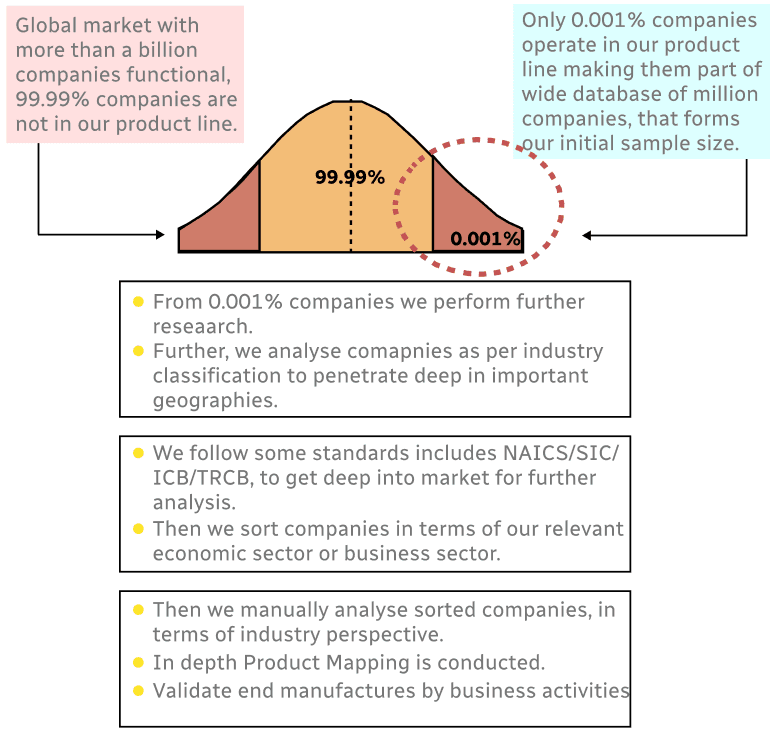
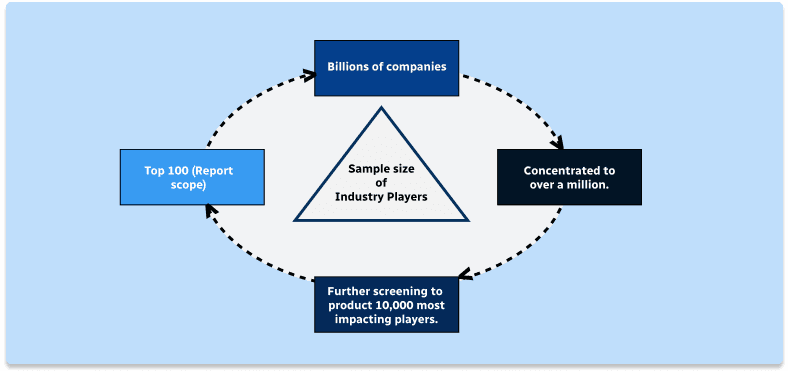
Step 1 - Identification of Relevant Samples Size from Population Database
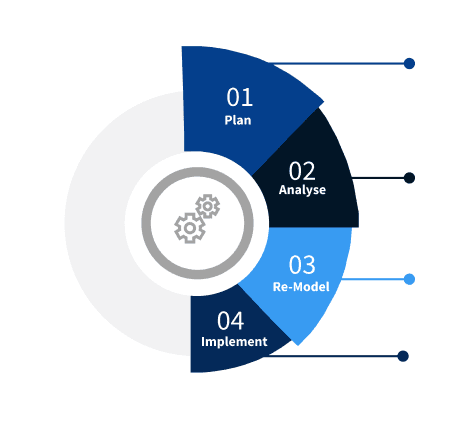
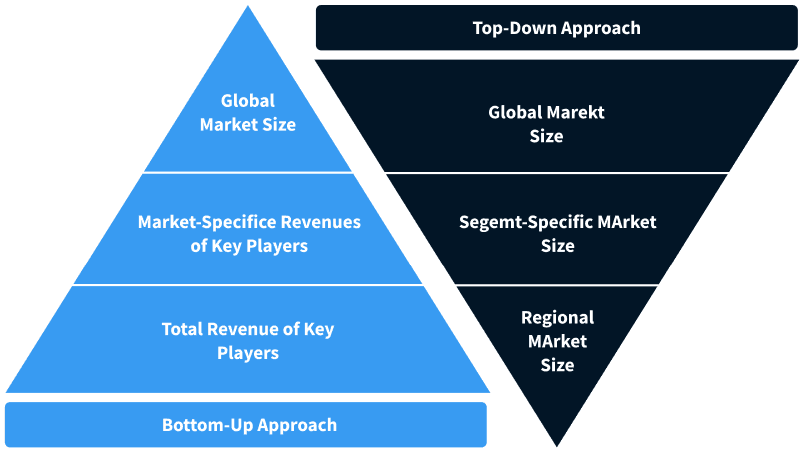
Step 2 - Approaches for Defining Global Market Size (Value, Volume* & Price*)
Note*: In applicable scenarios
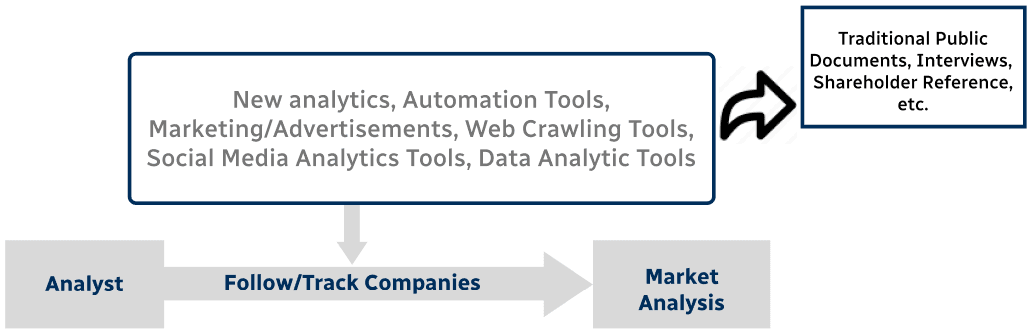
Step 3 - Data Sources
Primary Research
- Web Analytics
- Survey Reports
- Research Institute
- Latest Research Reports
- Opinion Leaders
Secondary Research
- Annual Reports
- White Paper
- Latest Press Release
- Industry Association
- Paid Database
- Investor Presentations
Step 4 - Data Triangulation
Involves using different sources of information in order to increase the validity of a study
These sources are likely to be stakeholders in a program - participants, other researchers, program staff, other community members, and so on.
Then we put all data in single framework & apply various statistical tools to find out the dynamic on the market.
During the analysis stage, feedback from the stakeholder groups would be compared to determine areas of agreement as well as areas of divergence