

Key Insights
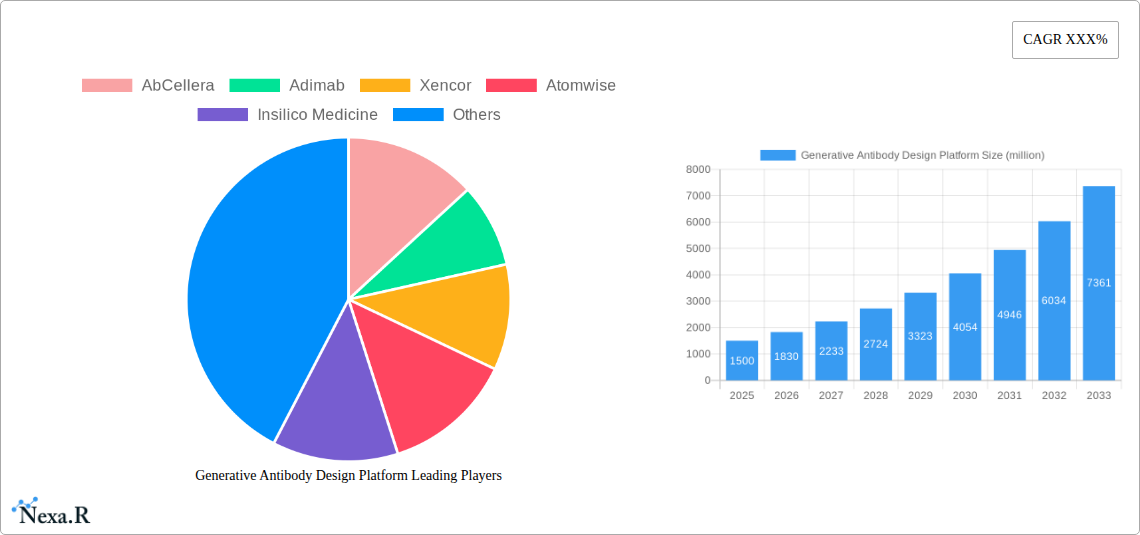
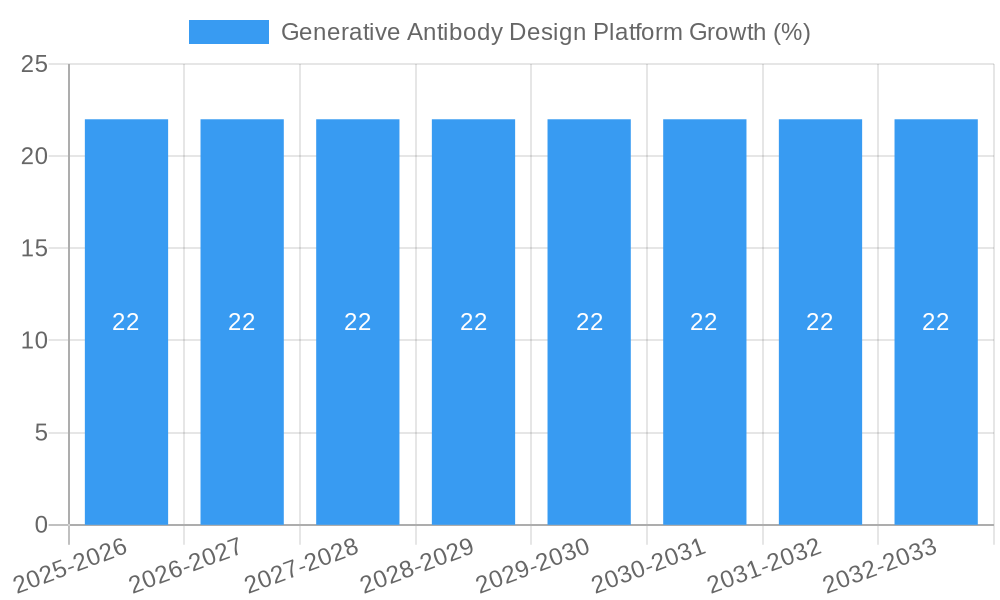
The Generative Antibody Design Platform market is poised for significant expansion, driven by its revolutionary impact on drug discovery and development. With an estimated market size of USD 1,500 million in 2025, the sector is projected to witness a robust Compound Annual Growth Rate (CAGR) of 22%, reaching approximately USD 4,800 million by 2033. This accelerated growth is fueled by the increasing demand for novel therapeutics to address unmet medical needs across various diseases, including cancer, autoimmune disorders, and infectious diseases. The platform's ability to accelerate the design and discovery of highly specific and potent antibodies, while reducing development timelines and costs, positions it as a critical tool for pharmaceutical and biotechnology companies. Advances in artificial intelligence (AI) and machine learning (ML) are central to this growth, enabling the predictive design of antibodies with desired therapeutic properties, thereby overcoming traditional limitations in antibody engineering.
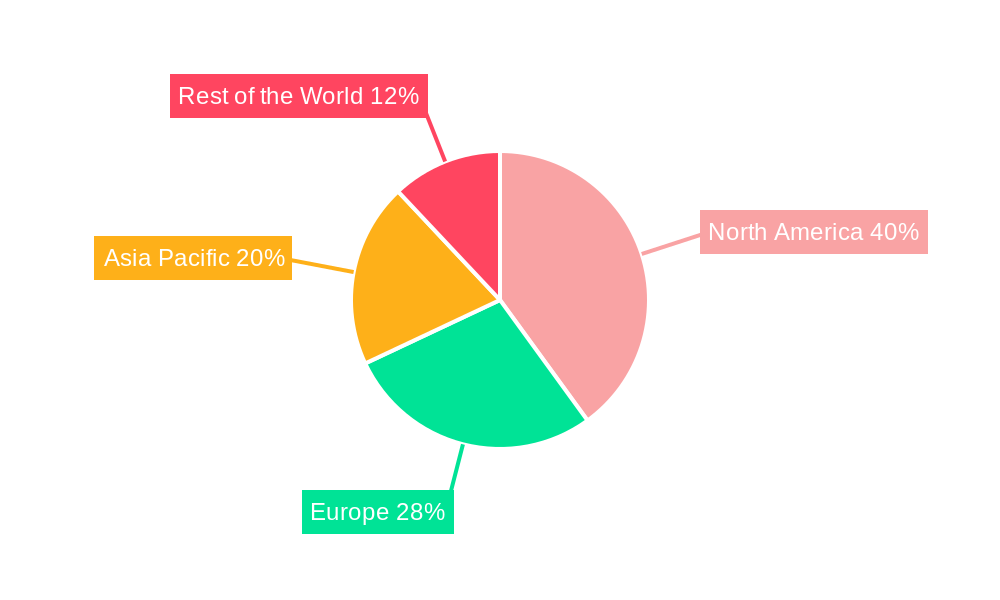
The market's segmentation reveals a dynamic landscape. The Application segment is dominated by Hospitals, reflecting the increasing integration of advanced antibody therapies in clinical practice, followed by Research Institutes leveraging these platforms for fundamental scientific inquiry. The Type segment showcases a balanced adoption between Cloud-Based and On-Premises solutions, with cloud-based platforms gaining traction due to their scalability, accessibility, and cost-effectiveness, especially for smaller biotech firms. Key players such as AbCellera, Adimab, Xencor, and Insilico Medicine are at the forefront, investing heavily in R&D to enhance their AI algorithms and expand their therapeutic pipelines. However, the market faces certain restraints, including the high initial investment in AI infrastructure, regulatory hurdles for novel antibody designs, and the need for specialized bioinformatics expertise. Geographically, North America, particularly the United States, is expected to lead the market, owing to strong R&D investments and a well-established biopharmaceutical ecosystem, followed by Europe and the Asia Pacific region, which is experiencing rapid growth.
Generative Antibody Design Platform Market Dynamics & Structure
The generative antibody design platform market is characterized by a highly dynamic and rapidly evolving landscape, driven by significant technological advancements and increasing demand for novel therapeutics. Market concentration is moderately high, with a few key players like AbCellera, Adimab, and Xencor holding substantial influence through their proprietary platforms and strategic partnerships. Technological innovation is the primary driver, fueled by breakthroughs in artificial intelligence (AI), machine learning (ML), and computational biology, enabling faster and more precise antibody discovery. Regulatory frameworks are maturing, with agencies increasingly adapting to novel therapeutic modalities, though navigating these pathways remains a critical consideration. Competitive product substitutes, primarily traditional antibody discovery methods and other biologics platforms, are gradually being outpaced by the efficiency and specificity offered by generative AI. End-user demographics are diverse, encompassing pharmaceutical companies, biotechnology firms, contract research organizations (CROs), and academic research institutions, all seeking to accelerate their drug development pipelines. Mergers and acquisitions (M&A) are a significant trend, as larger pharmaceutical companies acquire or partner with innovative generative antibody design platform providers to gain a competitive edge.
- Market Concentration: Moderate to high, with key players investing heavily in R&D.
- Technological Innovation Drivers: AI/ML integration, deep learning algorithms, computational chemistry.
- Regulatory Frameworks: Evolving approval pathways for AI-generated biologics.
- Competitive Product Substitutes: Traditional antibody discovery, other AI-driven drug discovery platforms.
- End-User Demographics: Pharma, biotech, CROs, academic research.
- M&A Trends: Strategic acquisitions and partnerships to secure AI capabilities.
Generative Antibody Design Platform Growth Trends & Insights
The generative antibody design platform market is poised for exceptional growth, projected to expand significantly over the forecast period of 2025–2033. This expansion is underpinned by a confluence of factors, including the increasing prevalence of complex diseases, the growing demand for targeted therapies, and the inherent limitations of conventional antibody discovery methods. The market size evolution is expected to witness a compound annual growth rate (CAGR) of approximately 35%, reaching an estimated valuation of $3,500 million units by 2033. Adoption rates are accelerating across the pharmaceutical and biotechnology sectors as companies recognize the tangible benefits of these platforms, such as reduced timelines, lower discovery costs, and the ability to design antibodies with enhanced efficacy and reduced immunogenicity. Technological disruptions are at the forefront of this growth, with continuous advancements in AI algorithms, data analytics, and high-throughput screening capabilities pushing the boundaries of what is possible in antibody engineering. Consumer behavior shifts are also playing a crucial role, with a growing preference for personalized medicine and precision therapeutics, which generative antibody design platforms are uniquely positioned to deliver. The ability to rapidly generate and optimize antibody candidates for specific therapeutic targets is revolutionizing drug development, moving from serendipitous discovery to rational design.
The increasing investment in R&D by leading companies like AbCellera, Adimab, and Xencor, alongside emerging players such as Insilico Medicine and Generate Biomedicines, is a testament to the market's potential. These investments are channeled into developing more sophisticated AI models, expanding computational power, and integrating novel biological data streams to enhance predictive accuracy and design capabilities. The platform types, broadly categorized as Cloud-Based and On-Premises, are both experiencing growth, with cloud-based solutions offering scalability and accessibility, while on-premises solutions cater to organizations with stringent data security requirements. The application segments, including Hospitals, Research Institutes, and others (encompassing pharmaceutical and biotechnology companies), are all contributing to the market's upward trajectory. Research institutes are leveraging these platforms for foundational antibody research and early-stage drug discovery, while hospitals are becoming stakeholders in the development of novel antibody-based treatments. The broader "Others" segment, primarily pharmaceutical and biotechnology companies, represents the largest market share due to their direct involvement in therapeutic development and commercialization. The seamless integration of these platforms into existing drug discovery workflows is a key factor driving adoption.
The impact of generative AI on reducing the attrition rates in early-stage drug development is also a significant growth driver. By predicting potential liabilities and optimizing antibody characteristics upfront, these platforms minimize the risk of late-stage failures, saving substantial time and resources. Furthermore, the burgeoning field of biologics, especially antibody-drug conjugates (ADCs) and bispecific antibodies, is directly benefiting from the precision offered by generative design. The ability to engineer antibodies with highly specific binding affinities and tailored effector functions opens up new therapeutic avenues for previously intractable diseases. The market penetration of generative antibody design platforms, while still in its nascent stages compared to traditional methods, is rapidly increasing, indicating a paradigm shift in how antibodies are discovered and developed. This transformation is not just about speed; it's about unlocking new therapeutic possibilities and addressing unmet medical needs more effectively than ever before.
Dominant Regions, Countries, or Segments in Generative Antibody Design Platform
North America currently stands as the dominant region in the generative antibody design platform market, driven by a confluence of robust R&D infrastructure, significant venture capital investment in biotechnology and AI, and the presence of leading pharmaceutical and biotech companies. The United States, in particular, boasts a vibrant ecosystem of academic institutions and private enterprises at the forefront of AI-driven drug discovery. Economic policies that encourage innovation and intellectual property protection further bolster this leadership. The country's advanced healthcare system and high expenditure on drug development create a fertile ground for the adoption of cutting-edge technologies like generative antibody design. Furthermore, the presence of key players like AbCellera, Adimab, and Xencor, with their established research facilities and collaborations, solidifies North America's leading position. The market share within this region is estimated to be around 45% of the global market.
The Application segment of Research Institutes is a significant growth driver within North America and globally. These institutions are instrumental in pioneering new antibody modalities and validating novel AI-driven discovery approaches. Their research often leads to groundbreaking discoveries that are subsequently licensed or spun out into commercial ventures. For example, collaborations between universities and biotech firms, utilizing generative design platforms, have led to accelerated development of preclinical candidates.
Within the Type segment, Cloud-Based solutions are experiencing particularly rapid growth, especially in North America, due to their inherent scalability, cost-effectiveness, and accessibility for a wide range of research entities, including smaller biotech startups and academic labs. The ability to access powerful computational resources and vast datasets without significant upfront infrastructure investment is a major advantage. Major cloud providers are also actively partnering with AI drug discovery companies, further enhancing the capabilities and reach of these platforms.
Looking at specific countries, the United States is the undisputed leader due to its extensive biopharmaceutical industry, pioneering AI research, and a strong regulatory environment that supports innovation. Its market share within the global landscape is substantial, estimated at over 40%. Other key countries contributing to regional dominance include Canada, with its growing biotech sector and supportive government initiatives.
The growth potential in North America remains exceptionally high. Continued investment in AI research, coupled with the ongoing pursuit of novel therapeutics for complex diseases, ensures that this region will maintain its leading edge. The increasing number of successful drug candidates emerging from generative AI platforms is further validating the technology and encouraging broader adoption.
Generative Antibody Design Platform Product Landscape
Generative antibody design platforms are revolutionizing the creation of novel antibody therapeutics with unprecedented speed and precision. These platforms leverage advanced AI algorithms and vast biological datasets to design antibody sequences with tailored properties, including enhanced binding affinity, specificity, reduced immunogenicity, and improved pharmacokinetic profiles. Innovations include the development of de novo antibody design capabilities, enabling the generation of entirely new antibody scaffolds, as well as sophisticated sequence optimization tools. Applications span a wide spectrum, from developing biologics for oncology and autoimmune diseases to novel therapeutics for infectious diseases and rare genetic disorders. Unique selling propositions include significantly reduced development timelines, lower discovery costs, and the ability to overcome limitations of traditional antibody discovery methods. Technological advancements are focused on improving predictive accuracy, expanding the scope of designable antibody formats, and integrating real-time experimental feedback loops into the design process.
Key Drivers, Barriers & Challenges in Generative Antibody Design Platform
Key Drivers: The primary forces propelling the generative antibody design platform market are the relentless pursuit of novel and more effective antibody therapeutics, driven by the increasing prevalence of chronic and complex diseases. Technological advancements in artificial intelligence (AI), machine learning (ML), and big data analytics are fundamental enablers, allowing for faster, more accurate, and cost-efficient antibody discovery. Strategic investments by pharmaceutical giants and venture capital firms are fueling innovation and market expansion. The growing demand for personalized medicine and targeted therapies aligns perfectly with the capabilities of generative design platforms.
Barriers & Challenges: Despite the immense potential, the market faces several challenges. Regulatory hurdles surrounding AI-generated therapeutics require evolving frameworks and rigorous validation processes. High upfront investment in AI infrastructure and specialized talent can be a barrier for smaller organizations. Ensuring data quality and standardization for AI model training is critical. The interpretability of AI models (the "black box" problem) can sometimes pose challenges in understanding design rationale and regulatory submission. Competitive pressures from established antibody discovery methods and other AI-driven platforms necessitate continuous innovation. Supply chain issues for specialized reagents and computational resources can also impact development timelines.
Emerging Opportunities in Generative Antibody Design Platform
Emerging opportunities in the generative antibody design platform sector are abundant and diverse. There is significant untapped potential in the development of antibodies for neglected tropical diseases and rare genetic disorders, where traditional discovery methods have yielded limited success. The growing interest in bispecific and multispecific antibodies, designed to engage multiple targets simultaneously, presents a prime area for generative AI to excel in creating complex molecular architectures. Furthermore, the integration of generative antibody design with other emerging technologies, such as synthetic biology and advanced biomanufacturing, promises to streamline the entire drug development pipeline from concept to clinic. The expansion of cloud-based platforms and accessible AI tools to academic institutions and smaller biotech firms will democratize antibody discovery, fostering a new wave of innovation.
Growth Accelerators in the Generative Antibody Design Platform Industry
Several catalysts are accelerating the long-term growth of the generative antibody design platform industry. Technological breakthroughs in AI, particularly in areas like natural language processing for understanding biological literature and reinforcement learning for optimizing antibody properties, are continuously enhancing platform capabilities. Strategic partnerships between platform providers, pharmaceutical companies, and academic research centers are crucial for accelerating R&D and clinical translation. Market expansion strategies, including geographical outreach into emerging biopharmaceutical hubs and the development of specialized platforms for niche therapeutic areas, are also driving growth. The increasing validation of AI-discovered antibodies in clinical trials will further boost confidence and investment in the sector.
Key Players Shaping the Generative Antibody Design Platform Market
- AbCellera
- Adimab
- Xencor
- Atomwise
- Insilico Medicine
- Generate Biomedicines
- Zymeworks
- Adaptive Biotechnologies
- Antiverse
Notable Milestones in Generative Antibody Design Platform Sector
- 2020: AbCellera's antibody discovery platform contributes to the rapid identification of an antibody treatment for COVID-19.
- 2021: Generate Biomedicines announces a major collaboration with a leading pharmaceutical company to leverage its AI-powered antibody generation platform for novel therapeutics.
- 2022: Insilico Medicine showcases promising preclinical data for AI-discovered antibodies targeting various disease indications.
- 2023: Adimab secures significant funding to expand its proprietary antibody discovery and engineering capabilities.
- 2024: Xencor announces progress in its clinical pipeline of antibodies designed using its engineered Fc domain technology.
- 2024: Atomwise expands its AI platform to encompass antibody design and optimization, complementing its small molecule discovery expertise.
- 2025 (Projected): Significant advancements in the regulatory approval pathways for AI-designed biologics are anticipated.
- 2025 (Projected): Increased adoption of fully automated, AI-driven antibody discovery workflows by major pharmaceutical companies.
In-Depth Generative Antibody Design Platform Market Outlook
The generative antibody design platform market is on an upward trajectory, driven by the transformative power of AI and the persistent demand for innovative antibody-based therapeutics. Growth accelerators include ongoing advancements in AI/ML algorithms, the strategic integration of diverse biological data, and increasing collaborations across the biopharmaceutical ecosystem. The future market potential is immense, fueled by the promise of faster, more efficient, and more precise drug discovery, ultimately leading to improved patient outcomes. Strategic opportunities lie in the development of specialized platforms for complex modalities like bispecific antibodies, expanding into underserved therapeutic areas, and fostering greater accessibility of these technologies to a wider research community. The continuous validation of AI-discovered drugs in clinical trials will further solidify the market's robust growth trajectory.
Generative Antibody Design Platform Segmentation
-
1. Application
- 1.1. Hospital
- 1.2. Research Institute
- 1.3. Others
-
2. Type
- 2.1. Cloud-Based
- 2.2. On-Premises
Generative Antibody Design Platform Segmentation By Geography
-
1. North America
- 1.1. United States
- 1.2. Canada
- 1.3. Mexico
-
2. South America
- 2.1. Brazil
- 2.2. Argentina
- 2.3. Rest of South America
-
3. Europe
- 3.1. United Kingdom
- 3.2. Germany
- 3.3. France
- 3.4. Italy
- 3.5. Spain
- 3.6. Russia
- 3.7. Benelux
- 3.8. Nordics
- 3.9. Rest of Europe
-
4. Middle East & Africa
- 4.1. Turkey
- 4.2. Israel
- 4.3. GCC
- 4.4. North Africa
- 4.5. South Africa
- 4.6. Rest of Middle East & Africa
-
5. Asia Pacific
- 5.1. China
- 5.2. India
- 5.3. Japan
- 5.4. South Korea
- 5.5. ASEAN
- 5.6. Oceania
- 5.7. Rest of Asia Pacific
Generative Antibody Design Platform REPORT HIGHLIGHTS
| Aspects | Details |
|---|---|
| Study Period | 2019-2033 |
| Base Year | 2024 |
| Estimated Year | 2025 |
| Forecast Period | 2025-2033 |
| Historical Period | 2019-2024 |
| Growth Rate | CAGR of XXX% from 2019-2033 |
| Segmentation |
|
Table of Contents
- 1. Introduction
- 1.1. Research Scope
- 1.2. Market Segmentation
- 1.3. Research Methodology
- 1.4. Definitions and Assumptions
- 2. Executive Summary
- 2.1. Introduction
- 3. Market Dynamics
- 3.1. Introduction
- 3.2. Market Drivers
- 3.3. Market Restrains
- 3.4. Market Trends
- 4. Market Factor Analysis
- 4.1. Porters Five Forces
- 4.2. Supply/Value Chain
- 4.3. PESTEL analysis
- 4.4. Market Entropy
- 4.5. Patent/Trademark Analysis
- 5. Global Generative Antibody Design Platform Analysis, Insights and Forecast, 2019-2031
- 5.1. Market Analysis, Insights and Forecast - by Application
- 5.1.1. Hospital
- 5.1.2. Research Institute
- 5.1.3. Others
- 5.2. Market Analysis, Insights and Forecast - by Type
- 5.2.1. Cloud-Based
- 5.2.2. On-Premises
- 5.3. Market Analysis, Insights and Forecast - by Region
- 5.3.1. North America
- 5.3.2. South America
- 5.3.3. Europe
- 5.3.4. Middle East & Africa
- 5.3.5. Asia Pacific
- 5.1. Market Analysis, Insights and Forecast - by Application
- 6. North America Generative Antibody Design Platform Analysis, Insights and Forecast, 2019-2031
- 6.1. Market Analysis, Insights and Forecast - by Application
- 6.1.1. Hospital
- 6.1.2. Research Institute
- 6.1.3. Others
- 6.2. Market Analysis, Insights and Forecast - by Type
- 6.2.1. Cloud-Based
- 6.2.2. On-Premises
- 6.1. Market Analysis, Insights and Forecast - by Application
- 7. South America Generative Antibody Design Platform Analysis, Insights and Forecast, 2019-2031
- 7.1. Market Analysis, Insights and Forecast - by Application
- 7.1.1. Hospital
- 7.1.2. Research Institute
- 7.1.3. Others
- 7.2. Market Analysis, Insights and Forecast - by Type
- 7.2.1. Cloud-Based
- 7.2.2. On-Premises
- 7.1. Market Analysis, Insights and Forecast - by Application
- 8. Europe Generative Antibody Design Platform Analysis, Insights and Forecast, 2019-2031
- 8.1. Market Analysis, Insights and Forecast - by Application
- 8.1.1. Hospital
- 8.1.2. Research Institute
- 8.1.3. Others
- 8.2. Market Analysis, Insights and Forecast - by Type
- 8.2.1. Cloud-Based
- 8.2.2. On-Premises
- 8.1. Market Analysis, Insights and Forecast - by Application
- 9. Middle East & Africa Generative Antibody Design Platform Analysis, Insights and Forecast, 2019-2031
- 9.1. Market Analysis, Insights and Forecast - by Application
- 9.1.1. Hospital
- 9.1.2. Research Institute
- 9.1.3. Others
- 9.2. Market Analysis, Insights and Forecast - by Type
- 9.2.1. Cloud-Based
- 9.2.2. On-Premises
- 9.1. Market Analysis, Insights and Forecast - by Application
- 10. Asia Pacific Generative Antibody Design Platform Analysis, Insights and Forecast, 2019-2031
- 10.1. Market Analysis, Insights and Forecast - by Application
- 10.1.1. Hospital
- 10.1.2. Research Institute
- 10.1.3. Others
- 10.2. Market Analysis, Insights and Forecast - by Type
- 10.2.1. Cloud-Based
- 10.2.2. On-Premises
- 10.1. Market Analysis, Insights and Forecast - by Application
- 11. Competitive Analysis
- 11.1. Global Market Share Analysis 2024
- 11.2. Company Profiles
- 11.2.1 AbCellera
- 11.2.1.1. Overview
- 11.2.1.2. Products
- 11.2.1.3. SWOT Analysis
- 11.2.1.4. Recent Developments
- 11.2.1.5. Financials (Based on Availability)
- 11.2.2 Adimab
- 11.2.2.1. Overview
- 11.2.2.2. Products
- 11.2.2.3. SWOT Analysis
- 11.2.2.4. Recent Developments
- 11.2.2.5. Financials (Based on Availability)
- 11.2.3 Xencor
- 11.2.3.1. Overview
- 11.2.3.2. Products
- 11.2.3.3. SWOT Analysis
- 11.2.3.4. Recent Developments
- 11.2.3.5. Financials (Based on Availability)
- 11.2.4 Atomwise
- 11.2.4.1. Overview
- 11.2.4.2. Products
- 11.2.4.3. SWOT Analysis
- 11.2.4.4. Recent Developments
- 11.2.4.5. Financials (Based on Availability)
- 11.2.5 Insilico Medicine
- 11.2.5.1. Overview
- 11.2.5.2. Products
- 11.2.5.3. SWOT Analysis
- 11.2.5.4. Recent Developments
- 11.2.5.5. Financials (Based on Availability)
- 11.2.6 Generate Biomedicines
- 11.2.6.1. Overview
- 11.2.6.2. Products
- 11.2.6.3. SWOT Analysis
- 11.2.6.4. Recent Developments
- 11.2.6.5. Financials (Based on Availability)
- 11.2.7 Zymeworks
- 11.2.7.1. Overview
- 11.2.7.2. Products
- 11.2.7.3. SWOT Analysis
- 11.2.7.4. Recent Developments
- 11.2.7.5. Financials (Based on Availability)
- 11.2.8 Adaptive Biotechnologies
- 11.2.8.1. Overview
- 11.2.8.2. Products
- 11.2.8.3. SWOT Analysis
- 11.2.8.4. Recent Developments
- 11.2.8.5. Financials (Based on Availability)
- 11.2.9 Antiverse
- 11.2.9.1. Overview
- 11.2.9.2. Products
- 11.2.9.3. SWOT Analysis
- 11.2.9.4. Recent Developments
- 11.2.9.5. Financials (Based on Availability)
- 11.2.1 AbCellera
List of Figures
- Figure 1: Global Generative Antibody Design Platform Revenue Breakdown (million, %) by Region 2024 & 2032
- Figure 2: North America Generative Antibody Design Platform Revenue (million), by Application 2024 & 2032
- Figure 3: North America Generative Antibody Design Platform Revenue Share (%), by Application 2024 & 2032
- Figure 4: North America Generative Antibody Design Platform Revenue (million), by Type 2024 & 2032
- Figure 5: North America Generative Antibody Design Platform Revenue Share (%), by Type 2024 & 2032
- Figure 6: North America Generative Antibody Design Platform Revenue (million), by Country 2024 & 2032
- Figure 7: North America Generative Antibody Design Platform Revenue Share (%), by Country 2024 & 2032
- Figure 8: South America Generative Antibody Design Platform Revenue (million), by Application 2024 & 2032
- Figure 9: South America Generative Antibody Design Platform Revenue Share (%), by Application 2024 & 2032
- Figure 10: South America Generative Antibody Design Platform Revenue (million), by Type 2024 & 2032
- Figure 11: South America Generative Antibody Design Platform Revenue Share (%), by Type 2024 & 2032
- Figure 12: South America Generative Antibody Design Platform Revenue (million), by Country 2024 & 2032
- Figure 13: South America Generative Antibody Design Platform Revenue Share (%), by Country 2024 & 2032
- Figure 14: Europe Generative Antibody Design Platform Revenue (million), by Application 2024 & 2032
- Figure 15: Europe Generative Antibody Design Platform Revenue Share (%), by Application 2024 & 2032
- Figure 16: Europe Generative Antibody Design Platform Revenue (million), by Type 2024 & 2032
- Figure 17: Europe Generative Antibody Design Platform Revenue Share (%), by Type 2024 & 2032
- Figure 18: Europe Generative Antibody Design Platform Revenue (million), by Country 2024 & 2032
- Figure 19: Europe Generative Antibody Design Platform Revenue Share (%), by Country 2024 & 2032
- Figure 20: Middle East & Africa Generative Antibody Design Platform Revenue (million), by Application 2024 & 2032
- Figure 21: Middle East & Africa Generative Antibody Design Platform Revenue Share (%), by Application 2024 & 2032
- Figure 22: Middle East & Africa Generative Antibody Design Platform Revenue (million), by Type 2024 & 2032
- Figure 23: Middle East & Africa Generative Antibody Design Platform Revenue Share (%), by Type 2024 & 2032
- Figure 24: Middle East & Africa Generative Antibody Design Platform Revenue (million), by Country 2024 & 2032
- Figure 25: Middle East & Africa Generative Antibody Design Platform Revenue Share (%), by Country 2024 & 2032
- Figure 26: Asia Pacific Generative Antibody Design Platform Revenue (million), by Application 2024 & 2032
- Figure 27: Asia Pacific Generative Antibody Design Platform Revenue Share (%), by Application 2024 & 2032
- Figure 28: Asia Pacific Generative Antibody Design Platform Revenue (million), by Type 2024 & 2032
- Figure 29: Asia Pacific Generative Antibody Design Platform Revenue Share (%), by Type 2024 & 2032
- Figure 30: Asia Pacific Generative Antibody Design Platform Revenue (million), by Country 2024 & 2032
- Figure 31: Asia Pacific Generative Antibody Design Platform Revenue Share (%), by Country 2024 & 2032
List of Tables
- Table 1: Global Generative Antibody Design Platform Revenue million Forecast, by Region 2019 & 2032
- Table 2: Global Generative Antibody Design Platform Revenue million Forecast, by Application 2019 & 2032
- Table 3: Global Generative Antibody Design Platform Revenue million Forecast, by Type 2019 & 2032
- Table 4: Global Generative Antibody Design Platform Revenue million Forecast, by Region 2019 & 2032
- Table 5: Global Generative Antibody Design Platform Revenue million Forecast, by Application 2019 & 2032
- Table 6: Global Generative Antibody Design Platform Revenue million Forecast, by Type 2019 & 2032
- Table 7: Global Generative Antibody Design Platform Revenue million Forecast, by Country 2019 & 2032
- Table 8: United States Generative Antibody Design Platform Revenue (million) Forecast, by Application 2019 & 2032
- Table 9: Canada Generative Antibody Design Platform Revenue (million) Forecast, by Application 2019 & 2032
- Table 10: Mexico Generative Antibody Design Platform Revenue (million) Forecast, by Application 2019 & 2032
- Table 11: Global Generative Antibody Design Platform Revenue million Forecast, by Application 2019 & 2032
- Table 12: Global Generative Antibody Design Platform Revenue million Forecast, by Type 2019 & 2032
- Table 13: Global Generative Antibody Design Platform Revenue million Forecast, by Country 2019 & 2032
- Table 14: Brazil Generative Antibody Design Platform Revenue (million) Forecast, by Application 2019 & 2032
- Table 15: Argentina Generative Antibody Design Platform Revenue (million) Forecast, by Application 2019 & 2032
- Table 16: Rest of South America Generative Antibody Design Platform Revenue (million) Forecast, by Application 2019 & 2032
- Table 17: Global Generative Antibody Design Platform Revenue million Forecast, by Application 2019 & 2032
- Table 18: Global Generative Antibody Design Platform Revenue million Forecast, by Type 2019 & 2032
- Table 19: Global Generative Antibody Design Platform Revenue million Forecast, by Country 2019 & 2032
- Table 20: United Kingdom Generative Antibody Design Platform Revenue (million) Forecast, by Application 2019 & 2032
- Table 21: Germany Generative Antibody Design Platform Revenue (million) Forecast, by Application 2019 & 2032
- Table 22: France Generative Antibody Design Platform Revenue (million) Forecast, by Application 2019 & 2032
- Table 23: Italy Generative Antibody Design Platform Revenue (million) Forecast, by Application 2019 & 2032
- Table 24: Spain Generative Antibody Design Platform Revenue (million) Forecast, by Application 2019 & 2032
- Table 25: Russia Generative Antibody Design Platform Revenue (million) Forecast, by Application 2019 & 2032
- Table 26: Benelux Generative Antibody Design Platform Revenue (million) Forecast, by Application 2019 & 2032
- Table 27: Nordics Generative Antibody Design Platform Revenue (million) Forecast, by Application 2019 & 2032
- Table 28: Rest of Europe Generative Antibody Design Platform Revenue (million) Forecast, by Application 2019 & 2032
- Table 29: Global Generative Antibody Design Platform Revenue million Forecast, by Application 2019 & 2032
- Table 30: Global Generative Antibody Design Platform Revenue million Forecast, by Type 2019 & 2032
- Table 31: Global Generative Antibody Design Platform Revenue million Forecast, by Country 2019 & 2032
- Table 32: Turkey Generative Antibody Design Platform Revenue (million) Forecast, by Application 2019 & 2032
- Table 33: Israel Generative Antibody Design Platform Revenue (million) Forecast, by Application 2019 & 2032
- Table 34: GCC Generative Antibody Design Platform Revenue (million) Forecast, by Application 2019 & 2032
- Table 35: North Africa Generative Antibody Design Platform Revenue (million) Forecast, by Application 2019 & 2032
- Table 36: South Africa Generative Antibody Design Platform Revenue (million) Forecast, by Application 2019 & 2032
- Table 37: Rest of Middle East & Africa Generative Antibody Design Platform Revenue (million) Forecast, by Application 2019 & 2032
- Table 38: Global Generative Antibody Design Platform Revenue million Forecast, by Application 2019 & 2032
- Table 39: Global Generative Antibody Design Platform Revenue million Forecast, by Type 2019 & 2032
- Table 40: Global Generative Antibody Design Platform Revenue million Forecast, by Country 2019 & 2032
- Table 41: China Generative Antibody Design Platform Revenue (million) Forecast, by Application 2019 & 2032
- Table 42: India Generative Antibody Design Platform Revenue (million) Forecast, by Application 2019 & 2032
- Table 43: Japan Generative Antibody Design Platform Revenue (million) Forecast, by Application 2019 & 2032
- Table 44: South Korea Generative Antibody Design Platform Revenue (million) Forecast, by Application 2019 & 2032
- Table 45: ASEAN Generative Antibody Design Platform Revenue (million) Forecast, by Application 2019 & 2032
- Table 46: Oceania Generative Antibody Design Platform Revenue (million) Forecast, by Application 2019 & 2032
- Table 47: Rest of Asia Pacific Generative Antibody Design Platform Revenue (million) Forecast, by Application 2019 & 2032
Frequently Asked Questions
1. What is the projected Compound Annual Growth Rate (CAGR) of the Generative Antibody Design Platform?
The projected CAGR is approximately XXX%.
2. Which companies are prominent players in the Generative Antibody Design Platform?
Key companies in the market include AbCellera, Adimab, Xencor, Atomwise, Insilico Medicine, Generate Biomedicines, Zymeworks, Adaptive Biotechnologies, Antiverse.
3. What are the main segments of the Generative Antibody Design Platform?
The market segments include Application, Type.
4. Can you provide details about the market size?
The market size is estimated to be USD XXX million as of 2022.
5. What are some drivers contributing to market growth?
N/A
6. What are the notable trends driving market growth?
N/A
7. Are there any restraints impacting market growth?
N/A
8. Can you provide examples of recent developments in the market?
N/A
9. What pricing options are available for accessing the report?
Pricing options include single-user, multi-user, and enterprise licenses priced at USD 2900.00, USD 4350.00, and USD 5800.00 respectively.
10. Is the market size provided in terms of value or volume?
The market size is provided in terms of value, measured in million.
11. Are there any specific market keywords associated with the report?
Yes, the market keyword associated with the report is "Generative Antibody Design Platform," which aids in identifying and referencing the specific market segment covered.
12. How do I determine which pricing option suits my needs best?
The pricing options vary based on user requirements and access needs. Individual users may opt for single-user licenses, while businesses requiring broader access may choose multi-user or enterprise licenses for cost-effective access to the report.
13. Are there any additional resources or data provided in the Generative Antibody Design Platform report?
While the report offers comprehensive insights, it's advisable to review the specific contents or supplementary materials provided to ascertain if additional resources or data are available.
14. How can I stay updated on further developments or reports in the Generative Antibody Design Platform?
To stay informed about further developments, trends, and reports in the Generative Antibody Design Platform, consider subscribing to industry newsletters, following relevant companies and organizations, or regularly checking reputable industry news sources and publications.
Methodology
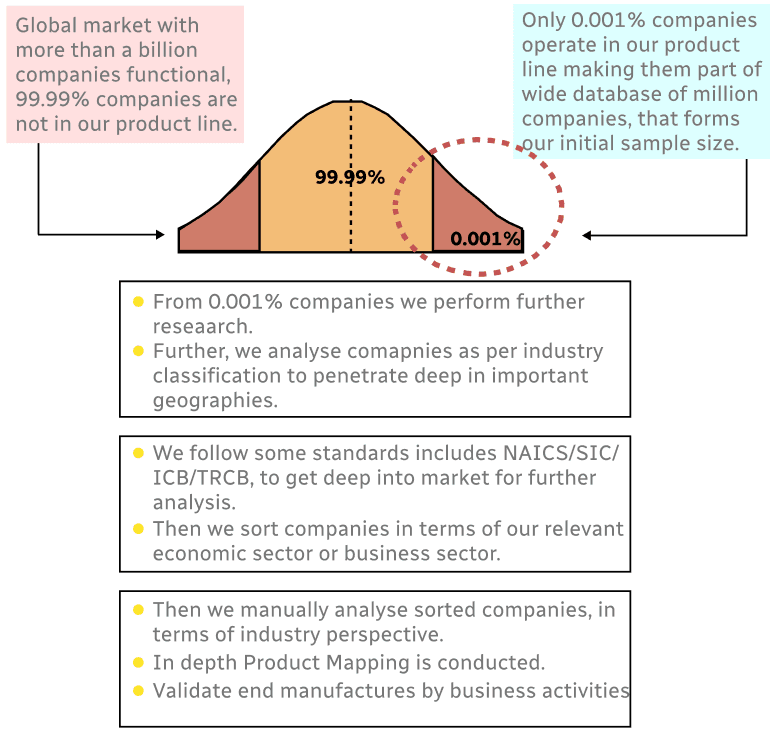
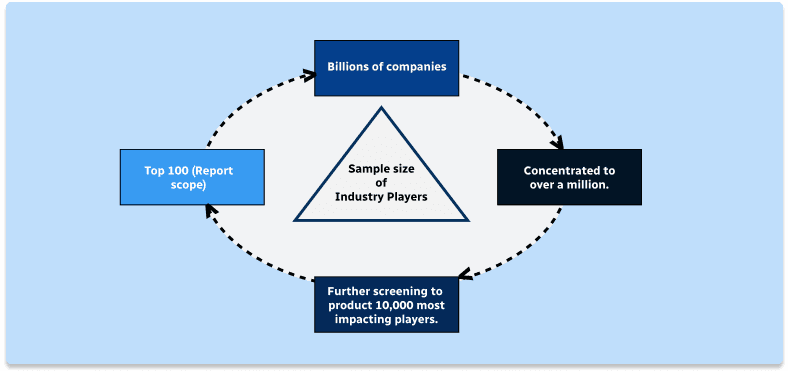
Step 1 - Identification of Relevant Samples Size from Population Database
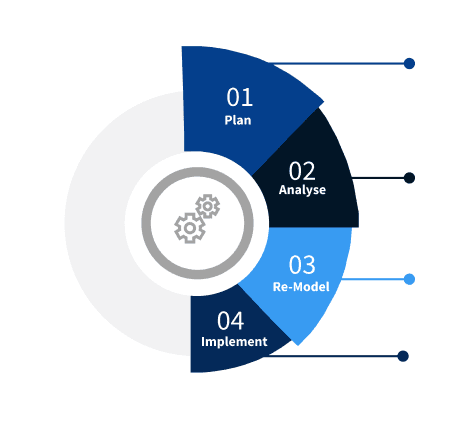
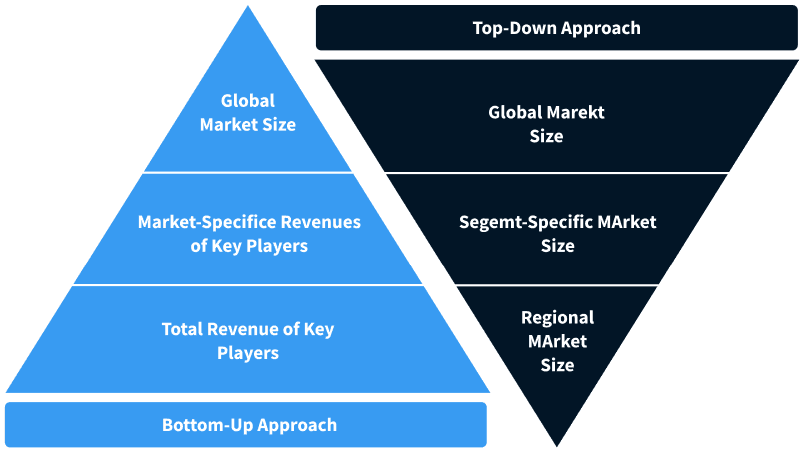
Step 2 - Approaches for Defining Global Market Size (Value, Volume* & Price*)
Note*: In applicable scenarios
Step 3 - Data Sources
Primary Research
- Web Analytics
- Survey Reports
- Research Institute
- Latest Research Reports
- Opinion Leaders
Secondary Research
- Annual Reports
- White Paper
- Latest Press Release
- Industry Association
- Paid Database
- Investor Presentations
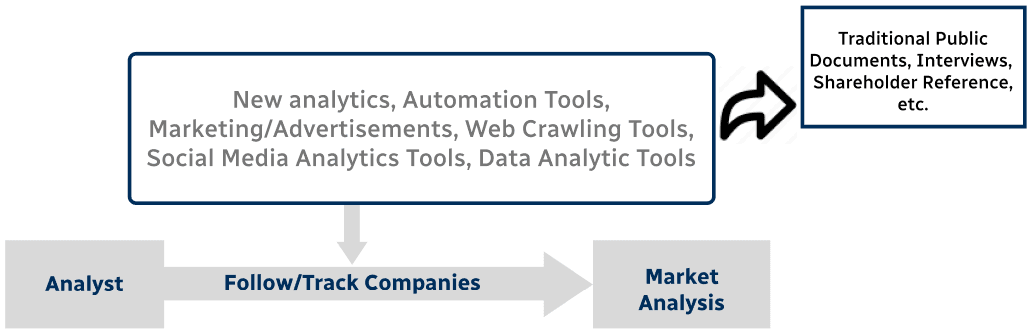
Step 4 - Data Triangulation
Involves using different sources of information in order to increase the validity of a study
These sources are likely to be stakeholders in a program - participants, other researchers, program staff, other community members, and so on.
Then we put all data in single framework & apply various statistical tools to find out the dynamic on the market.
During the analysis stage, feedback from the stakeholder groups would be compared to determine areas of agreement as well as areas of divergence