

Key Insights
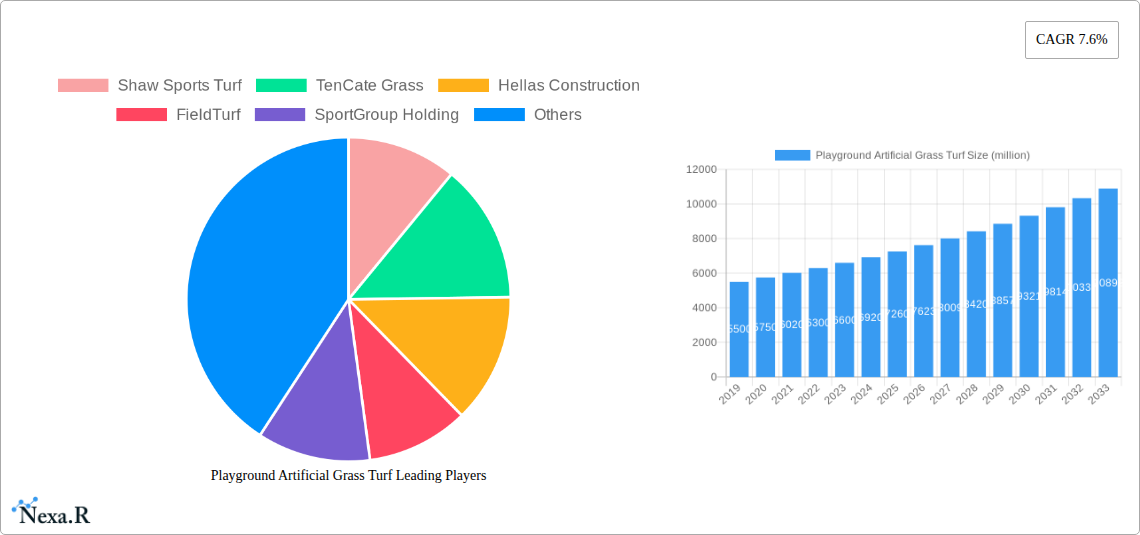
The global Playground Artificial Grass Turf market is poised for robust expansion, projected to reach a substantial market size of USD 8,589 million. This growth is fueled by a compelling Compound Annual Growth Rate (CAGR) of 7.6% throughout the forecast period of 2025-2033. The primary drivers behind this surge include the increasing demand for low-maintenance, safe, and durable recreational surfaces in schools, public parks, and sports facilities. Parents and facility managers are increasingly recognizing the benefits of artificial turf over natural grass, such as its all-weather usability, reduced need for watering and mowing, and consistent playability. The market is segmented by application, with School Playgrounds and Public Playgrounds anticipated to be the dominant segments due to significant investments in child safety and recreational infrastructure worldwide. The type segmentation reveals a strong preference for PP (Polypropylene) and PE (Polyethylene) artificial grass turfs, known for their softness, resilience, and cost-effectiveness, catering to the specific needs of playground environments.
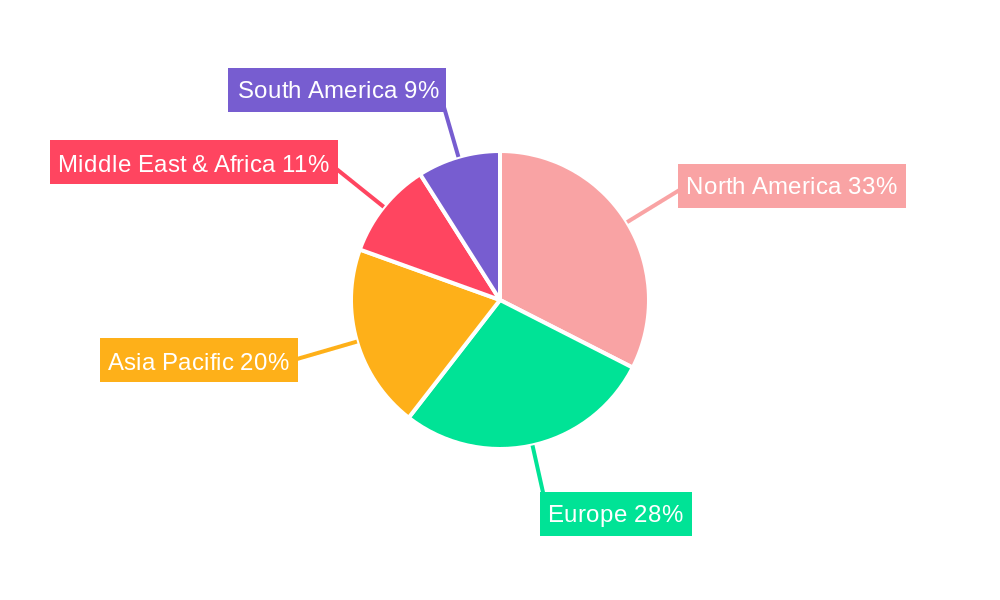
Further propelling the market forward are emerging trends such as the development of eco-friendly and sustainable artificial turf solutions, incorporating recycled materials and advanced drainage systems. Innovations in shock absorption technology are also enhancing playground safety, a key consideration for parents and safety organizations. Despite the positive outlook, certain restraints might influence market dynamics, including the initial installation cost, although this is increasingly offset by long-term savings. Intense competition among a wide array of established players like Shaw Sports Turf, TenCate Grass, FieldTurf, and SportGroup Holding, alongside emerging companies, indicates a dynamic and evolving landscape. Geographically, North America and Europe are expected to lead market share, driven by established infrastructure and high disposable incomes, while the Asia Pacific region presents significant growth opportunities due to rapid urbanization and increasing investments in public amenities.
Playground Artificial Grass Turf Market Dynamics & Structure
The global playground artificial grass turf market exhibits a moderately concentrated structure, with a few leading entities like Shaw Sports Turf, TenCate Grass, and FieldTurf holding significant sway. This concentration is driven by substantial R&D investments, economies of scale in manufacturing, and established distribution networks. Technological innovation is a primary driver, focusing on enhanced durability, improved shock absorption for safety, realistic aesthetics, and sustainable material sourcing. The development of advanced backing systems and wear-resistant fiber technologies, such as improved PP Artificial Grass Turf and PE Artificial Grass Turf variants, are key areas of innovation. Regulatory frameworks, particularly those related to playground safety standards and environmental impact assessments, significantly influence product development and market entry. For instance, EN 1177 standards for impact attenuation and REACH regulations in Europe guide material composition. Competitive product substitutes, including natural grass and rubberized surfaces, offer varying levels of cost, maintenance, and performance, necessitating continuous product improvement in artificial turf. End-user demographics, particularly the increasing demand from educational institutions and municipalities for low-maintenance, all-weather play surfaces, are shaping market needs. The parent market, encompassing the broader artificial turf industry (estimated at over $3.5 billion in 2025), provides a fertile ground for specialized playground turf. The child market, focusing specifically on playground applications, is projected to reach approximately $900 million in 2025, demonstrating substantial growth potential. Mergers and acquisitions (M&A) are moderately active, with companies like Sport Group Holding strategically acquiring smaller players to expand their product portfolios and geographical reach, aiming for a consolidated market share in specific regions. For example, the acquisition of ACT Global Sports by Sport Group Holding in 2022 bolstered their presence in North America.
- Market Concentration: Moderately concentrated with key players investing heavily in R&D.
- Technological Innovation: Focus on safety features (shock absorption), durability, aesthetics, and eco-friendly materials.
- Regulatory Frameworks: Safety standards (e.g., EN 1177) and environmental regulations are critical.
- Competitive Substitutes: Natural grass and rubber surfaces present ongoing competition.
- End-User Demographics: Growing demand from schools and public spaces for low-maintenance solutions.
- M&A Trends: Strategic acquisitions to enhance market presence and product offerings.
Playground Artificial Grass Turf Growth Trends & Insights
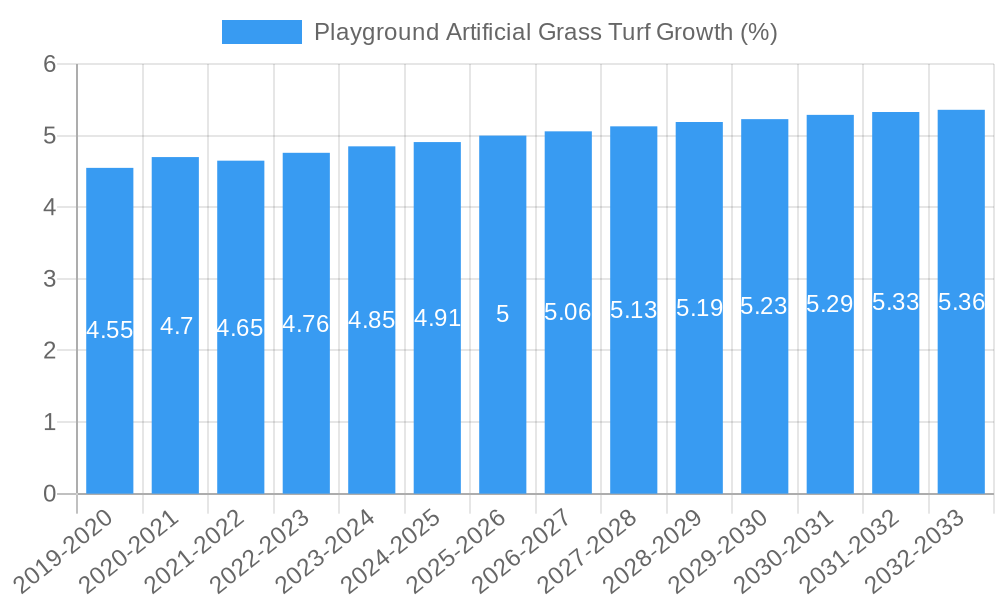
The playground artificial grass turf market is experiencing robust growth, projected to expand at a Compound Annual Growth Rate (CAGR) of approximately 7.5% from 2025 to 2033. This upward trajectory is fueled by an escalating global awareness of the benefits of durable, low-maintenance, and safe play environments for children. The market size, estimated at over $900 million in 2025, is anticipated to surpass $1.6 billion by 2033. Adoption rates are steadily increasing across public playgrounds and school facilities worldwide, driven by the persistent need to reduce maintenance costs associated with natural grass, such as mowing, watering, and pest control, which can exceed $5,000 per acre annually for some municipal facilities. Technological disruptions are continuously reshaping the landscape, with advancements in fiber technology, backing systems, and infill materials enhancing performance and safety. For instance, the introduction of advanced PE Artificial Grass Turf variants with superior UV resistance and softer textures has improved child comfort and durability. Innovations in shock-absorbent infill, moving beyond traditional rubber crumb to more sustainable options like sand or cork, are addressing environmental concerns and enhancing safety metrics, with critical fall height ratings (CFH) improving significantly. Consumer behavior is shifting towards seeking sustainable and eco-friendly solutions, prompting manufacturers to explore recycled materials and biodegradable infill options. The market penetration of artificial grass in new playground installations is on an incline, particularly in regions with challenging climates or water scarcity, where maintaining natural grass is economically unfeasible. The trend towards multi-functional play spaces, requiring resilient and consistent surfaces, further boosts demand. The parent market's overall growth also indirectly supports the playground segment, creating a favorable ecosystem for specialized turf solutions. The historical period (2019-2024) saw initial adoption and awareness growth, setting the stage for the accelerated expansion observed in the forecast period. The estimated year of 2025 marks a significant point where market acceptance and technological maturity have reached a level conducive to substantial growth.
- Market Size Evolution: Projected to grow from over $900 million in 2025 to over $1.6 billion by 2033.
- CAGR: Estimated at 7.5% for the forecast period (2025-2033).
- Adoption Rates: Increasing significantly in schools and public parks due to cost and maintenance benefits.
- Technological Disruptions: Advancements in fiber, backing, and infill materials enhance safety and performance.
- Consumer Behavior Shifts: Growing preference for sustainable, eco-friendly, and low-maintenance options.
- Market Penetration: Rising in new installations, especially in regions with climate or water challenges.
Dominant Regions, Countries, or Segments in Playground Artificial Grass Turf
North America, particularly the United States, currently holds a dominant position in the playground artificial grass turf market, accounting for an estimated 35% of the global market share in 2025, valued at over $315 million. This dominance is attributed to a confluence of factors including significant government spending on public infrastructure, a strong emphasis on child safety in educational and recreational facilities, and a mature market for artificial turf solutions. The high adoption rate of PE Artificial Grass Turf within this region is a key driver, owing to its durability and aesthetic appeal, making it a preferred choice for both School Playgrounds and Public Playgrounds. The strong presence of key players like Shaw Sports Turf, Hellas Construction, and FieldTurf further solidifies North America's leadership. Economic policies that favor infrastructure development and a proactive approach to playground safety standards, such as those set by ASTM International, create a conducive environment for market growth. Furthermore, the widespread awareness and acceptance of artificial turf as a viable and often superior alternative to natural grass for high-traffic play areas contribute significantly to its market penetration.
In terms of segments, the School Playground application is experiencing the most substantial growth, projected to command over 40% of the playground artificial grass turf market by 2027. This is driven by budget constraints in educational institutions that seek to minimize ongoing maintenance costs. The consistent, safe, and all-weather playability offered by artificial turf aligns perfectly with the educational calendar and the need for reliable outdoor learning and recreational spaces. The increasing focus on child development and the importance of active play in schools further bolsters this segment. PP Artificial Grass Turf, while offering a more economical option, is gradually being surpassed by PE variants in high-end applications due to the latter's superior resilience and softer feel, crucial for playground safety. The Stadium segment, while a significant player in the broader artificial turf market, represents a smaller, albeit growing, niche within the playground-specific context, primarily for multi-purpose community sports fields that also serve as play areas. The Asia-Pacific region, especially China and Southeast Asian countries, is emerging as a high-growth region, driven by rapid urbanization, increasing disposable incomes, and a growing awareness of playground safety and quality. Countries like Taishan and ForestGrass are key local players contributing to this regional expansion.
- Dominant Region: North America (USA) with an estimated 35% market share in 2025.
- Key Drivers (North America): Government spending, child safety emphasis, established turf market, ASTM standards.
- Dominant Application Segment: School Playground, projected to reach over 40% market share by 2027.
- Segment Drivers (School Playgrounds): Reduced maintenance costs, consistent playability, child development focus.
- Type Dominance: PE Artificial Grass Turf preferred for its durability and safety over PP variants in high-traffic areas.
- Emerging Region: Asia-Pacific showing rapid growth due to urbanization and increased spending.
Playground Artificial Grass Turf Product Landscape
The playground artificial grass turf product landscape is characterized by continuous innovation focused on enhancing safety, durability, and realism. Advanced PE Artificial Grass Turf variants now offer superior softness, reducing abrasions during falls, alongside excellent UV resistance to maintain vibrant color for extended periods. Innovations in backing systems, such as multi-layer stitch-bonding and permeable urethane coatings, ensure superior drainage and structural integrity, preventing premature wear and tear. The development of specialized infill materials, including antimicrobial and shock-absorbent options, further distinguishes products, addressing hygiene concerns and critical fall height requirements. Products like CoCreation Grass are focusing on eco-friendly materials and enhanced playability, while companies like ForeverLawn offer specialized turf systems designed for various playground applications, emphasizing performance metrics like tuft bind strength and wear resistance exceeding 50,000 cycles in accelerated testing.
Key Drivers, Barriers & Challenges in Playground Artificial Grass Turf
The playground artificial grass turf market is propelled by several key drivers. The escalating need for low-maintenance, durable, and all-weather play surfaces in schools and public spaces is paramount. Growing awareness of child safety standards and the demand for shock-absorbent surfaces, coupled with increasing government and private investments in recreational infrastructure, further fuel market expansion. Technological advancements in fiber extrusion and backing technologies contribute to improved product performance and aesthetics.
However, the market faces significant barriers and challenges. The initial cost of installation remains a considerable hurdle for some budget-conscious institutions compared to traditional natural grass. Concerns regarding the long-term environmental impact of certain infill materials, particularly recycled rubber, and the subsequent regulatory scrutiny are ongoing challenges. Supply chain disruptions and the fluctuating prices of raw materials, such as polyethylene and polypropylene, can impact manufacturing costs and product availability. Intense competition from established players and emerging manufacturers, alongside the availability of lower-cost substitutes, necessitates continuous innovation and competitive pricing strategies.
- Key Drivers:
- Demand for low-maintenance, all-weather play surfaces.
- Increasing focus on child safety and shock absorption.
- Investment in recreational infrastructure.
- Technological advancements in turf materials.
- Key Challenges & Restraints:
- High initial installation costs.
- Environmental concerns and regulatory scrutiny of infill materials.
- Supply chain volatility and raw material price fluctuations.
- Intense market competition and pricing pressures.
Emerging Opportunities in Playground Artificial Grass Turf
Emerging opportunities in the playground artificial grass turf industry lie in the development of highly sustainable and eco-friendly turf solutions. This includes the use of biodegradable infill materials, such as cork or coconut fiber, and exploring recycled content in the manufacturing of the turf itself. The growing demand for specialized turf for therapeutic playgrounds, designed to stimulate sensory development and provide safe, inclusive play experiences for children with special needs, presents a niche but high-potential market. Furthermore, the integration of smart technologies, such as embedded sensors for monitoring usage patterns or environmental conditions, could offer new avenues for product differentiation and value-added services. Tapping into the rapidly growing markets in developing economies, where the demand for modern recreational facilities is surging, also represents a significant expansion opportunity.
Growth Accelerators in the Playground Artificial Grass Turf Industry
Several catalysts are accelerating long-term growth in the playground artificial grass turf industry. Strategic partnerships between turf manufacturers and playground equipment providers can lead to integrated solutions, offering a one-stop shop for facility development. Continued investment in research and development to create more resilient, cooler-performing, and longer-lasting artificial grass fibers will drive product evolution and consumer adoption. Market expansion strategies targeting untapped geographical regions with favorable climates or limited access to well-maintained natural grass spaces are crucial. Moreover, the increasing emphasis on public health and child well-being, promoting outdoor activity, indirectly supports the demand for safe and accessible play environments facilitated by artificial turf.
Key Players Shaping the Playground Artificial Grass Turf Market
- Shaw Sports Turf
- TenCate Grass
- Hellas Construction
- FieldTurf
- SportGroup Holding
- ACT Global Sports
- Controlled Products
- Sprinturf
- CoCreation Grass
- Domo Sports Grass
- TurfStore
- Global Syn-Turf
- ForeverLawn
- Challenger Industries
- Mondo
- Polytan
- Taishan
- ForestGrass
- Limonta Sport
- Edel Grass
- Unisport
- Condor Grass
- Nurteks
- Victoria
Notable Milestones in Playground Artificial Grass Turf Sector
- 2019: Increased adoption of advanced PE Artificial Grass Turf formulations for enhanced softness and durability.
- 2020: Growing demand for antimicrobial infill solutions in response to public health concerns.
- 2021: Sport Group Holding acquires ACT Global Sports, expanding its North American presence.
- 2022: Development of more sustainable infill options, such as cork and coconut fiber, gaining traction.
- 2023: Enhanced shock absorption technologies integrated into turf systems to meet stringent safety standards.
- 2024: Increased focus on recycled materials in turf manufacturing and backing systems.
In-Depth Playground Artificial Grass Turf Market Outlook
The future outlook for the playground artificial grass turf market is highly promising, driven by sustained demand for safe, low-maintenance, and aesthetically pleasing play surfaces. Growth accelerators such as technological advancements in fiber science, the increasing focus on sustainability, and strategic market expansion into emerging economies will continue to propel the industry forward. The industry is poised for further innovation, with an emphasis on eco-friendly materials and smart playground integration. This forward momentum ensures continued market growth and significant opportunities for stakeholders.
Playground Artificial Grass Turf Segmentation
-
1. Application
- 1.1. School Playground
- 1.2. Public Playground
- 1.3. Stadium
-
2. Type
- 2.1. PP Artificial Grass Turf
- 2.2. PE Artificial Grass Turf
- 2.3. Nylon Artificial Grass Turf
Playground Artificial Grass Turf Segmentation By Geography
-
1. North America
- 1.1. United States
- 1.2. Canada
- 1.3. Mexico
-
2. South America
- 2.1. Brazil
- 2.2. Argentina
- 2.3. Rest of South America
-
3. Europe
- 3.1. United Kingdom
- 3.2. Germany
- 3.3. France
- 3.4. Italy
- 3.5. Spain
- 3.6. Russia
- 3.7. Benelux
- 3.8. Nordics
- 3.9. Rest of Europe
-
4. Middle East & Africa
- 4.1. Turkey
- 4.2. Israel
- 4.3. GCC
- 4.4. North Africa
- 4.5. South Africa
- 4.6. Rest of Middle East & Africa
-
5. Asia Pacific
- 5.1. China
- 5.2. India
- 5.3. Japan
- 5.4. South Korea
- 5.5. ASEAN
- 5.6. Oceania
- 5.7. Rest of Asia Pacific
Playground Artificial Grass Turf REPORT HIGHLIGHTS
| Aspects | Details |
|---|---|
| Study Period | 2019-2033 |
| Base Year | 2024 |
| Estimated Year | 2025 |
| Forecast Period | 2025-2033 |
| Historical Period | 2019-2024 |
| Growth Rate | CAGR of 7.6% from 2019-2033 |
| Segmentation |
|
Table of Contents
- 1. Introduction
- 1.1. Research Scope
- 1.2. Market Segmentation
- 1.3. Research Methodology
- 1.4. Definitions and Assumptions
- 2. Executive Summary
- 2.1. Introduction
- 3. Market Dynamics
- 3.1. Introduction
- 3.2. Market Drivers
- 3.3. Market Restrains
- 3.4. Market Trends
- 4. Market Factor Analysis
- 4.1. Porters Five Forces
- 4.2. Supply/Value Chain
- 4.3. PESTEL analysis
- 4.4. Market Entropy
- 4.5. Patent/Trademark Analysis
- 5. Global Playground Artificial Grass Turf Analysis, Insights and Forecast, 2019-2031
- 5.1. Market Analysis, Insights and Forecast - by Application
- 5.1.1. School Playground
- 5.1.2. Public Playground
- 5.1.3. Stadium
- 5.2. Market Analysis, Insights and Forecast - by Type
- 5.2.1. PP Artificial Grass Turf
- 5.2.2. PE Artificial Grass Turf
- 5.2.3. Nylon Artificial Grass Turf
- 5.3. Market Analysis, Insights and Forecast - by Region
- 5.3.1. North America
- 5.3.2. South America
- 5.3.3. Europe
- 5.3.4. Middle East & Africa
- 5.3.5. Asia Pacific
- 5.1. Market Analysis, Insights and Forecast - by Application
- 6. North America Playground Artificial Grass Turf Analysis, Insights and Forecast, 2019-2031
- 6.1. Market Analysis, Insights and Forecast - by Application
- 6.1.1. School Playground
- 6.1.2. Public Playground
- 6.1.3. Stadium
- 6.2. Market Analysis, Insights and Forecast - by Type
- 6.2.1. PP Artificial Grass Turf
- 6.2.2. PE Artificial Grass Turf
- 6.2.3. Nylon Artificial Grass Turf
- 6.1. Market Analysis, Insights and Forecast - by Application
- 7. South America Playground Artificial Grass Turf Analysis, Insights and Forecast, 2019-2031
- 7.1. Market Analysis, Insights and Forecast - by Application
- 7.1.1. School Playground
- 7.1.2. Public Playground
- 7.1.3. Stadium
- 7.2. Market Analysis, Insights and Forecast - by Type
- 7.2.1. PP Artificial Grass Turf
- 7.2.2. PE Artificial Grass Turf
- 7.2.3. Nylon Artificial Grass Turf
- 7.1. Market Analysis, Insights and Forecast - by Application
- 8. Europe Playground Artificial Grass Turf Analysis, Insights and Forecast, 2019-2031
- 8.1. Market Analysis, Insights and Forecast - by Application
- 8.1.1. School Playground
- 8.1.2. Public Playground
- 8.1.3. Stadium
- 8.2. Market Analysis, Insights and Forecast - by Type
- 8.2.1. PP Artificial Grass Turf
- 8.2.2. PE Artificial Grass Turf
- 8.2.3. Nylon Artificial Grass Turf
- 8.1. Market Analysis, Insights and Forecast - by Application
- 9. Middle East & Africa Playground Artificial Grass Turf Analysis, Insights and Forecast, 2019-2031
- 9.1. Market Analysis, Insights and Forecast - by Application
- 9.1.1. School Playground
- 9.1.2. Public Playground
- 9.1.3. Stadium
- 9.2. Market Analysis, Insights and Forecast - by Type
- 9.2.1. PP Artificial Grass Turf
- 9.2.2. PE Artificial Grass Turf
- 9.2.3. Nylon Artificial Grass Turf
- 9.1. Market Analysis, Insights and Forecast - by Application
- 10. Asia Pacific Playground Artificial Grass Turf Analysis, Insights and Forecast, 2019-2031
- 10.1. Market Analysis, Insights and Forecast - by Application
- 10.1.1. School Playground
- 10.1.2. Public Playground
- 10.1.3. Stadium
- 10.2. Market Analysis, Insights and Forecast - by Type
- 10.2.1. PP Artificial Grass Turf
- 10.2.2. PE Artificial Grass Turf
- 10.2.3. Nylon Artificial Grass Turf
- 10.1. Market Analysis, Insights and Forecast - by Application
- 11. Competitive Analysis
- 11.1. Global Market Share Analysis 2024
- 11.2. Company Profiles
- 11.2.1 Shaw Sports Turf
- 11.2.1.1. Overview
- 11.2.1.2. Products
- 11.2.1.3. SWOT Analysis
- 11.2.1.4. Recent Developments
- 11.2.1.5. Financials (Based on Availability)
- 11.2.2 TenCate Grass
- 11.2.2.1. Overview
- 11.2.2.2. Products
- 11.2.2.3. SWOT Analysis
- 11.2.2.4. Recent Developments
- 11.2.2.5. Financials (Based on Availability)
- 11.2.3 Hellas Construction
- 11.2.3.1. Overview
- 11.2.3.2. Products
- 11.2.3.3. SWOT Analysis
- 11.2.3.4. Recent Developments
- 11.2.3.5. Financials (Based on Availability)
- 11.2.4 FieldTurf
- 11.2.4.1. Overview
- 11.2.4.2. Products
- 11.2.4.3. SWOT Analysis
- 11.2.4.4. Recent Developments
- 11.2.4.5. Financials (Based on Availability)
- 11.2.5 SportGroup Holding
- 11.2.5.1. Overview
- 11.2.5.2. Products
- 11.2.5.3. SWOT Analysis
- 11.2.5.4. Recent Developments
- 11.2.5.5. Financials (Based on Availability)
- 11.2.6 ACT Global Sports
- 11.2.6.1. Overview
- 11.2.6.2. Products
- 11.2.6.3. SWOT Analysis
- 11.2.6.4. Recent Developments
- 11.2.6.5. Financials (Based on Availability)
- 11.2.7 Controlled Products
- 11.2.7.1. Overview
- 11.2.7.2. Products
- 11.2.7.3. SWOT Analysis
- 11.2.7.4. Recent Developments
- 11.2.7.5. Financials (Based on Availability)
- 11.2.8 Sprinturf
- 11.2.8.1. Overview
- 11.2.8.2. Products
- 11.2.8.3. SWOT Analysis
- 11.2.8.4. Recent Developments
- 11.2.8.5. Financials (Based on Availability)
- 11.2.9 CoCreation Grass
- 11.2.9.1. Overview
- 11.2.9.2. Products
- 11.2.9.3. SWOT Analysis
- 11.2.9.4. Recent Developments
- 11.2.9.5. Financials (Based on Availability)
- 11.2.10 Domo Sports Grass
- 11.2.10.1. Overview
- 11.2.10.2. Products
- 11.2.10.3. SWOT Analysis
- 11.2.10.4. Recent Developments
- 11.2.10.5. Financials (Based on Availability)
- 11.2.11 TurfStore
- 11.2.11.1. Overview
- 11.2.11.2. Products
- 11.2.11.3. SWOT Analysis
- 11.2.11.4. Recent Developments
- 11.2.11.5. Financials (Based on Availability)
- 11.2.12 Global Syn-Tur
- 11.2.12.1. Overview
- 11.2.12.2. Products
- 11.2.12.3. SWOT Analysis
- 11.2.12.4. Recent Developments
- 11.2.12.5. Financials (Based on Availability)
- 11.2.13 ForeverLawn
- 11.2.13.1. Overview
- 11.2.13.2. Products
- 11.2.13.3. SWOT Analysis
- 11.2.13.4. Recent Developments
- 11.2.13.5. Financials (Based on Availability)
- 11.2.14 Challenger Industires
- 11.2.14.1. Overview
- 11.2.14.2. Products
- 11.2.14.3. SWOT Analysis
- 11.2.14.4. Recent Developments
- 11.2.14.5. Financials (Based on Availability)
- 11.2.15 Mondo
- 11.2.15.1. Overview
- 11.2.15.2. Products
- 11.2.15.3. SWOT Analysis
- 11.2.15.4. Recent Developments
- 11.2.15.5. Financials (Based on Availability)
- 11.2.16 Polytan
- 11.2.16.1. Overview
- 11.2.16.2. Products
- 11.2.16.3. SWOT Analysis
- 11.2.16.4. Recent Developments
- 11.2.16.5. Financials (Based on Availability)
- 11.2.17 Taishan
- 11.2.17.1. Overview
- 11.2.17.2. Products
- 11.2.17.3. SWOT Analysis
- 11.2.17.4. Recent Developments
- 11.2.17.5. Financials (Based on Availability)
- 11.2.18 ForestGrass
- 11.2.18.1. Overview
- 11.2.18.2. Products
- 11.2.18.3. SWOT Analysis
- 11.2.18.4. Recent Developments
- 11.2.18.5. Financials (Based on Availability)
- 11.2.19 Limonta Sport
- 11.2.19.1. Overview
- 11.2.19.2. Products
- 11.2.19.3. SWOT Analysis
- 11.2.19.4. Recent Developments
- 11.2.19.5. Financials (Based on Availability)
- 11.2.20 Edel Grass
- 11.2.20.1. Overview
- 11.2.20.2. Products
- 11.2.20.3. SWOT Analysis
- 11.2.20.4. Recent Developments
- 11.2.20.5. Financials (Based on Availability)
- 11.2.21 Unisport
- 11.2.21.1. Overview
- 11.2.21.2. Products
- 11.2.21.3. SWOT Analysis
- 11.2.21.4. Recent Developments
- 11.2.21.5. Financials (Based on Availability)
- 11.2.22 Condor Grass
- 11.2.22.1. Overview
- 11.2.22.2. Products
- 11.2.22.3. SWOT Analysis
- 11.2.22.4. Recent Developments
- 11.2.22.5. Financials (Based on Availability)
- 11.2.23 Nurteks
- 11.2.23.1. Overview
- 11.2.23.2. Products
- 11.2.23.3. SWOT Analysis
- 11.2.23.4. Recent Developments
- 11.2.23.5. Financials (Based on Availability)
- 11.2.24 Victoria
- 11.2.24.1. Overview
- 11.2.24.2. Products
- 11.2.24.3. SWOT Analysis
- 11.2.24.4. Recent Developments
- 11.2.24.5. Financials (Based on Availability)
- 11.2.1 Shaw Sports Turf
List of Figures
- Figure 1: Global Playground Artificial Grass Turf Revenue Breakdown (million, %) by Region 2024 & 2032
- Figure 2: North America Playground Artificial Grass Turf Revenue (million), by Application 2024 & 2032
- Figure 3: North America Playground Artificial Grass Turf Revenue Share (%), by Application 2024 & 2032
- Figure 4: North America Playground Artificial Grass Turf Revenue (million), by Type 2024 & 2032
- Figure 5: North America Playground Artificial Grass Turf Revenue Share (%), by Type 2024 & 2032
- Figure 6: North America Playground Artificial Grass Turf Revenue (million), by Country 2024 & 2032
- Figure 7: North America Playground Artificial Grass Turf Revenue Share (%), by Country 2024 & 2032
- Figure 8: South America Playground Artificial Grass Turf Revenue (million), by Application 2024 & 2032
- Figure 9: South America Playground Artificial Grass Turf Revenue Share (%), by Application 2024 & 2032
- Figure 10: South America Playground Artificial Grass Turf Revenue (million), by Type 2024 & 2032
- Figure 11: South America Playground Artificial Grass Turf Revenue Share (%), by Type 2024 & 2032
- Figure 12: South America Playground Artificial Grass Turf Revenue (million), by Country 2024 & 2032
- Figure 13: South America Playground Artificial Grass Turf Revenue Share (%), by Country 2024 & 2032
- Figure 14: Europe Playground Artificial Grass Turf Revenue (million), by Application 2024 & 2032
- Figure 15: Europe Playground Artificial Grass Turf Revenue Share (%), by Application 2024 & 2032
- Figure 16: Europe Playground Artificial Grass Turf Revenue (million), by Type 2024 & 2032
- Figure 17: Europe Playground Artificial Grass Turf Revenue Share (%), by Type 2024 & 2032
- Figure 18: Europe Playground Artificial Grass Turf Revenue (million), by Country 2024 & 2032
- Figure 19: Europe Playground Artificial Grass Turf Revenue Share (%), by Country 2024 & 2032
- Figure 20: Middle East & Africa Playground Artificial Grass Turf Revenue (million), by Application 2024 & 2032
- Figure 21: Middle East & Africa Playground Artificial Grass Turf Revenue Share (%), by Application 2024 & 2032
- Figure 22: Middle East & Africa Playground Artificial Grass Turf Revenue (million), by Type 2024 & 2032
- Figure 23: Middle East & Africa Playground Artificial Grass Turf Revenue Share (%), by Type 2024 & 2032
- Figure 24: Middle East & Africa Playground Artificial Grass Turf Revenue (million), by Country 2024 & 2032
- Figure 25: Middle East & Africa Playground Artificial Grass Turf Revenue Share (%), by Country 2024 & 2032
- Figure 26: Asia Pacific Playground Artificial Grass Turf Revenue (million), by Application 2024 & 2032
- Figure 27: Asia Pacific Playground Artificial Grass Turf Revenue Share (%), by Application 2024 & 2032
- Figure 28: Asia Pacific Playground Artificial Grass Turf Revenue (million), by Type 2024 & 2032
- Figure 29: Asia Pacific Playground Artificial Grass Turf Revenue Share (%), by Type 2024 & 2032
- Figure 30: Asia Pacific Playground Artificial Grass Turf Revenue (million), by Country 2024 & 2032
- Figure 31: Asia Pacific Playground Artificial Grass Turf Revenue Share (%), by Country 2024 & 2032
List of Tables
- Table 1: Global Playground Artificial Grass Turf Revenue million Forecast, by Region 2019 & 2032
- Table 2: Global Playground Artificial Grass Turf Revenue million Forecast, by Application 2019 & 2032
- Table 3: Global Playground Artificial Grass Turf Revenue million Forecast, by Type 2019 & 2032
- Table 4: Global Playground Artificial Grass Turf Revenue million Forecast, by Region 2019 & 2032
- Table 5: Global Playground Artificial Grass Turf Revenue million Forecast, by Application 2019 & 2032
- Table 6: Global Playground Artificial Grass Turf Revenue million Forecast, by Type 2019 & 2032
- Table 7: Global Playground Artificial Grass Turf Revenue million Forecast, by Country 2019 & 2032
- Table 8: United States Playground Artificial Grass Turf Revenue (million) Forecast, by Application 2019 & 2032
- Table 9: Canada Playground Artificial Grass Turf Revenue (million) Forecast, by Application 2019 & 2032
- Table 10: Mexico Playground Artificial Grass Turf Revenue (million) Forecast, by Application 2019 & 2032
- Table 11: Global Playground Artificial Grass Turf Revenue million Forecast, by Application 2019 & 2032
- Table 12: Global Playground Artificial Grass Turf Revenue million Forecast, by Type 2019 & 2032
- Table 13: Global Playground Artificial Grass Turf Revenue million Forecast, by Country 2019 & 2032
- Table 14: Brazil Playground Artificial Grass Turf Revenue (million) Forecast, by Application 2019 & 2032
- Table 15: Argentina Playground Artificial Grass Turf Revenue (million) Forecast, by Application 2019 & 2032
- Table 16: Rest of South America Playground Artificial Grass Turf Revenue (million) Forecast, by Application 2019 & 2032
- Table 17: Global Playground Artificial Grass Turf Revenue million Forecast, by Application 2019 & 2032
- Table 18: Global Playground Artificial Grass Turf Revenue million Forecast, by Type 2019 & 2032
- Table 19: Global Playground Artificial Grass Turf Revenue million Forecast, by Country 2019 & 2032
- Table 20: United Kingdom Playground Artificial Grass Turf Revenue (million) Forecast, by Application 2019 & 2032
- Table 21: Germany Playground Artificial Grass Turf Revenue (million) Forecast, by Application 2019 & 2032
- Table 22: France Playground Artificial Grass Turf Revenue (million) Forecast, by Application 2019 & 2032
- Table 23: Italy Playground Artificial Grass Turf Revenue (million) Forecast, by Application 2019 & 2032
- Table 24: Spain Playground Artificial Grass Turf Revenue (million) Forecast, by Application 2019 & 2032
- Table 25: Russia Playground Artificial Grass Turf Revenue (million) Forecast, by Application 2019 & 2032
- Table 26: Benelux Playground Artificial Grass Turf Revenue (million) Forecast, by Application 2019 & 2032
- Table 27: Nordics Playground Artificial Grass Turf Revenue (million) Forecast, by Application 2019 & 2032
- Table 28: Rest of Europe Playground Artificial Grass Turf Revenue (million) Forecast, by Application 2019 & 2032
- Table 29: Global Playground Artificial Grass Turf Revenue million Forecast, by Application 2019 & 2032
- Table 30: Global Playground Artificial Grass Turf Revenue million Forecast, by Type 2019 & 2032
- Table 31: Global Playground Artificial Grass Turf Revenue million Forecast, by Country 2019 & 2032
- Table 32: Turkey Playground Artificial Grass Turf Revenue (million) Forecast, by Application 2019 & 2032
- Table 33: Israel Playground Artificial Grass Turf Revenue (million) Forecast, by Application 2019 & 2032
- Table 34: GCC Playground Artificial Grass Turf Revenue (million) Forecast, by Application 2019 & 2032
- Table 35: North Africa Playground Artificial Grass Turf Revenue (million) Forecast, by Application 2019 & 2032
- Table 36: South Africa Playground Artificial Grass Turf Revenue (million) Forecast, by Application 2019 & 2032
- Table 37: Rest of Middle East & Africa Playground Artificial Grass Turf Revenue (million) Forecast, by Application 2019 & 2032
- Table 38: Global Playground Artificial Grass Turf Revenue million Forecast, by Application 2019 & 2032
- Table 39: Global Playground Artificial Grass Turf Revenue million Forecast, by Type 2019 & 2032
- Table 40: Global Playground Artificial Grass Turf Revenue million Forecast, by Country 2019 & 2032
- Table 41: China Playground Artificial Grass Turf Revenue (million) Forecast, by Application 2019 & 2032
- Table 42: India Playground Artificial Grass Turf Revenue (million) Forecast, by Application 2019 & 2032
- Table 43: Japan Playground Artificial Grass Turf Revenue (million) Forecast, by Application 2019 & 2032
- Table 44: South Korea Playground Artificial Grass Turf Revenue (million) Forecast, by Application 2019 & 2032
- Table 45: ASEAN Playground Artificial Grass Turf Revenue (million) Forecast, by Application 2019 & 2032
- Table 46: Oceania Playground Artificial Grass Turf Revenue (million) Forecast, by Application 2019 & 2032
- Table 47: Rest of Asia Pacific Playground Artificial Grass Turf Revenue (million) Forecast, by Application 2019 & 2032
Frequently Asked Questions
1. What is the projected Compound Annual Growth Rate (CAGR) of the Playground Artificial Grass Turf?
The projected CAGR is approximately 7.6%.
2. Which companies are prominent players in the Playground Artificial Grass Turf?
Key companies in the market include Shaw Sports Turf, TenCate Grass, Hellas Construction, FieldTurf, SportGroup Holding, ACT Global Sports, Controlled Products, Sprinturf, CoCreation Grass, Domo Sports Grass, TurfStore, Global Syn-Tur, ForeverLawn, Challenger Industires, Mondo, Polytan, Taishan, ForestGrass, Limonta Sport, Edel Grass, Unisport, Condor Grass, Nurteks, Victoria.
3. What are the main segments of the Playground Artificial Grass Turf?
The market segments include Application, Type.
4. Can you provide details about the market size?
The market size is estimated to be USD 8589 million as of 2022.
5. What are some drivers contributing to market growth?
N/A
6. What are the notable trends driving market growth?
N/A
7. Are there any restraints impacting market growth?
N/A
8. Can you provide examples of recent developments in the market?
N/A
9. What pricing options are available for accessing the report?
Pricing options include single-user, multi-user, and enterprise licenses priced at USD 4900.00, USD 7350.00, and USD 9800.00 respectively.
10. Is the market size provided in terms of value or volume?
The market size is provided in terms of value, measured in million.
11. Are there any specific market keywords associated with the report?
Yes, the market keyword associated with the report is "Playground Artificial Grass Turf," which aids in identifying and referencing the specific market segment covered.
12. How do I determine which pricing option suits my needs best?
The pricing options vary based on user requirements and access needs. Individual users may opt for single-user licenses, while businesses requiring broader access may choose multi-user or enterprise licenses for cost-effective access to the report.
13. Are there any additional resources or data provided in the Playground Artificial Grass Turf report?
While the report offers comprehensive insights, it's advisable to review the specific contents or supplementary materials provided to ascertain if additional resources or data are available.
14. How can I stay updated on further developments or reports in the Playground Artificial Grass Turf?
To stay informed about further developments, trends, and reports in the Playground Artificial Grass Turf, consider subscribing to industry newsletters, following relevant companies and organizations, or regularly checking reputable industry news sources and publications.
Methodology
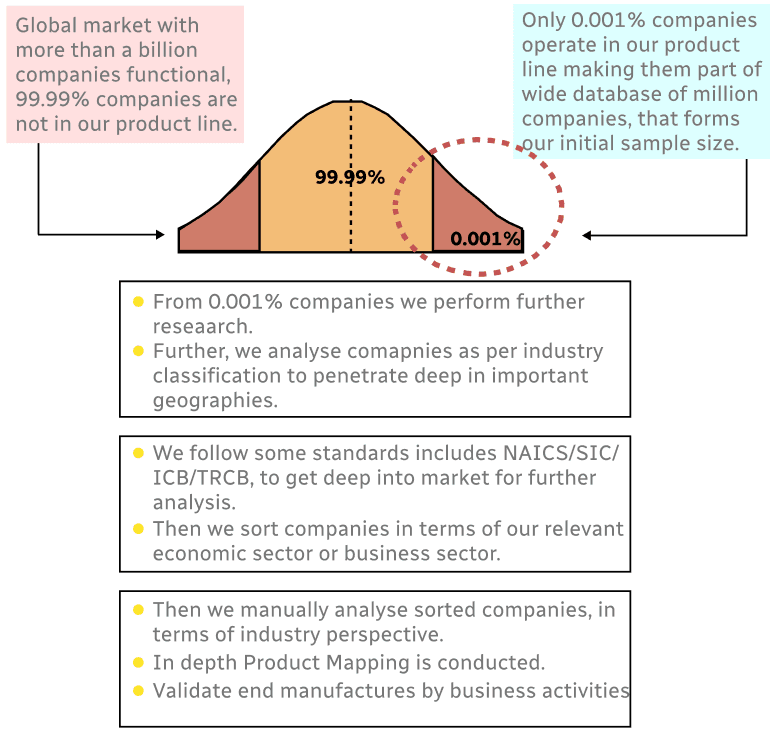
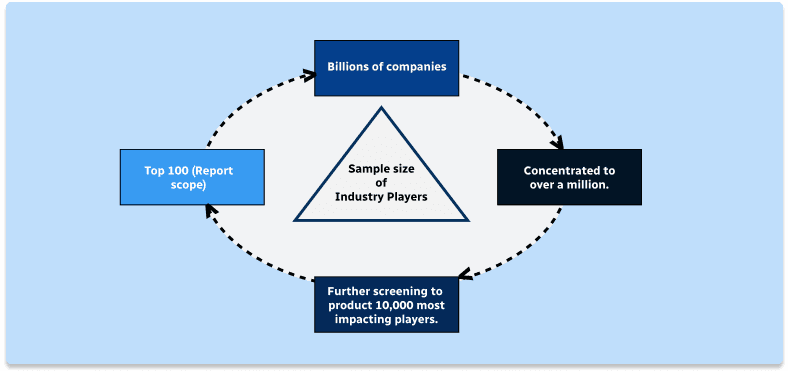
Step 1 - Identification of Relevant Samples Size from Population Database
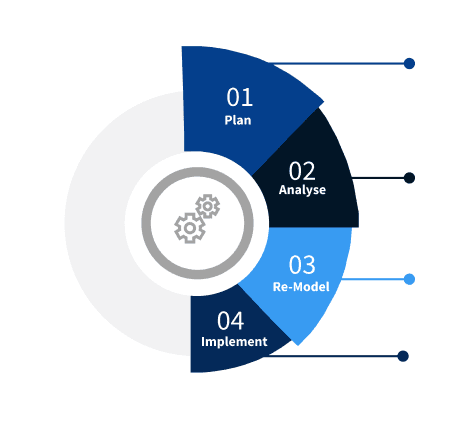
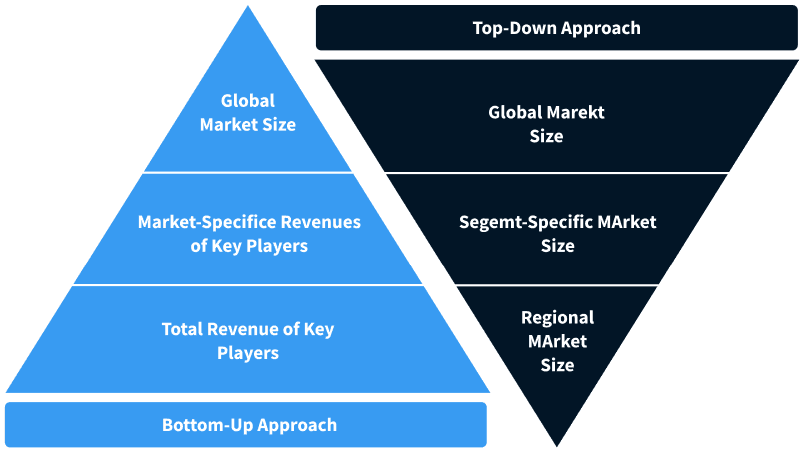
Step 2 - Approaches for Defining Global Market Size (Value, Volume* & Price*)
Note*: In applicable scenarios
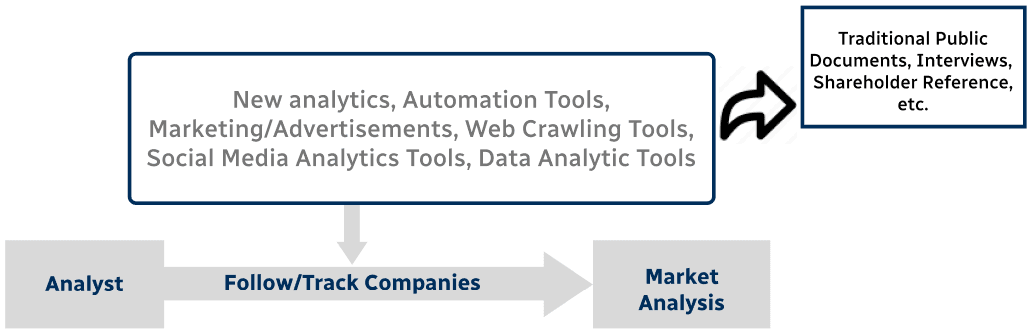
Step 3 - Data Sources
Primary Research
- Web Analytics
- Survey Reports
- Research Institute
- Latest Research Reports
- Opinion Leaders
Secondary Research
- Annual Reports
- White Paper
- Latest Press Release
- Industry Association
- Paid Database
- Investor Presentations
Step 4 - Data Triangulation
Involves using different sources of information in order to increase the validity of a study
These sources are likely to be stakeholders in a program - participants, other researchers, program staff, other community members, and so on.
Then we put all data in single framework & apply various statistical tools to find out the dynamic on the market.
During the analysis stage, feedback from the stakeholder groups would be compared to determine areas of agreement as well as areas of divergence