

Key Insights
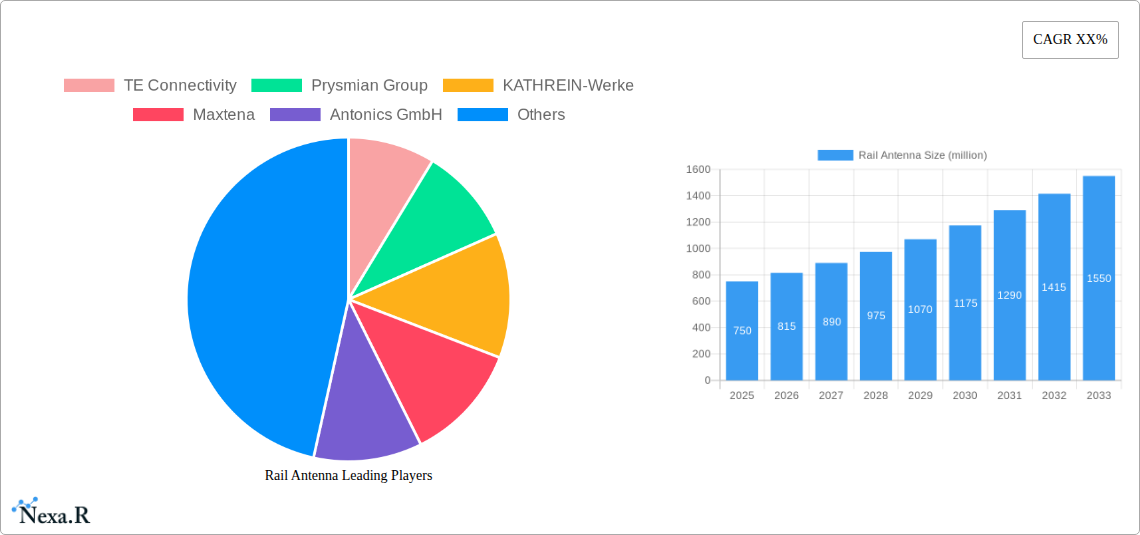
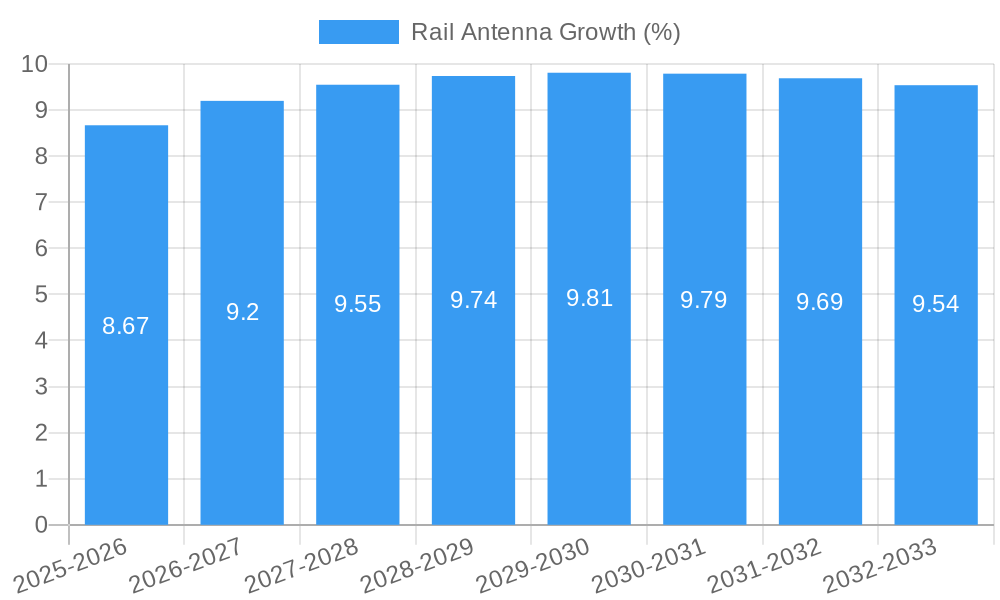
The global Rail Antenna market is poised for significant expansion, projected to reach an estimated market size of approximately USD 750 million by 2025, with a robust Compound Annual Growth Rate (CAGR) of around 8.5% anticipated through 2033. This upward trajectory is primarily fueled by the escalating demand for enhanced connectivity and data transmission capabilities within the rail sector, driven by advancements in smart ticketing, real-time passenger information systems, and the increasing adoption of onboard diagnostics and predictive maintenance solutions. The growing emphasis on safety and security, incorporating technologies like surveillance cameras and communication systems that rely heavily on reliable antenna performance, further underpins market growth. Furthermore, the ongoing modernization of existing rail infrastructure and the development of new high-speed rail networks across various regions, particularly in Asia Pacific and Europe, are creating substantial opportunities for rail antenna manufacturers.
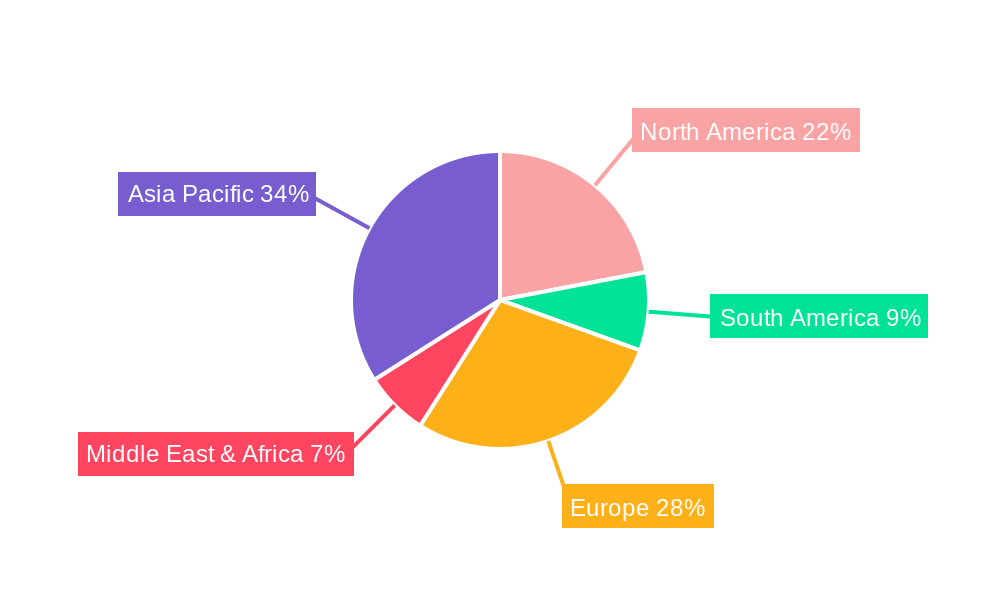
The market is segmented by application into Trains, Trams, and Buses, with Trains expected to hold the largest share due to their extensive usage in both passenger and freight transportation, demanding sophisticated antenna solutions for a wide array of functionalities including Wi-Fi, GPS, and cellular communication. Panel antennas are anticipated to dominate the types segment, offering a sleek and efficient design suitable for the demanding environmental conditions of rail operations. Geographically, Asia Pacific is expected to emerge as a dominant region, driven by rapid infrastructure development and the substantial investments in public transportation in countries like China and India. North America and Europe also represent significant markets, with a strong focus on upgrading existing fleets and implementing advanced communication technologies. Key players like TE Connectivity, Prysmian Group, and KATHREIN-Werke are actively investing in research and development to introduce innovative antenna solutions, addressing the evolving needs for high bandwidth, reliability, and miniaturization in the dynamic rail industry.
Rail Antenna Market Dynamics & Structure
The global rail antenna market is characterized by moderate concentration, with a few prominent players like TE Connectivity, Prysmian Group, and KATHREIN-Werke holding significant market shares. Technological innovation is a primary driver, fueled by the increasing demand for high-speed data connectivity, enhanced passenger Wi-Fi, and advanced signaling systems within the rail sector. Regulatory frameworks, particularly those mandating safety and communication standards, also shape market dynamics. Competitive product substitutes, though limited in specialized rail applications, include alternative communication technologies that might impact niche segments. End-user demographics are increasingly sophisticated, with railway operators prioritizing reliability, performance, and cost-effectiveness in their antenna solutions. Mergers and acquisitions (M&A) activity remains steady, with companies seeking to expand their product portfolios and geographical reach. For instance, recent M&A deals in the broader transportation technology sector, totaling an estimated $150 million in deal volume historically, indicate a trend towards consolidation. Innovation barriers include the stringent testing and certification processes for rail components, alongside the high upfront investment required for developing cutting-edge antenna designs.
- Market Concentration: Moderate, with key players holding substantial shares.
- Technological Innovation Drivers: High-speed data, passenger Wi-Fi, advanced signaling.
- Regulatory Frameworks: Mandates for safety and communication standards are crucial.
- Competitive Product Substitutes: Limited in specialized rail applications.
- End-User Demographics: Growing demand for reliability, performance, and cost-effectiveness.
- M&A Trends: Steady activity, focusing on portfolio expansion and geographic reach. Estimated deal volume: $150 million.
- Innovation Barriers: Stringent certification processes and high R&D investment.
Rail Antenna Growth Trends & Insights
The rail antenna market is poised for robust expansion, projected to grow from an estimated $1,200 million in 2025 to $2,100 million by 2033, exhibiting a Compound Annual Growth Rate (CAGR) of approximately 7.2% during the forecast period (2025–2033). This growth trajectory is underpinned by several critical trends. The increasing digitalization of railway operations, encompassing intelligent transport systems (ITS), real-time passenger information systems, and predictive maintenance, necessitates advanced and reliable antenna solutions. The continuous enhancement of passenger experience, driven by the expectation of seamless connectivity, including high-speed internet and in-train entertainment, further fuels the demand for sophisticated onboard communication antennas. Technological disruptions, such as the integration of 5G connectivity for enhanced bandwidth and lower latency, are creating new opportunities for antenna manufacturers. Furthermore, the shift towards smart city initiatives and the expansion of urban rail networks, including metros and trams, are significant market enablers. Consumer behavior is evolving, with railway operators and passengers alike prioritizing robust, secure, and high-performance communication capabilities. The adoption rates for advanced antenna technologies are escalating as operators recognize their critical role in operational efficiency and passenger satisfaction. Market penetration of specialized rail antennas is expected to increase significantly as older infrastructure is upgraded and new lines are constructed. The study encompasses a historical period from 2019 to 2024, providing a baseline for understanding current market conditions. The base year is set at 2025, with the estimated year also being 2025, setting the stage for detailed future projections. The forecast period of 2025–2033 is crucial for capturing the full impact of emerging technologies and market trends.
Dominant Regions, Countries, or Segments in Rail Antenna
The global rail antenna market's dominance is largely driven by the Asia Pacific region, primarily due to substantial investments in railway infrastructure development, rapid urbanization, and the burgeoning adoption of high-speed rail networks across countries like China, India, and South Korea. This region is expected to represent a significant market share, estimated at 35% of the global market by 2025, with a projected growth potential of 8.5% CAGR during the forecast period. The dominance is fueled by a confluence of factors including government initiatives promoting public transportation, a growing middle class with increasing demand for comfortable and connected travel, and the presence of major railway manufacturing hubs.
Within the Application segment, Trains are the most dominant category, accounting for an estimated 60% of the market share in 2025. This is attributable to the extensive use of trains for both passenger and freight transportation, requiring a wide array of communication and signaling antennas for operational efficiency, safety, and passenger services. The ongoing modernization of existing rail fleets and the construction of new high-speed and conventional train lines globally are primary drivers for this segment.
In terms of Types, Vehicle Rooftop antennas hold a commanding position, representing approximately 55% of the market share in 2025. Their strategic placement on train roofs ensures optimal signal reception and transmission for various applications, including GPS, Wi-Fi, cellular communication, and critical train control systems. The demand for compact, robust, and high-performance rooftop antennas is continuously rising.
Key drivers for this regional and segmental dominance include:
- Economic Policies: Favorable government policies and substantial public funding allocated to railway infrastructure expansion and upgrades.
- Infrastructure Development: Continuous construction of new high-speed rail lines, metro systems, and suburban railway networks, especially in emerging economies.
- Technological Adoption: Early and widespread adoption of advanced communication technologies and smart rail solutions.
- Passenger Growth: Increasing passenger volumes necessitate improved connectivity and real-time information dissemination.
- Regulatory Mandates: Stringent safety and operational regulations that require advanced communication systems.
The market size for rail antennas in the Asia Pacific is estimated to be $420 million in 2025, with strong growth potential driven by these factors. The Trains application segment is projected to reach $720 million by 2025, and Vehicle Rooftop antennas are estimated to contribute $660 million to the market value in the same year.
Rail Antenna Product Landscape
The rail antenna product landscape is characterized by increasing sophistication and miniaturization, driven by the need for high-performance and multi-functional solutions. Innovations in antenna design are focusing on broadband capabilities, enhanced gain, and superior environmental resistance to withstand the demanding conditions of railway operations. Key product advancements include the development of multi-band antennas that support various communication protocols (e.g., 4G, 5G, Wi-Fi, GNSS) from a single unit, reducing installation complexity and space requirements. Panel antennas are gaining traction for their discreet integration and versatility in various mounting configurations. Performance metrics such as radiation pattern, bandwidth, efficiency, and durability are paramount. Companies like Maxtena and Antonics GmbH are leading in developing compact, high-gain antennas crucial for reliable data transmission in moving trains.
Key Drivers, Barriers & Challenges in Rail Antenna
Key Drivers:
- Digitalization of Rail: The pervasive adoption of IoT devices, real-time data analytics, and smart ticketing systems demands robust and continuous connectivity, making advanced rail antennas indispensable.
- Passenger Connectivity Demand: Growing expectations for onboard Wi-Fi, entertainment, and productivity tools are pushing railway operators to invest in high-performance communication infrastructure.
- Safety and Signaling Advancements: Modern train control systems, positive train control (PTC), and advanced signaling rely heavily on reliable wireless communication, driving the need for specialized antennas.
- Government Investments: Significant government spending on railway modernization and expansion projects globally provides a strong impetus for market growth.
Barriers & Challenges:
- Stringent Certification and Regulatory Hurdles: The rail industry has rigorous safety and performance standards, leading to lengthy and costly certification processes for new antenna technologies, estimated to add 15% to development costs.
- Harsh Operating Environments: Antennas must endure extreme temperatures, vibrations, and electromagnetic interference, requiring specialized materials and robust designs, which can increase manufacturing costs by 10%.
- High Initial Investment: Implementing new antenna systems and upgrading existing infrastructure requires substantial capital expenditure from railway operators, sometimes leading to project delays.
- Supply Chain Volatility: Global supply chain disruptions and the scarcity of certain electronic components can impact production timelines and increase material costs, with potential delays of up to 20% in component delivery.
Emerging Opportunities in Rail Antenna
Emerging opportunities in the rail antenna market are largely concentrated around the integration of next-generation technologies and the expansion into underserved segments. The rollout of 5G networks presents a significant avenue for growth, enabling ultra-reliable low-latency communication (URLLC) for critical train operations and enhanced passenger bandwidth. The increasing focus on predictive maintenance, utilizing sensors and real-time data, will drive demand for antennas capable of supporting a multitude of IoT devices. Furthermore, the burgeoning development of autonomous rail systems will necessitate advanced sensor integration and communication capabilities, creating a niche but high-value market. The expansion of light rail and tram networks in urban areas, often with space constraints, opens up opportunities for compact and highly efficient panel antennas.
Growth Accelerators in the Rail Antenna Industry
Several key factors are accelerating growth within the rail antenna industry. The widespread adoption of 5G technology is a primary catalyst, enabling higher data throughput and lower latency essential for advanced railway applications such as real-time diagnostics and enhanced passenger services. Strategic partnerships between antenna manufacturers and railway operators or system integrators are fostering collaborative innovation and accelerating the deployment of new solutions. The continuous push for improved passenger experience, driven by competitive pressures and evolving consumer expectations, compels operators to invest in superior connectivity, thereby boosting demand for advanced antenna systems. Moreover, government initiatives and funding for smart city projects and sustainable transportation solutions often include significant allocations for railway infrastructure upgrades, further fueling market expansion.
Key Players Shaping the Rail Antenna Market
- TE Connectivity
- Prysmian Group
- KATHREIN-Werke
- Maxtena
- Antonics GmbH
- HUBER+SUHNER
- MP Antenna
- STAR Antenna
- Kymeta Corp
- Abracon
- Antenna Products
Notable Milestones in Rail Antenna Sector
- 2019: Launch of next-generation multi-band antennas supporting 5G and Wi-Fi 6 for high-speed rail by TE Connectivity.
- 2020: Prysmian Group acquires a leading provider of in-train connectivity solutions, strengthening its market position.
- 2021: KATHREIN-Werke unveils innovative compact rooftop antennas optimized for limited space on urban transit vehicles.
- 2022: Maxtena introduces highly robust antennas designed for extreme environmental conditions in freight rail applications.
- 2023: HUBER+SUHNER collaborates with a major railway operator to implement a comprehensive 5G-based communication system.
- 2024 (Q1): Antonics GmbH patents a new antenna technology offering improved signal penetration within train carriages.
In-Depth Rail Antenna Market Outlook
The future outlook for the rail antenna market is exceptionally promising, driven by the convergence of technological advancements, increasing global railway investments, and a sustained demand for enhanced connectivity. The anticipated widespread deployment of 5G infrastructure across rail networks will unlock unprecedented opportunities for high-bandwidth applications, including real-time video surveillance, advanced passenger infotainment, and mission-critical communication for operational safety. Furthermore, the growing emphasis on sustainability and the expansion of public transportation systems worldwide will continue to spur new railway construction and modernization projects, directly translating into higher demand for sophisticated antenna solutions. Strategic alliances and ongoing research and development efforts will further accelerate innovation, leading to more integrated, intelligent, and efficient antenna systems. The market is poised for sustained growth, driven by these powerful accelerators, with an estimated market value of $2,100 million by 2033.
Rail Antenna Segmentation
-
1. Application
- 1.1. Trains
- 1.2. Trams
- 1.3. Buses
-
2. Types
- 2.1. Vehicle Rooftop
- 2.2. Panel
Rail Antenna Segmentation By Geography
-
1. North America
- 1.1. United States
- 1.2. Canada
- 1.3. Mexico
-
2. South America
- 2.1. Brazil
- 2.2. Argentina
- 2.3. Rest of South America
-
3. Europe
- 3.1. United Kingdom
- 3.2. Germany
- 3.3. France
- 3.4. Italy
- 3.5. Spain
- 3.6. Russia
- 3.7. Benelux
- 3.8. Nordics
- 3.9. Rest of Europe
-
4. Middle East & Africa
- 4.1. Turkey
- 4.2. Israel
- 4.3. GCC
- 4.4. North Africa
- 4.5. South Africa
- 4.6. Rest of Middle East & Africa
-
5. Asia Pacific
- 5.1. China
- 5.2. India
- 5.3. Japan
- 5.4. South Korea
- 5.5. ASEAN
- 5.6. Oceania
- 5.7. Rest of Asia Pacific
Rail Antenna REPORT HIGHLIGHTS
| Aspects | Details |
|---|---|
| Study Period | 2019-2033 |
| Base Year | 2024 |
| Estimated Year | 2025 |
| Forecast Period | 2025-2033 |
| Historical Period | 2019-2024 |
| Growth Rate | CAGR of XX% from 2019-2033 |
| Segmentation |
|
Table of Contents
- 1. Introduction
- 1.1. Research Scope
- 1.2. Market Segmentation
- 1.3. Research Methodology
- 1.4. Definitions and Assumptions
- 2. Executive Summary
- 2.1. Introduction
- 3. Market Dynamics
- 3.1. Introduction
- 3.2. Market Drivers
- 3.3. Market Restrains
- 3.4. Market Trends
- 4. Market Factor Analysis
- 4.1. Porters Five Forces
- 4.2. Supply/Value Chain
- 4.3. PESTEL analysis
- 4.4. Market Entropy
- 4.5. Patent/Trademark Analysis
- 5. Global Rail Antenna Analysis, Insights and Forecast, 2019-2031
- 5.1. Market Analysis, Insights and Forecast - by Application
- 5.1.1. Trains
- 5.1.2. Trams
- 5.1.3. Buses
- 5.2. Market Analysis, Insights and Forecast - by Types
- 5.2.1. Vehicle Rooftop
- 5.2.2. Panel
- 5.3. Market Analysis, Insights and Forecast - by Region
- 5.3.1. North America
- 5.3.2. South America
- 5.3.3. Europe
- 5.3.4. Middle East & Africa
- 5.3.5. Asia Pacific
- 5.1. Market Analysis, Insights and Forecast - by Application
- 6. North America Rail Antenna Analysis, Insights and Forecast, 2019-2031
- 6.1. Market Analysis, Insights and Forecast - by Application
- 6.1.1. Trains
- 6.1.2. Trams
- 6.1.3. Buses
- 6.2. Market Analysis, Insights and Forecast - by Types
- 6.2.1. Vehicle Rooftop
- 6.2.2. Panel
- 6.1. Market Analysis, Insights and Forecast - by Application
- 7. South America Rail Antenna Analysis, Insights and Forecast, 2019-2031
- 7.1. Market Analysis, Insights and Forecast - by Application
- 7.1.1. Trains
- 7.1.2. Trams
- 7.1.3. Buses
- 7.2. Market Analysis, Insights and Forecast - by Types
- 7.2.1. Vehicle Rooftop
- 7.2.2. Panel
- 7.1. Market Analysis, Insights and Forecast - by Application
- 8. Europe Rail Antenna Analysis, Insights and Forecast, 2019-2031
- 8.1. Market Analysis, Insights and Forecast - by Application
- 8.1.1. Trains
- 8.1.2. Trams
- 8.1.3. Buses
- 8.2. Market Analysis, Insights and Forecast - by Types
- 8.2.1. Vehicle Rooftop
- 8.2.2. Panel
- 8.1. Market Analysis, Insights and Forecast - by Application
- 9. Middle East & Africa Rail Antenna Analysis, Insights and Forecast, 2019-2031
- 9.1. Market Analysis, Insights and Forecast - by Application
- 9.1.1. Trains
- 9.1.2. Trams
- 9.1.3. Buses
- 9.2. Market Analysis, Insights and Forecast - by Types
- 9.2.1. Vehicle Rooftop
- 9.2.2. Panel
- 9.1. Market Analysis, Insights and Forecast - by Application
- 10. Asia Pacific Rail Antenna Analysis, Insights and Forecast, 2019-2031
- 10.1. Market Analysis, Insights and Forecast - by Application
- 10.1.1. Trains
- 10.1.2. Trams
- 10.1.3. Buses
- 10.2. Market Analysis, Insights and Forecast - by Types
- 10.2.1. Vehicle Rooftop
- 10.2.2. Panel
- 10.1. Market Analysis, Insights and Forecast - by Application
- 11. Competitive Analysis
- 11.1. Global Market Share Analysis 2024
- 11.2. Company Profiles
- 11.2.1 TE Connectivity
- 11.2.1.1. Overview
- 11.2.1.2. Products
- 11.2.1.3. SWOT Analysis
- 11.2.1.4. Recent Developments
- 11.2.1.5. Financials (Based on Availability)
- 11.2.2 Prysmian Group
- 11.2.2.1. Overview
- 11.2.2.2. Products
- 11.2.2.3. SWOT Analysis
- 11.2.2.4. Recent Developments
- 11.2.2.5. Financials (Based on Availability)
- 11.2.3 KATHREIN-Werke
- 11.2.3.1. Overview
- 11.2.3.2. Products
- 11.2.3.3. SWOT Analysis
- 11.2.3.4. Recent Developments
- 11.2.3.5. Financials (Based on Availability)
- 11.2.4 Maxtena
- 11.2.4.1. Overview
- 11.2.4.2. Products
- 11.2.4.3. SWOT Analysis
- 11.2.4.4. Recent Developments
- 11.2.4.5. Financials (Based on Availability)
- 11.2.5 Antonics GmbH
- 11.2.5.1. Overview
- 11.2.5.2. Products
- 11.2.5.3. SWOT Analysis
- 11.2.5.4. Recent Developments
- 11.2.5.5. Financials (Based on Availability)
- 11.2.6 HUBER+SUHNER
- 11.2.6.1. Overview
- 11.2.6.2. Products
- 11.2.6.3. SWOT Analysis
- 11.2.6.4. Recent Developments
- 11.2.6.5. Financials (Based on Availability)
- 11.2.7 MP Antenna
- 11.2.7.1. Overview
- 11.2.7.2. Products
- 11.2.7.3. SWOT Analysis
- 11.2.7.4. Recent Developments
- 11.2.7.5. Financials (Based on Availability)
- 11.2.8 STAR Antenna
- 11.2.8.1. Overview
- 11.2.8.2. Products
- 11.2.8.3. SWOT Analysis
- 11.2.8.4. Recent Developments
- 11.2.8.5. Financials (Based on Availability)
- 11.2.9 Kymeta Corp
- 11.2.9.1. Overview
- 11.2.9.2. Products
- 11.2.9.3. SWOT Analysis
- 11.2.9.4. Recent Developments
- 11.2.9.5. Financials (Based on Availability)
- 11.2.10 Abracon
- 11.2.10.1. Overview
- 11.2.10.2. Products
- 11.2.10.3. SWOT Analysis
- 11.2.10.4. Recent Developments
- 11.2.10.5. Financials (Based on Availability)
- 11.2.11 Antenna Products
- 11.2.11.1. Overview
- 11.2.11.2. Products
- 11.2.11.3. SWOT Analysis
- 11.2.11.4. Recent Developments
- 11.2.11.5. Financials (Based on Availability)
- 11.2.1 TE Connectivity
List of Figures
- Figure 1: Global Rail Antenna Revenue Breakdown (million, %) by Region 2024 & 2032
- Figure 2: North America Rail Antenna Revenue (million), by Application 2024 & 2032
- Figure 3: North America Rail Antenna Revenue Share (%), by Application 2024 & 2032
- Figure 4: North America Rail Antenna Revenue (million), by Types 2024 & 2032
- Figure 5: North America Rail Antenna Revenue Share (%), by Types 2024 & 2032
- Figure 6: North America Rail Antenna Revenue (million), by Country 2024 & 2032
- Figure 7: North America Rail Antenna Revenue Share (%), by Country 2024 & 2032
- Figure 8: South America Rail Antenna Revenue (million), by Application 2024 & 2032
- Figure 9: South America Rail Antenna Revenue Share (%), by Application 2024 & 2032
- Figure 10: South America Rail Antenna Revenue (million), by Types 2024 & 2032
- Figure 11: South America Rail Antenna Revenue Share (%), by Types 2024 & 2032
- Figure 12: South America Rail Antenna Revenue (million), by Country 2024 & 2032
- Figure 13: South America Rail Antenna Revenue Share (%), by Country 2024 & 2032
- Figure 14: Europe Rail Antenna Revenue (million), by Application 2024 & 2032
- Figure 15: Europe Rail Antenna Revenue Share (%), by Application 2024 & 2032
- Figure 16: Europe Rail Antenna Revenue (million), by Types 2024 & 2032
- Figure 17: Europe Rail Antenna Revenue Share (%), by Types 2024 & 2032
- Figure 18: Europe Rail Antenna Revenue (million), by Country 2024 & 2032
- Figure 19: Europe Rail Antenna Revenue Share (%), by Country 2024 & 2032
- Figure 20: Middle East & Africa Rail Antenna Revenue (million), by Application 2024 & 2032
- Figure 21: Middle East & Africa Rail Antenna Revenue Share (%), by Application 2024 & 2032
- Figure 22: Middle East & Africa Rail Antenna Revenue (million), by Types 2024 & 2032
- Figure 23: Middle East & Africa Rail Antenna Revenue Share (%), by Types 2024 & 2032
- Figure 24: Middle East & Africa Rail Antenna Revenue (million), by Country 2024 & 2032
- Figure 25: Middle East & Africa Rail Antenna Revenue Share (%), by Country 2024 & 2032
- Figure 26: Asia Pacific Rail Antenna Revenue (million), by Application 2024 & 2032
- Figure 27: Asia Pacific Rail Antenna Revenue Share (%), by Application 2024 & 2032
- Figure 28: Asia Pacific Rail Antenna Revenue (million), by Types 2024 & 2032
- Figure 29: Asia Pacific Rail Antenna Revenue Share (%), by Types 2024 & 2032
- Figure 30: Asia Pacific Rail Antenna Revenue (million), by Country 2024 & 2032
- Figure 31: Asia Pacific Rail Antenna Revenue Share (%), by Country 2024 & 2032
List of Tables
- Table 1: Global Rail Antenna Revenue million Forecast, by Region 2019 & 2032
- Table 2: Global Rail Antenna Revenue million Forecast, by Application 2019 & 2032
- Table 3: Global Rail Antenna Revenue million Forecast, by Types 2019 & 2032
- Table 4: Global Rail Antenna Revenue million Forecast, by Region 2019 & 2032
- Table 5: Global Rail Antenna Revenue million Forecast, by Application 2019 & 2032
- Table 6: Global Rail Antenna Revenue million Forecast, by Types 2019 & 2032
- Table 7: Global Rail Antenna Revenue million Forecast, by Country 2019 & 2032
- Table 8: United States Rail Antenna Revenue (million) Forecast, by Application 2019 & 2032
- Table 9: Canada Rail Antenna Revenue (million) Forecast, by Application 2019 & 2032
- Table 10: Mexico Rail Antenna Revenue (million) Forecast, by Application 2019 & 2032
- Table 11: Global Rail Antenna Revenue million Forecast, by Application 2019 & 2032
- Table 12: Global Rail Antenna Revenue million Forecast, by Types 2019 & 2032
- Table 13: Global Rail Antenna Revenue million Forecast, by Country 2019 & 2032
- Table 14: Brazil Rail Antenna Revenue (million) Forecast, by Application 2019 & 2032
- Table 15: Argentina Rail Antenna Revenue (million) Forecast, by Application 2019 & 2032
- Table 16: Rest of South America Rail Antenna Revenue (million) Forecast, by Application 2019 & 2032
- Table 17: Global Rail Antenna Revenue million Forecast, by Application 2019 & 2032
- Table 18: Global Rail Antenna Revenue million Forecast, by Types 2019 & 2032
- Table 19: Global Rail Antenna Revenue million Forecast, by Country 2019 & 2032
- Table 20: United Kingdom Rail Antenna Revenue (million) Forecast, by Application 2019 & 2032
- Table 21: Germany Rail Antenna Revenue (million) Forecast, by Application 2019 & 2032
- Table 22: France Rail Antenna Revenue (million) Forecast, by Application 2019 & 2032
- Table 23: Italy Rail Antenna Revenue (million) Forecast, by Application 2019 & 2032
- Table 24: Spain Rail Antenna Revenue (million) Forecast, by Application 2019 & 2032
- Table 25: Russia Rail Antenna Revenue (million) Forecast, by Application 2019 & 2032
- Table 26: Benelux Rail Antenna Revenue (million) Forecast, by Application 2019 & 2032
- Table 27: Nordics Rail Antenna Revenue (million) Forecast, by Application 2019 & 2032
- Table 28: Rest of Europe Rail Antenna Revenue (million) Forecast, by Application 2019 & 2032
- Table 29: Global Rail Antenna Revenue million Forecast, by Application 2019 & 2032
- Table 30: Global Rail Antenna Revenue million Forecast, by Types 2019 & 2032
- Table 31: Global Rail Antenna Revenue million Forecast, by Country 2019 & 2032
- Table 32: Turkey Rail Antenna Revenue (million) Forecast, by Application 2019 & 2032
- Table 33: Israel Rail Antenna Revenue (million) Forecast, by Application 2019 & 2032
- Table 34: GCC Rail Antenna Revenue (million) Forecast, by Application 2019 & 2032
- Table 35: North Africa Rail Antenna Revenue (million) Forecast, by Application 2019 & 2032
- Table 36: South Africa Rail Antenna Revenue (million) Forecast, by Application 2019 & 2032
- Table 37: Rest of Middle East & Africa Rail Antenna Revenue (million) Forecast, by Application 2019 & 2032
- Table 38: Global Rail Antenna Revenue million Forecast, by Application 2019 & 2032
- Table 39: Global Rail Antenna Revenue million Forecast, by Types 2019 & 2032
- Table 40: Global Rail Antenna Revenue million Forecast, by Country 2019 & 2032
- Table 41: China Rail Antenna Revenue (million) Forecast, by Application 2019 & 2032
- Table 42: India Rail Antenna Revenue (million) Forecast, by Application 2019 & 2032
- Table 43: Japan Rail Antenna Revenue (million) Forecast, by Application 2019 & 2032
- Table 44: South Korea Rail Antenna Revenue (million) Forecast, by Application 2019 & 2032
- Table 45: ASEAN Rail Antenna Revenue (million) Forecast, by Application 2019 & 2032
- Table 46: Oceania Rail Antenna Revenue (million) Forecast, by Application 2019 & 2032
- Table 47: Rest of Asia Pacific Rail Antenna Revenue (million) Forecast, by Application 2019 & 2032
Frequently Asked Questions
1. What is the projected Compound Annual Growth Rate (CAGR) of the Rail Antenna?
The projected CAGR is approximately XX%.
2. Which companies are prominent players in the Rail Antenna?
Key companies in the market include TE Connectivity, Prysmian Group, KATHREIN-Werke, Maxtena, Antonics GmbH, HUBER+SUHNER, MP Antenna, STAR Antenna, Kymeta Corp, Abracon, Antenna Products.
3. What are the main segments of the Rail Antenna?
The market segments include Application, Types.
4. Can you provide details about the market size?
The market size is estimated to be USD XXX million as of 2022.
5. What are some drivers contributing to market growth?
N/A
6. What are the notable trends driving market growth?
N/A
7. Are there any restraints impacting market growth?
N/A
8. Can you provide examples of recent developments in the market?
N/A
9. What pricing options are available for accessing the report?
Pricing options include single-user, multi-user, and enterprise licenses priced at USD 2900.00, USD 4350.00, and USD 5800.00 respectively.
10. Is the market size provided in terms of value or volume?
The market size is provided in terms of value, measured in million.
11. Are there any specific market keywords associated with the report?
Yes, the market keyword associated with the report is "Rail Antenna," which aids in identifying and referencing the specific market segment covered.
12. How do I determine which pricing option suits my needs best?
The pricing options vary based on user requirements and access needs. Individual users may opt for single-user licenses, while businesses requiring broader access may choose multi-user or enterprise licenses for cost-effective access to the report.
13. Are there any additional resources or data provided in the Rail Antenna report?
While the report offers comprehensive insights, it's advisable to review the specific contents or supplementary materials provided to ascertain if additional resources or data are available.
14. How can I stay updated on further developments or reports in the Rail Antenna?
To stay informed about further developments, trends, and reports in the Rail Antenna, consider subscribing to industry newsletters, following relevant companies and organizations, or regularly checking reputable industry news sources and publications.
Methodology
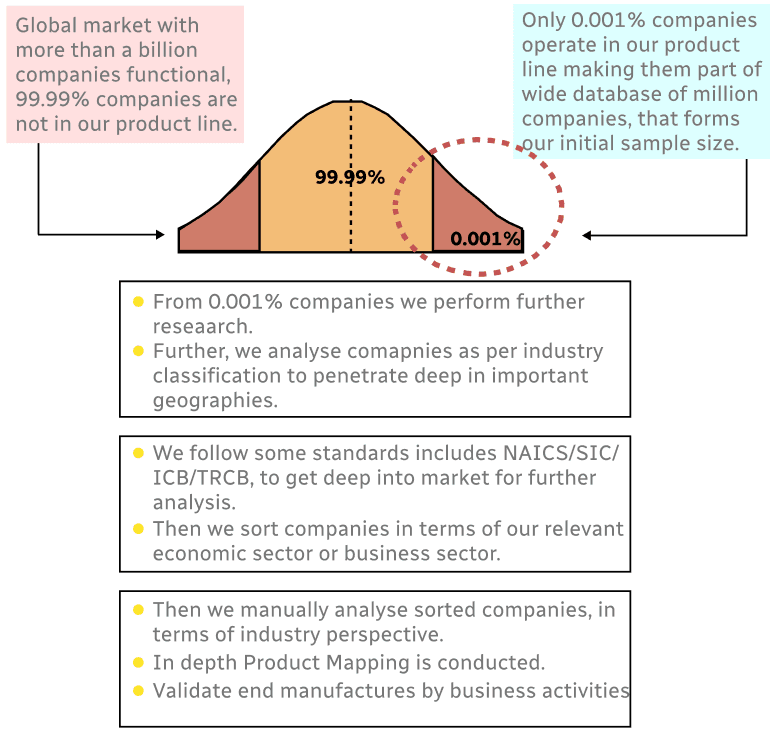
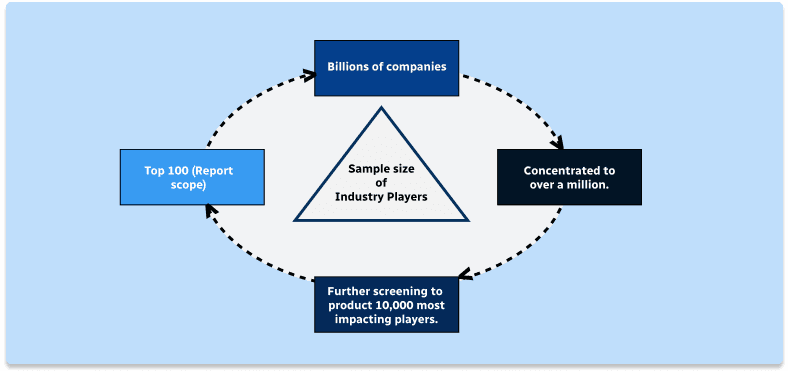
Step 1 - Identification of Relevant Samples Size from Population Database
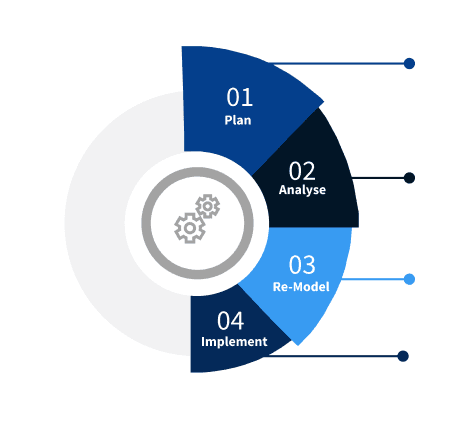
Step 2 - Approaches for Defining Global Market Size (Value, Volume* & Price*)
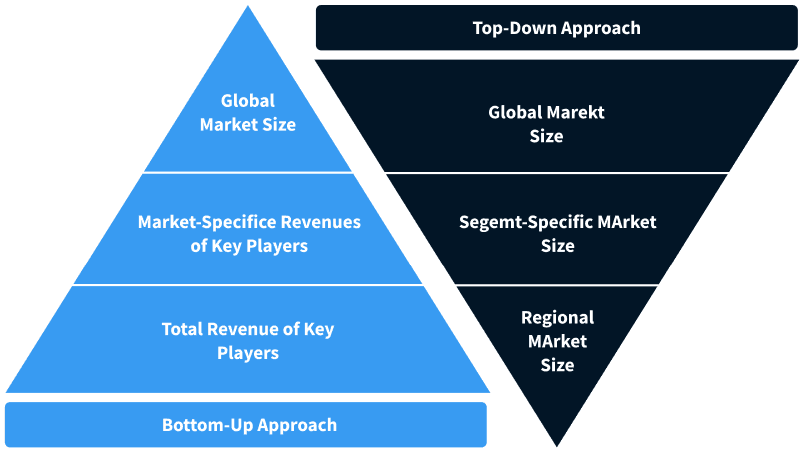
Note*: In applicable scenarios
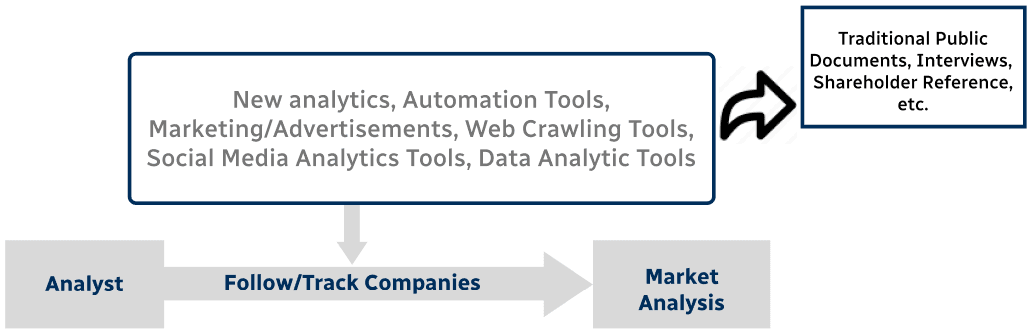
Step 3 - Data Sources
Primary Research
- Web Analytics
- Survey Reports
- Research Institute
- Latest Research Reports
- Opinion Leaders
Secondary Research
- Annual Reports
- White Paper
- Latest Press Release
- Industry Association
- Paid Database
- Investor Presentations
Step 4 - Data Triangulation
Involves using different sources of information in order to increase the validity of a study
These sources are likely to be stakeholders in a program - participants, other researchers, program staff, other community members, and so on.
Then we put all data in single framework & apply various statistical tools to find out the dynamic on the market.
During the analysis stage, feedback from the stakeholder groups would be compared to determine areas of agreement as well as areas of divergence