
Key Insights
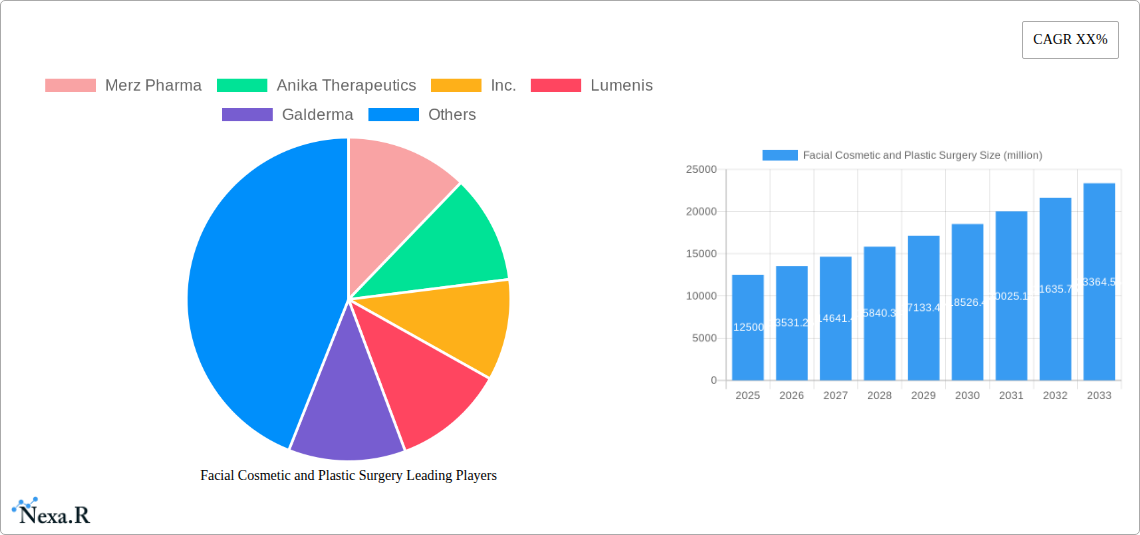
The global Facial Cosmetic and Plastic Surgery market is poised for significant expansion, projected to reach approximately USD 12.5 billion by 2025 and grow at a Compound Annual Growth Rate (CAGR) of around 8.5% through 2033. This robust growth is fueled by a confluence of factors, including an increasing societal acceptance of aesthetic procedures, rising disposable incomes, and advancements in minimally invasive techniques that offer quicker recovery times and more natural-looking results. The demand is particularly strong among individuals seeking to address signs of aging, enhance facial features, and achieve a more youthful appearance. Key drivers include the growing influence of social media and celebrity culture, which continuously set new aesthetic benchmarks, and an aging global population that is actively investing in maintaining their appearance and self-confidence. Furthermore, the market is witnessing a surge in demand for non-surgical procedures, such as injectables, as they offer a lower barrier to entry compared to surgical interventions, attracting a broader demographic.
The market is strategically segmented by application and type to cater to diverse consumer needs. Hospitals and dermatology clinics remain dominant application segments due to the availability of skilled professionals and advanced infrastructure. However, beauty centers are rapidly gaining traction, offering a more accessible and specialized environment for certain cosmetic treatments. In terms of types, injectables, including dermal fillers and neurotoxins, are expected to experience the fastest growth, driven by their versatility, affordability, and minimal downtime. Implants, while representing a more significant investment, continue to hold a substantial share, particularly for reconstructive and augmentation purposes. Geographically, North America and Europe are leading markets, characterized by high consumer spending power and a well-established aesthetic industry. However, the Asia Pacific region, with its burgeoning economies and rapidly growing middle class, presents the most significant growth potential, with countries like China and India expected to drive substantial market expansion. Emerging markets in the Middle East and Africa also offer promising opportunities as awareness and disposable incomes rise.
Unveiling the Future: Comprehensive Report on the Facial Cosmetic and Plastic Surgery Market
This in-depth report provides a meticulously researched analysis of the global Facial Cosmetic and Plastic Surgery market, offering unparalleled insights for industry professionals, investors, and stakeholders. Covering the extensive Study Period of 2019–2033, with a Base Year of 2025 and a Forecast Period of 2025–2033, this report details the market's evolution through the Historical Period of 2019–2024. We delve into the intricate dynamics, growth trajectories, and future potential of this rapidly expanding sector.
Facial Cosmetic and Plastic Surgery Market Dynamics & Structure
The Facial Cosmetic and Plastic Surgery market is characterized by a moderate concentration, with key players investing heavily in research and development to drive technological innovation. The advent of minimally invasive procedures, advanced imaging techniques, and novel biomaterials are significant drivers. Regulatory frameworks, particularly concerning product safety and efficacy, play a crucial role in shaping market access and competition.
- Technological Innovation: Drivers include advancements in energy-based devices, improved dermal fillers, and precision surgical instruments, leading to enhanced patient outcomes and reduced recovery times.
- Competitive Product Substitutes: While surgical procedures remain a cornerstone, the growing popularity of non-invasive aesthetic treatments presents a dynamic competitive landscape.
- End-User Demographics: An aging global population, coupled with increasing disposable incomes and a growing emphasis on aesthetic appearance, fuels demand across all age groups.
- M&A Trends: The market has witnessed strategic mergers and acquisitions as larger entities seek to consolidate market share, expand product portfolios, and gain access to new technologies. For instance, approximately 5-7 M&A deals are anticipated annually in the coming years, with deal values often ranging from $50 million to $500 million, depending on the strategic fit and technological advantage of the acquired entity.
- Innovation Barriers: High R&D costs, lengthy clinical trial processes, and stringent regulatory approvals pose significant hurdles for new entrants and the rapid commercialization of novel technologies.
Facial Cosmetic and Plastic Surgery Growth Trends & Insights
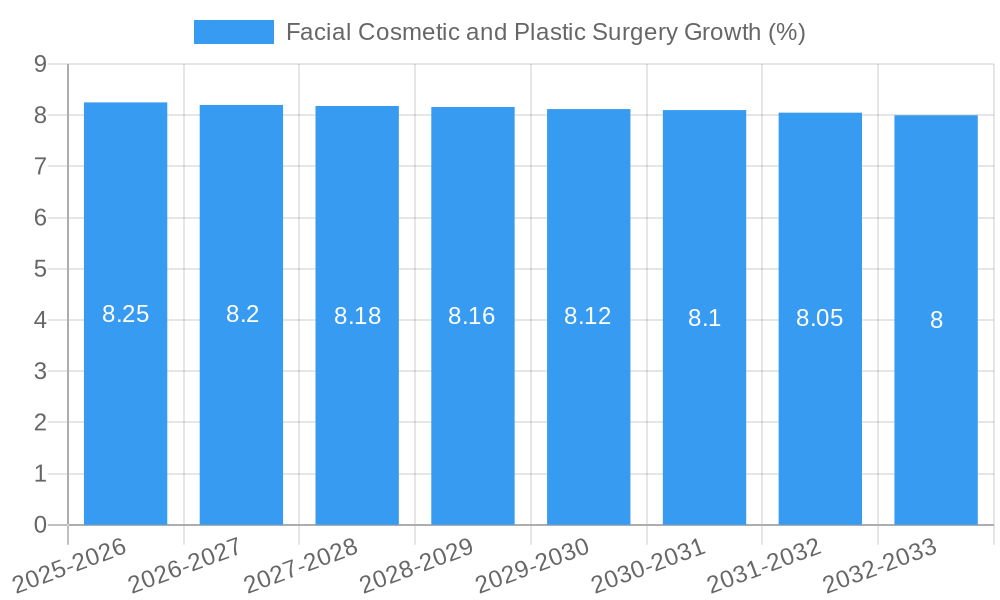
The global Facial Cosmetic and Plastic Surgery market is poised for significant expansion, driven by a confluence of demographic shifts, technological advancements, and evolving consumer preferences. Over the Forecast Period (2025–2033), the market is projected to experience a robust Compound Annual Growth Rate (CAGR) of approximately 7.5% to 8.5%, reaching an estimated market size of $XX.XX billion by 2033. This growth is underpinned by increasing disposable incomes globally, a greater societal acceptance of aesthetic procedures, and the continuous innovation in both surgical and non-surgical treatment modalities.
Consumer behavior is increasingly influenced by social media trends and a desire for a youthful appearance, propelling demand for treatments that offer natural-looking results with minimal downtime. The adoption rate of minimally invasive procedures, such as injectable fillers and botulinum toxin treatments, continues to surge due to their affordability and shorter recovery periods compared to traditional surgical interventions. Technological disruptions are central to this evolution, with advancements in personalized medicine, regenerative aesthetics, and sophisticated energy-based devices further refining treatment efficacy and patient satisfaction.
For example, the market penetration of injectable dermal fillers, a key segment, has seen a steady increase, moving from approximately 30% of eligible adults in the Base Year of 2025 to an estimated 45% by the end of the Forecast Period. Similarly, the adoption of advanced laser and radiofrequency technologies for skin rejuvenation and tightening is projected to grow at a CAGR of over 9%. The report further analyzes the impact of economic policies, such as the growth of medical tourism in certain regions, and the increasing awareness campaigns by industry players that are contributing to higher market penetration rates. This comprehensive analysis provides a deep dive into the intricate factors shaping the market's trajectory, enabling stakeholders to identify strategic opportunities and navigate the competitive landscape effectively.
Dominant Regions, Countries, or Segments in Facial Cosmetic and Plastic Surgery
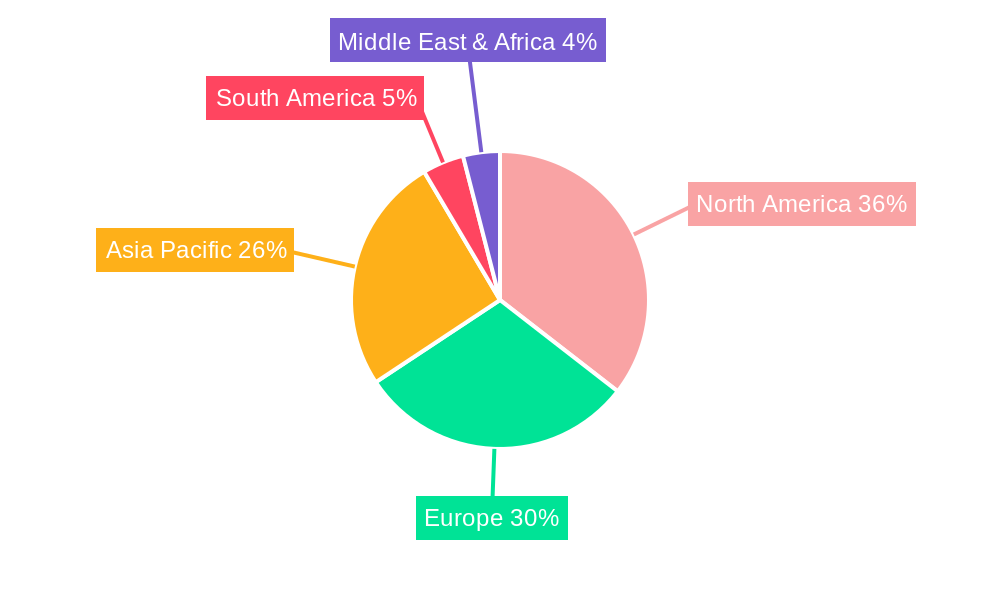
North America, particularly the United States, currently dominates the global Facial Cosmetic and Plastic Surgery market, driven by high disposable incomes, a well-established healthcare infrastructure, and a strong cultural emphasis on aesthetics. The region is projected to maintain its lead throughout the Forecast Period, contributing an estimated 35% to 40% of the global market revenue.
- Leading Segments: The Injectable segment, encompassing neuromodulators and dermal fillers, stands out as a primary growth engine. Its market share is expected to expand significantly due to the growing preference for minimally invasive procedures, offering convenience and rapid results.
- Regional Dominance Factors:
- Economic Policies: Favorable economic conditions and readily available financing options for elective procedures in North America and parts of Europe fuel consistent demand.
- Infrastructure: Advanced healthcare facilities, the presence of highly skilled surgeons, and the widespread availability of cutting-edge aesthetic technologies in these regions are critical.
- Consumer Awareness: Extensive marketing campaigns and the influence of social media platforms have dramatically increased consumer awareness and desire for facial rejuvenation and enhancement.
Asia Pacific is emerging as a rapidly growing region, with countries like South Korea, China, and India exhibiting substantial market potential. This growth is attributed to rising disposable incomes, a burgeoning middle class, and an increasing acceptance of cosmetic procedures. The region is expected to witness a CAGR of over 9% during the forecast period, driven by both surgical and non-surgical interventions.
Application Dominance: Dermatology Clinics are expected to see the highest growth within the Application segment, accounting for an estimated 45% of the market by 2033. This is due to their specialized focus on aesthetic treatments and the increasing demand for tailored, non-surgical interventions. Beauty Centers also represent a significant and growing application, driven by the accessibility and variety of non-invasive aesthetic services they offer.
Type Dominance: Within the Types segment, Injectables are projected to continue their market dominance, holding an estimated 55% share of the total market by 2033. Their popularity stems from their efficacy, minimal downtime, and broad range of applications for treating wrinkles, volume loss, and facial contouring. The Implants segment, while smaller, is also expected to witness steady growth, particularly in advanced biocompatible materials and custom-designed implants.
Facial Cosmetic and Plastic Surgery Product Landscape
The product landscape is defined by continuous innovation aimed at enhancing efficacy, safety, and patient experience. Advancements in injectable fillers now offer improved longevity and natural integration with facial tissues, while energy-based devices utilize sophisticated technologies like radiofrequency and ultrasound for precise tissue remodeling. Biocompatible implant materials are being refined for superior integration and reduced complication rates. The unique selling proposition of many new products lies in their ability to deliver subtle, natural-looking results, addressing the growing consumer demand for authenticity. Technological advancements are also focusing on personalized treatment approaches, leveraging AI and advanced imaging to tailor procedures to individual patient anatomy and desired outcomes.
Key Drivers, Barriers & Challenges in Facial Cosmetic and Plastic Surgery
Key Drivers:
- Rising Disposable Incomes: Increased global affluence empowers more individuals to invest in elective aesthetic procedures.
- Technological Advancements: Innovations in minimally invasive techniques, advanced materials, and energy-based devices enhance treatment efficacy and patient satisfaction.
- Growing Aesthetic Consciousness: Societal trends and media influence promote a culture that values youthful appearance and self-enhancement.
- Aging Population: The desire to combat the visible signs of aging is a consistent and powerful driver of demand.
- Medical Tourism: Facilitates access to procedures in regions offering competitive pricing and high-quality care.
Key Barriers & Challenges:
- High Costs of Procedures: The expense of many cosmetic surgeries remains a significant barrier for a substantial portion of the population, impacting market penetration.
- Regulatory Hurdles: Stringent approval processes for new devices and treatments can slow down market entry and increase R&D investment.
- Potential for Complications and Side Effects: While rare, the risk of adverse outcomes can deter some potential patients and necessitates rigorous safety protocols.
- Economic Downturns: Elective procedures are often among the first to be cut during economic recessions, posing a threat to market stability.
- Supply Chain Disruptions: Global events can impact the availability of specialized materials and equipment, potentially delaying procedures and affecting operational efficiency. For instance, disruptions in the supply of active pharmaceutical ingredients for botulinum toxin formulations could lead to a 5-10% increase in treatment costs and a 1-2 month delay in service availability for affected clinics.
Emerging Opportunities in Facial Cosmetic and Plastic Surgery
Emerging opportunities lie in the development of more advanced regenerative aesthetic treatments, utilizing stem cells and growth factors to promote natural tissue repair and rejuvenation. The growing demand for non-invasive and minimally invasive options presents significant potential for innovative energy-based devices and bio-stimulatory injectables. Furthermore, the untapped market potential in developing economies, coupled with increasing digital engagement for patient consultation and post-operative care, offers avenues for market expansion. Personalized treatment plans based on genetic predispositions and advanced imaging technologies are also poised to revolutionize patient care and outcomes.
Growth Accelerators in the Facial Cosmetic and Plastic Surgery Industry
The Facial Cosmetic and Plastic Surgery industry is propelled by several growth accelerators. Continuous technological breakthroughs, such as the development of AI-powered diagnostic tools for precise treatment planning and the evolution of bio-compatible materials with enhanced integration properties, are key. Strategic partnerships between aesthetic device manufacturers and pharmaceutical companies are fostering integrated treatment solutions. Furthermore, strategic market expansion initiatives, particularly targeting underserved demographics and geographic regions, and the increasing focus on preventative and maintenance aesthetics, are expected to drive sustained long-term growth in the market.
Key Players Shaping the Facial Cosmetic and Plastic Surgery Market
- Merz Pharma
- Anika Therapeutics, Inc.
- Lumenis
- Galderma
- Contura
- Daewoong Pharma
- Allergan
Notable Milestones in Facial Cosmetic and Plastic Surgery Sector
- 2019: Launch of novel hyaluronic acid fillers with enhanced longevity and rheological properties, offering improved patient outcomes.
- 2020: Introduction of advanced energy-based devices for skin tightening, utilizing fractional laser technology for reduced downtime.
- 2021: Significant advancements in biostimulatory fillers, promoting natural collagen production and offering a more sustainable approach to facial rejuvenation.
- 2022: Increased regulatory approvals for new injectable treatments targeting specific facial concerns, expanding the non-surgical treatment portfolio.
- 2023: Strategic collaborations between cosmetic surgery clinics and dermatology centers to offer integrated patient care pathways.
- January 2024: Major pharmaceutical company announces significant investment in R&D for next-generation neuromodulators with faster onset and longer duration of action.
In-Depth Facial Cosmetic and Plastic Surgery Market Outlook
The future of the Facial Cosmetic and Plastic Surgery market is exceptionally promising, fueled by continuous innovation and evolving consumer desires. Growth accelerators like personalized medicine, advanced regenerative aesthetics, and the increasing adoption of non-invasive technologies will continue to shape the industry. Strategic opportunities abound in emerging markets and in developing integrated treatment solutions that combine surgical precision with aesthetic enhancement. The market is expected to reach an estimated $XX.XX billion by 2033, presenting substantial potential for sustained growth and profitability for forward-thinking stakeholders.
Facial Cosmetic and Plastic Surgery Segmentation
-
1. Application
- 1.1. Hospitals
- 1.2. Dermatology Clinics
- 1.3. Beauty Centers
- 1.4. Othes
-
2. Types
- 2.1. Implants
- 2.2. Injectable
Facial Cosmetic and Plastic Surgery Segmentation By Geography
-
1. North America
- 1.1. United States
- 1.2. Canada
- 1.3. Mexico
-
2. South America
- 2.1. Brazil
- 2.2. Argentina
- 2.3. Rest of South America
-
3. Europe
- 3.1. United Kingdom
- 3.2. Germany
- 3.3. France
- 3.4. Italy
- 3.5. Spain
- 3.6. Russia
- 3.7. Benelux
- 3.8. Nordics
- 3.9. Rest of Europe
-
4. Middle East & Africa
- 4.1. Turkey
- 4.2. Israel
- 4.3. GCC
- 4.4. North Africa
- 4.5. South Africa
- 4.6. Rest of Middle East & Africa
-
5. Asia Pacific
- 5.1. China
- 5.2. India
- 5.3. Japan
- 5.4. South Korea
- 5.5. ASEAN
- 5.6. Oceania
- 5.7. Rest of Asia Pacific
Facial Cosmetic and Plastic Surgery REPORT HIGHLIGHTS
| Aspects | Details |
|---|---|
| Study Period | 2019-2033 |
| Base Year | 2024 |
| Estimated Year | 2025 |
| Forecast Period | 2025-2033 |
| Historical Period | 2019-2024 |
| Growth Rate | CAGR of XX% from 2019-2033 |
| Segmentation |
|
Table of Contents
- 1. Introduction
- 1.1. Research Scope
- 1.2. Market Segmentation
- 1.3. Research Methodology
- 1.4. Definitions and Assumptions
- 2. Executive Summary
- 2.1. Introduction
- 3. Market Dynamics
- 3.1. Introduction
- 3.2. Market Drivers
- 3.3. Market Restrains
- 3.4. Market Trends
- 4. Market Factor Analysis
- 4.1. Porters Five Forces
- 4.2. Supply/Value Chain
- 4.3. PESTEL analysis
- 4.4. Market Entropy
- 4.5. Patent/Trademark Analysis
- 5. Global Facial Cosmetic and Plastic Surgery Analysis, Insights and Forecast, 2019-2031
- 5.1. Market Analysis, Insights and Forecast - by Application
- 5.1.1. Hospitals
- 5.1.2. Dermatology Clinics
- 5.1.3. Beauty Centers
- 5.1.4. Othes
- 5.2. Market Analysis, Insights and Forecast - by Types
- 5.2.1. Implants
- 5.2.2. Injectable
- 5.3. Market Analysis, Insights and Forecast - by Region
- 5.3.1. North America
- 5.3.2. South America
- 5.3.3. Europe
- 5.3.4. Middle East & Africa
- 5.3.5. Asia Pacific
- 5.1. Market Analysis, Insights and Forecast - by Application
- 6. North America Facial Cosmetic and Plastic Surgery Analysis, Insights and Forecast, 2019-2031
- 6.1. Market Analysis, Insights and Forecast - by Application
- 6.1.1. Hospitals
- 6.1.2. Dermatology Clinics
- 6.1.3. Beauty Centers
- 6.1.4. Othes
- 6.2. Market Analysis, Insights and Forecast - by Types
- 6.2.1. Implants
- 6.2.2. Injectable
- 6.1. Market Analysis, Insights and Forecast - by Application
- 7. South America Facial Cosmetic and Plastic Surgery Analysis, Insights and Forecast, 2019-2031
- 7.1. Market Analysis, Insights and Forecast - by Application
- 7.1.1. Hospitals
- 7.1.2. Dermatology Clinics
- 7.1.3. Beauty Centers
- 7.1.4. Othes
- 7.2. Market Analysis, Insights and Forecast - by Types
- 7.2.1. Implants
- 7.2.2. Injectable
- 7.1. Market Analysis, Insights and Forecast - by Application
- 8. Europe Facial Cosmetic and Plastic Surgery Analysis, Insights and Forecast, 2019-2031
- 8.1. Market Analysis, Insights and Forecast - by Application
- 8.1.1. Hospitals
- 8.1.2. Dermatology Clinics
- 8.1.3. Beauty Centers
- 8.1.4. Othes
- 8.2. Market Analysis, Insights and Forecast - by Types
- 8.2.1. Implants
- 8.2.2. Injectable
- 8.1. Market Analysis, Insights and Forecast - by Application
- 9. Middle East & Africa Facial Cosmetic and Plastic Surgery Analysis, Insights and Forecast, 2019-2031
- 9.1. Market Analysis, Insights and Forecast - by Application
- 9.1.1. Hospitals
- 9.1.2. Dermatology Clinics
- 9.1.3. Beauty Centers
- 9.1.4. Othes
- 9.2. Market Analysis, Insights and Forecast - by Types
- 9.2.1. Implants
- 9.2.2. Injectable
- 9.1. Market Analysis, Insights and Forecast - by Application
- 10. Asia Pacific Facial Cosmetic and Plastic Surgery Analysis, Insights and Forecast, 2019-2031
- 10.1. Market Analysis, Insights and Forecast - by Application
- 10.1.1. Hospitals
- 10.1.2. Dermatology Clinics
- 10.1.3. Beauty Centers
- 10.1.4. Othes
- 10.2. Market Analysis, Insights and Forecast - by Types
- 10.2.1. Implants
- 10.2.2. Injectable
- 10.1. Market Analysis, Insights and Forecast - by Application
- 11. Competitive Analysis
- 11.1. Global Market Share Analysis 2024
- 11.2. Company Profiles
- 11.2.1 Merz Pharma
- 11.2.1.1. Overview
- 11.2.1.2. Products
- 11.2.1.3. SWOT Analysis
- 11.2.1.4. Recent Developments
- 11.2.1.5. Financials (Based on Availability)
- 11.2.2 Anika Therapeutics
- 11.2.2.1. Overview
- 11.2.2.2. Products
- 11.2.2.3. SWOT Analysis
- 11.2.2.4. Recent Developments
- 11.2.2.5. Financials (Based on Availability)
- 11.2.3 Inc.
- 11.2.3.1. Overview
- 11.2.3.2. Products
- 11.2.3.3. SWOT Analysis
- 11.2.3.4. Recent Developments
- 11.2.3.5. Financials (Based on Availability)
- 11.2.4 Lumenis
- 11.2.4.1. Overview
- 11.2.4.2. Products
- 11.2.4.3. SWOT Analysis
- 11.2.4.4. Recent Developments
- 11.2.4.5. Financials (Based on Availability)
- 11.2.5 Galderma
- 11.2.5.1. Overview
- 11.2.5.2. Products
- 11.2.5.3. SWOT Analysis
- 11.2.5.4. Recent Developments
- 11.2.5.5. Financials (Based on Availability)
- 11.2.6 Contura
- 11.2.6.1. Overview
- 11.2.6.2. Products
- 11.2.6.3. SWOT Analysis
- 11.2.6.4. Recent Developments
- 11.2.6.5. Financials (Based on Availability)
- 11.2.7 Daewoong Pharma
- 11.2.7.1. Overview
- 11.2.7.2. Products
- 11.2.7.3. SWOT Analysis
- 11.2.7.4. Recent Developments
- 11.2.7.5. Financials (Based on Availability)
- 11.2.8 Allergan
- 11.2.8.1. Overview
- 11.2.8.2. Products
- 11.2.8.3. SWOT Analysis
- 11.2.8.4. Recent Developments
- 11.2.8.5. Financials (Based on Availability)
- 11.2.1 Merz Pharma
List of Figures
- Figure 1: Global Facial Cosmetic and Plastic Surgery Revenue Breakdown (million, %) by Region 2024 & 2032
- Figure 2: North America Facial Cosmetic and Plastic Surgery Revenue (million), by Application 2024 & 2032
- Figure 3: North America Facial Cosmetic and Plastic Surgery Revenue Share (%), by Application 2024 & 2032
- Figure 4: North America Facial Cosmetic and Plastic Surgery Revenue (million), by Types 2024 & 2032
- Figure 5: North America Facial Cosmetic and Plastic Surgery Revenue Share (%), by Types 2024 & 2032
- Figure 6: North America Facial Cosmetic and Plastic Surgery Revenue (million), by Country 2024 & 2032
- Figure 7: North America Facial Cosmetic and Plastic Surgery Revenue Share (%), by Country 2024 & 2032
- Figure 8: South America Facial Cosmetic and Plastic Surgery Revenue (million), by Application 2024 & 2032
- Figure 9: South America Facial Cosmetic and Plastic Surgery Revenue Share (%), by Application 2024 & 2032
- Figure 10: South America Facial Cosmetic and Plastic Surgery Revenue (million), by Types 2024 & 2032
- Figure 11: South America Facial Cosmetic and Plastic Surgery Revenue Share (%), by Types 2024 & 2032
- Figure 12: South America Facial Cosmetic and Plastic Surgery Revenue (million), by Country 2024 & 2032
- Figure 13: South America Facial Cosmetic and Plastic Surgery Revenue Share (%), by Country 2024 & 2032
- Figure 14: Europe Facial Cosmetic and Plastic Surgery Revenue (million), by Application 2024 & 2032
- Figure 15: Europe Facial Cosmetic and Plastic Surgery Revenue Share (%), by Application 2024 & 2032
- Figure 16: Europe Facial Cosmetic and Plastic Surgery Revenue (million), by Types 2024 & 2032
- Figure 17: Europe Facial Cosmetic and Plastic Surgery Revenue Share (%), by Types 2024 & 2032
- Figure 18: Europe Facial Cosmetic and Plastic Surgery Revenue (million), by Country 2024 & 2032
- Figure 19: Europe Facial Cosmetic and Plastic Surgery Revenue Share (%), by Country 2024 & 2032
- Figure 20: Middle East & Africa Facial Cosmetic and Plastic Surgery Revenue (million), by Application 2024 & 2032
- Figure 21: Middle East & Africa Facial Cosmetic and Plastic Surgery Revenue Share (%), by Application 2024 & 2032
- Figure 22: Middle East & Africa Facial Cosmetic and Plastic Surgery Revenue (million), by Types 2024 & 2032
- Figure 23: Middle East & Africa Facial Cosmetic and Plastic Surgery Revenue Share (%), by Types 2024 & 2032
- Figure 24: Middle East & Africa Facial Cosmetic and Plastic Surgery Revenue (million), by Country 2024 & 2032
- Figure 25: Middle East & Africa Facial Cosmetic and Plastic Surgery Revenue Share (%), by Country 2024 & 2032
- Figure 26: Asia Pacific Facial Cosmetic and Plastic Surgery Revenue (million), by Application 2024 & 2032
- Figure 27: Asia Pacific Facial Cosmetic and Plastic Surgery Revenue Share (%), by Application 2024 & 2032
- Figure 28: Asia Pacific Facial Cosmetic and Plastic Surgery Revenue (million), by Types 2024 & 2032
- Figure 29: Asia Pacific Facial Cosmetic and Plastic Surgery Revenue Share (%), by Types 2024 & 2032
- Figure 30: Asia Pacific Facial Cosmetic and Plastic Surgery Revenue (million), by Country 2024 & 2032
- Figure 31: Asia Pacific Facial Cosmetic and Plastic Surgery Revenue Share (%), by Country 2024 & 2032
List of Tables
- Table 1: Global Facial Cosmetic and Plastic Surgery Revenue million Forecast, by Region 2019 & 2032
- Table 2: Global Facial Cosmetic and Plastic Surgery Revenue million Forecast, by Application 2019 & 2032
- Table 3: Global Facial Cosmetic and Plastic Surgery Revenue million Forecast, by Types 2019 & 2032
- Table 4: Global Facial Cosmetic and Plastic Surgery Revenue million Forecast, by Region 2019 & 2032
- Table 5: Global Facial Cosmetic and Plastic Surgery Revenue million Forecast, by Application 2019 & 2032
- Table 6: Global Facial Cosmetic and Plastic Surgery Revenue million Forecast, by Types 2019 & 2032
- Table 7: Global Facial Cosmetic and Plastic Surgery Revenue million Forecast, by Country 2019 & 2032
- Table 8: United States Facial Cosmetic and Plastic Surgery Revenue (million) Forecast, by Application 2019 & 2032
- Table 9: Canada Facial Cosmetic and Plastic Surgery Revenue (million) Forecast, by Application 2019 & 2032
- Table 10: Mexico Facial Cosmetic and Plastic Surgery Revenue (million) Forecast, by Application 2019 & 2032
- Table 11: Global Facial Cosmetic and Plastic Surgery Revenue million Forecast, by Application 2019 & 2032
- Table 12: Global Facial Cosmetic and Plastic Surgery Revenue million Forecast, by Types 2019 & 2032
- Table 13: Global Facial Cosmetic and Plastic Surgery Revenue million Forecast, by Country 2019 & 2032
- Table 14: Brazil Facial Cosmetic and Plastic Surgery Revenue (million) Forecast, by Application 2019 & 2032
- Table 15: Argentina Facial Cosmetic and Plastic Surgery Revenue (million) Forecast, by Application 2019 & 2032
- Table 16: Rest of South America Facial Cosmetic and Plastic Surgery Revenue (million) Forecast, by Application 2019 & 2032
- Table 17: Global Facial Cosmetic and Plastic Surgery Revenue million Forecast, by Application 2019 & 2032
- Table 18: Global Facial Cosmetic and Plastic Surgery Revenue million Forecast, by Types 2019 & 2032
- Table 19: Global Facial Cosmetic and Plastic Surgery Revenue million Forecast, by Country 2019 & 2032
- Table 20: United Kingdom Facial Cosmetic and Plastic Surgery Revenue (million) Forecast, by Application 2019 & 2032
- Table 21: Germany Facial Cosmetic and Plastic Surgery Revenue (million) Forecast, by Application 2019 & 2032
- Table 22: France Facial Cosmetic and Plastic Surgery Revenue (million) Forecast, by Application 2019 & 2032
- Table 23: Italy Facial Cosmetic and Plastic Surgery Revenue (million) Forecast, by Application 2019 & 2032
- Table 24: Spain Facial Cosmetic and Plastic Surgery Revenue (million) Forecast, by Application 2019 & 2032
- Table 25: Russia Facial Cosmetic and Plastic Surgery Revenue (million) Forecast, by Application 2019 & 2032
- Table 26: Benelux Facial Cosmetic and Plastic Surgery Revenue (million) Forecast, by Application 2019 & 2032
- Table 27: Nordics Facial Cosmetic and Plastic Surgery Revenue (million) Forecast, by Application 2019 & 2032
- Table 28: Rest of Europe Facial Cosmetic and Plastic Surgery Revenue (million) Forecast, by Application 2019 & 2032
- Table 29: Global Facial Cosmetic and Plastic Surgery Revenue million Forecast, by Application 2019 & 2032
- Table 30: Global Facial Cosmetic and Plastic Surgery Revenue million Forecast, by Types 2019 & 2032
- Table 31: Global Facial Cosmetic and Plastic Surgery Revenue million Forecast, by Country 2019 & 2032
- Table 32: Turkey Facial Cosmetic and Plastic Surgery Revenue (million) Forecast, by Application 2019 & 2032
- Table 33: Israel Facial Cosmetic and Plastic Surgery Revenue (million) Forecast, by Application 2019 & 2032
- Table 34: GCC Facial Cosmetic and Plastic Surgery Revenue (million) Forecast, by Application 2019 & 2032
- Table 35: North Africa Facial Cosmetic and Plastic Surgery Revenue (million) Forecast, by Application 2019 & 2032
- Table 36: South Africa Facial Cosmetic and Plastic Surgery Revenue (million) Forecast, by Application 2019 & 2032
- Table 37: Rest of Middle East & Africa Facial Cosmetic and Plastic Surgery Revenue (million) Forecast, by Application 2019 & 2032
- Table 38: Global Facial Cosmetic and Plastic Surgery Revenue million Forecast, by Application 2019 & 2032
- Table 39: Global Facial Cosmetic and Plastic Surgery Revenue million Forecast, by Types 2019 & 2032
- Table 40: Global Facial Cosmetic and Plastic Surgery Revenue million Forecast, by Country 2019 & 2032
- Table 41: China Facial Cosmetic and Plastic Surgery Revenue (million) Forecast, by Application 2019 & 2032
- Table 42: India Facial Cosmetic and Plastic Surgery Revenue (million) Forecast, by Application 2019 & 2032
- Table 43: Japan Facial Cosmetic and Plastic Surgery Revenue (million) Forecast, by Application 2019 & 2032
- Table 44: South Korea Facial Cosmetic and Plastic Surgery Revenue (million) Forecast, by Application 2019 & 2032
- Table 45: ASEAN Facial Cosmetic and Plastic Surgery Revenue (million) Forecast, by Application 2019 & 2032
- Table 46: Oceania Facial Cosmetic and Plastic Surgery Revenue (million) Forecast, by Application 2019 & 2032
- Table 47: Rest of Asia Pacific Facial Cosmetic and Plastic Surgery Revenue (million) Forecast, by Application 2019 & 2032
Frequently Asked Questions
1. What is the projected Compound Annual Growth Rate (CAGR) of the Facial Cosmetic and Plastic Surgery?
The projected CAGR is approximately XX%.
2. Which companies are prominent players in the Facial Cosmetic and Plastic Surgery?
Key companies in the market include Merz Pharma, Anika Therapeutics, Inc., Lumenis, Galderma, Contura, Daewoong Pharma, Allergan.
3. What are the main segments of the Facial Cosmetic and Plastic Surgery?
The market segments include Application, Types.
4. Can you provide details about the market size?
The market size is estimated to be USD XXX million as of 2022.
5. What are some drivers contributing to market growth?
N/A
6. What are the notable trends driving market growth?
N/A
7. Are there any restraints impacting market growth?
N/A
8. Can you provide examples of recent developments in the market?
N/A
9. What pricing options are available for accessing the report?
Pricing options include single-user, multi-user, and enterprise licenses priced at USD 2900.00, USD 4350.00, and USD 5800.00 respectively.
10. Is the market size provided in terms of value or volume?
The market size is provided in terms of value, measured in million.
11. Are there any specific market keywords associated with the report?
Yes, the market keyword associated with the report is "Facial Cosmetic and Plastic Surgery," which aids in identifying and referencing the specific market segment covered.
12. How do I determine which pricing option suits my needs best?
The pricing options vary based on user requirements and access needs. Individual users may opt for single-user licenses, while businesses requiring broader access may choose multi-user or enterprise licenses for cost-effective access to the report.
13. Are there any additional resources or data provided in the Facial Cosmetic and Plastic Surgery report?
While the report offers comprehensive insights, it's advisable to review the specific contents or supplementary materials provided to ascertain if additional resources or data are available.
14. How can I stay updated on further developments or reports in the Facial Cosmetic and Plastic Surgery?
To stay informed about further developments, trends, and reports in the Facial Cosmetic and Plastic Surgery, consider subscribing to industry newsletters, following relevant companies and organizations, or regularly checking reputable industry news sources and publications.
Methodology
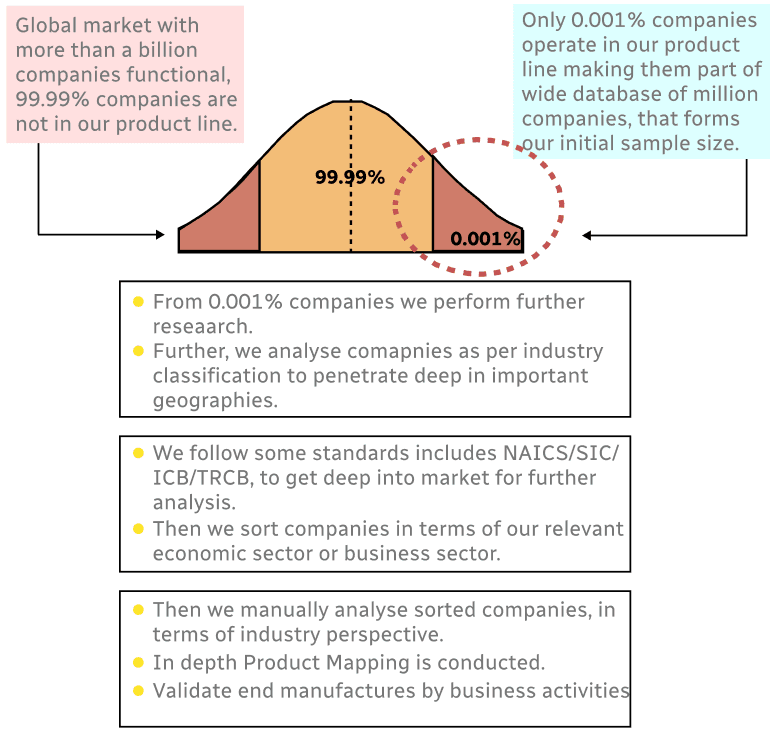
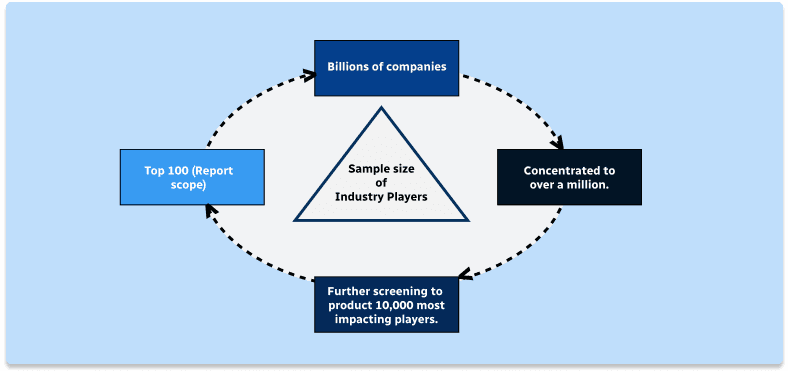
Step 1 - Identification of Relevant Samples Size from Population Database
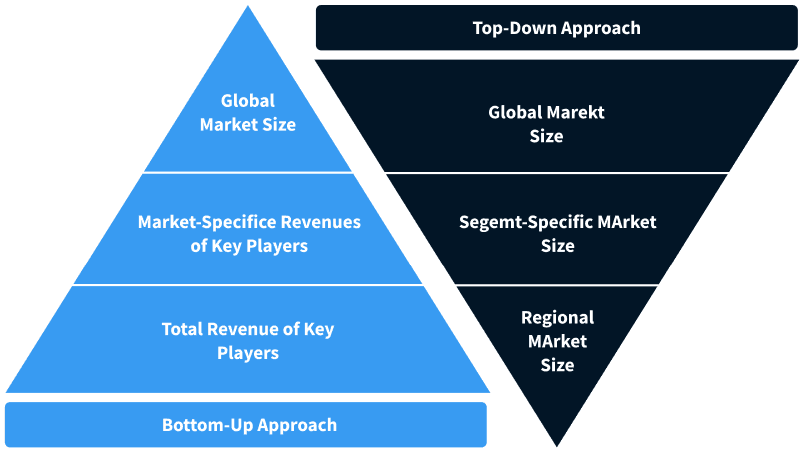
Step 2 - Approaches for Defining Global Market Size (Value, Volume* & Price*)
Note*: In applicable scenarios
Step 3 - Data Sources
Primary Research
- Web Analytics
- Survey Reports
- Research Institute
- Latest Research Reports
- Opinion Leaders
Secondary Research
- Annual Reports
- White Paper
- Latest Press Release
- Industry Association
- Paid Database
- Investor Presentations
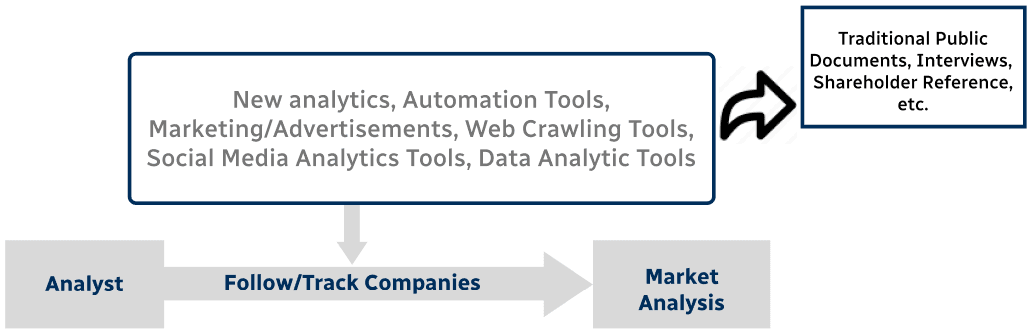
Step 4 - Data Triangulation
Involves using different sources of information in order to increase the validity of a study
These sources are likely to be stakeholders in a program - participants, other researchers, program staff, other community members, and so on.
Then we put all data in single framework & apply various statistical tools to find out the dynamic on the market.
During the analysis stage, feedback from the stakeholder groups would be compared to determine areas of agreement as well as areas of divergence