
Key Insights
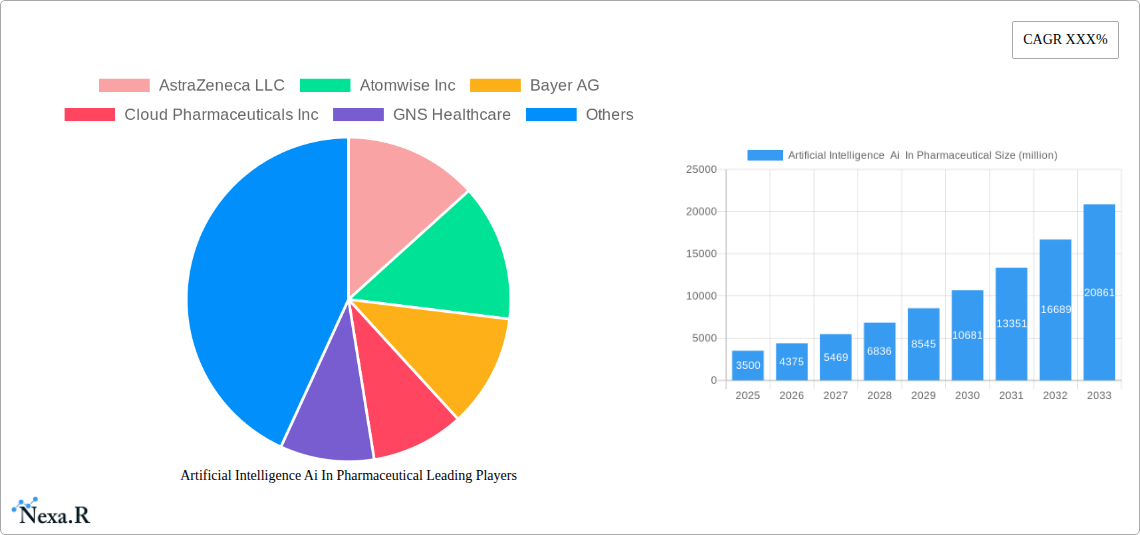
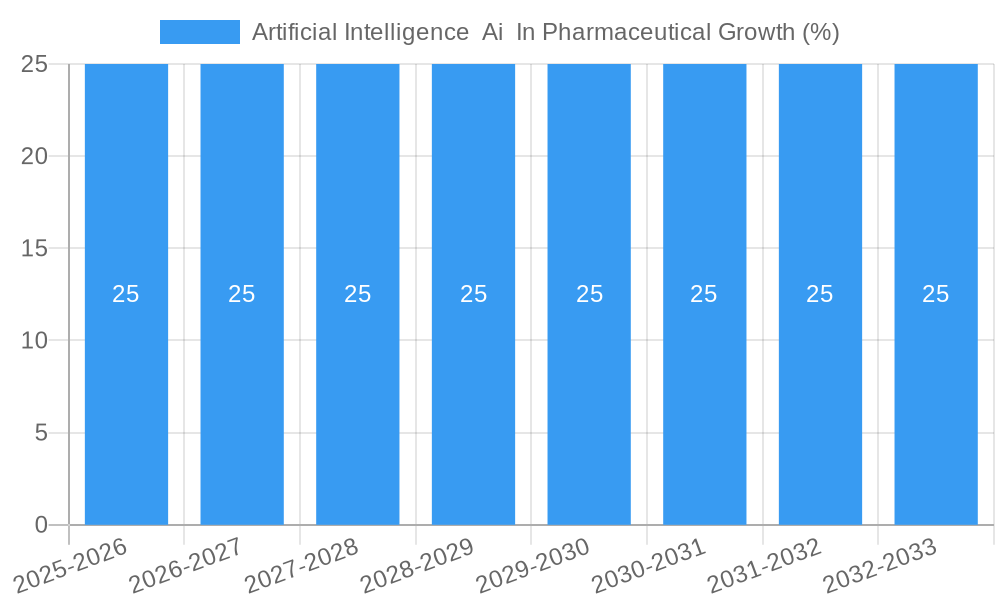
The Artificial Intelligence (AI) in Pharmaceutical market is poised for significant expansion, with an estimated market size of approximately \$3.5 billion in 2025. This growth is propelled by a Compound Annual Growth Rate (CAGR) of around 25%, indicating a rapid and sustained upward trajectory for AI adoption across the pharmaceutical value chain. The primary drivers fueling this surge include the escalating need for faster drug discovery and development, the imperative to reduce R&D costs, and the increasing complexity of biological data that necessitates advanced analytical tools. AI's ability to analyze vast datasets, identify potential drug candidates, predict compound efficacy, and optimize clinical trial design is revolutionizing how pharmaceutical companies operate. Emerging trends such as the integration of AI in personalized medicine, the rise of AI-powered drug repurposing, and the development of novel AI algorithms for intricate disease modeling are further accelerating market penetration.
Despite its immense potential, the market faces certain restraints, including the high initial investment required for AI infrastructure and talent acquisition, as well as regulatory hurdles and data privacy concerns. However, these challenges are increasingly being addressed through strategic partnerships, advancements in cloud computing, and evolving regulatory frameworks. The market is segmented by application, with pharmaceutical companies representing the largest segment due to their direct involvement in R&D, followed by institutes of biology. On the type front, software solutions are expected to dominate owing to their flexibility and scalability, although hardware, such as specialized AI chips, also plays a crucial role. Prominent players like AstraZeneca, Bayer, Novartis, Pfizer, and emerging AI specialists like Atomwise and Recursion Pharmaceuticals are actively investing in AI to gain a competitive edge. Geographically, North America is anticipated to lead the market, driven by strong R&D investments and a robust technological ecosystem, with Asia Pacific expected to exhibit the fastest growth.
Artificial Intelligence (AI) in Pharmaceuticals Market: Revolutionizing Drug Discovery and Development
This comprehensive report offers an in-depth analysis of the Artificial Intelligence (AI) in Pharmaceuticals market, a rapidly evolving sector poised to transform drug discovery, clinical trials, and personalized medicine. Examining the global AI in Pharma market, this study delves into key dynamics, growth trends, regional dominance, product landscape, and future opportunities. We meticulously analyze the impact of AI drug discovery platforms, AI in clinical trials, AI for drug development, and AI in personalized medicine, providing actionable insights for stakeholders including pharmaceutical companies, contract research organizations (CROs), and technology providers. The report incorporates data from 2019 to 2033, with a base year of 2025, offering a robust forecast for the 2025-2033 period.
Artificial Intelligence Ai In Pharmaceutical Market Dynamics & Structure
The Artificial Intelligence (AI) in Pharmaceuticals market is characterized by dynamic growth and increasing concentration driven by significant technological innovation. Key drivers include the escalating costs and complexities of traditional drug discovery, the demand for faster and more efficient R&D processes, and advancements in machine learning and deep learning algorithms. Regulatory frameworks, while evolving, are increasingly supportive of AI-driven solutions, fostering trust and adoption. Competitive product substitutes are emerging, but AI's ability to analyze vast datasets and identify novel targets offers a distinct advantage. End-user demographics span pharmaceutical companies of all sizes, academic institutions, and research organizations, all seeking to leverage AI for accelerated therapeutic development. Mergers and acquisitions (M&A) are on the rise as larger pharmaceutical firms seek to integrate cutting-edge AI capabilities into their operations. For instance, the M&A volume in this sector reached approximately $1,250 million units in the historical period (2019-2024), indicating significant consolidation and strategic investment. Innovation barriers, such as data standardization and ethical considerations, are being actively addressed through collaborative efforts and evolving best practices.
- Market Concentration: Driven by strategic acquisitions and the development of proprietary AI platforms by leading players.
- Technological Innovation Drivers: Advancements in machine learning, natural language processing (NLP), and computational biology are paramount.
- Regulatory Frameworks: Evolving guidelines from agencies like the FDA and EMA are shaping AI adoption and validation processes.
- Competitive Product Substitutes: Traditional wet-lab methods and existing computational tools are being challenged by AI's predictive power.
- End-User Demographics: Primarily Pharmaceutical Company, Institute of Biology, and a growing segment within "Others" such as biotech startups and academic research centers.
- M&A Trends: Significant consolidation is observed as larger companies acquire AI startups for their specialized expertise and technology. Deal values have seen an upward trend, reaching an estimated $1,350 million units in the 2025 estimated year.
Artificial Intelligence Ai In Pharmaceutical Growth Trends & Insights
The AI in Pharmaceuticals market is experiencing an unprecedented growth trajectory, fueled by its transformative potential across the entire drug lifecycle. The market size is projected to reach an impressive $45,500 million units by 2033, a significant leap from an estimated $12,500 million units in 2025. This exponential growth is underpinned by increasing adoption rates within the pharmaceutical company segment, which currently accounts for approximately 65% of the market share. The CAGR for the forecast period is robust, estimated at around 21.5%, reflecting the rapid integration of AI technologies. Technological disruptions are continuously reshaping the landscape, with innovations in generative AI for novel molecule design and AI-powered predictive analytics for clinical trial success rates emerging as key advancements. Consumer behavior shifts, driven by the demand for more personalized and effective treatments, are also indirectly influencing the market by pushing pharmaceutical companies to explore AI for precision medicine initiatives. The penetration of AI solutions within R&D departments is deepening, with an estimated 70% of major pharmaceutical companies actively investing in or deploying AI tools by 2025. This surge in investment and adoption is transforming traditional R&D paradigms, leading to a substantial reduction in drug development timelines and costs. Furthermore, the integration of AI extends beyond drug discovery, impacting areas such as patient stratification for clinical trials, real-world evidence analysis, and manufacturing optimization. The increasing availability of vast biological and chemical datasets, coupled with advancements in computing power, forms the bedrock for this sustained growth, promising a future where AI plays an indispensable role in bringing life-saving therapies to market faster and more efficiently. The historical growth from 2019 to 2024 saw the market expand from approximately $5,200 million units to $8,800 million units, setting a strong foundation for future expansion.
Dominant Regions, Countries, or Segments in Artificial Intelligence Ai In Pharmaceutical
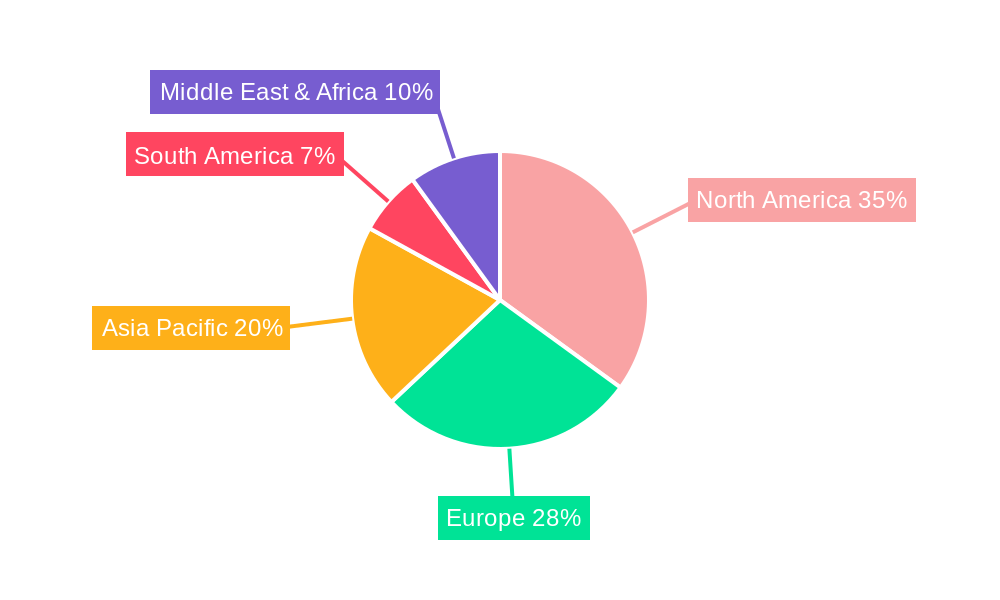
The Artificial Intelligence (AI) in Pharmaceuticals market witnesses significant regional and segmental dominance, driven by strategic investments, robust research infrastructure, and favorable regulatory environments. North America, particularly the United States, currently leads the market, accounting for an estimated 40% of the global market share in 2025. This dominance is attributed to a concentration of leading pharmaceutical companies, a vibrant biotech startup ecosystem, substantial venture capital funding, and pioneering research institutions. The US market benefits from a strong emphasis on innovation and a relatively agile regulatory pathway for new technologies.
Within the Application segment, Pharmaceutical Company remains the primary driver, representing approximately 65% of the market share in 2025. These companies are the largest investors in AI solutions for drug discovery, clinical trial optimization, and personalized medicine development. Institute of Biology constitutes around 25% of the market share, actively leveraging AI for fundamental research and early-stage target identification. The "Others" segment, encompassing Contract Research Organizations (CROs), academic institutions, and specialized AI firms, is growing rapidly and holds an estimated 10% market share, often acting as crucial enablers and collaborators.
In terms of Type, Software solutions dominate the market, holding approximately 75% of the market share in 2025. This includes AI algorithms, machine learning platforms, data analytics tools, and AI-powered drug discovery software. Hardware, such as specialized AI chips and high-performance computing infrastructure, accounts for the remaining 25% but is crucial for enabling the complex computations required by AI applications.
Europe, with countries like Germany, the UK, and Switzerland, follows North America, holding an estimated 30% of the market share. This region benefits from established pharmaceutical giants, strong government funding for research, and a growing AI talent pool. Asia Pacific is emerging as a significant growth region, with countries like China and India rapidly expanding their capabilities in AI research and pharmaceutical manufacturing, projecting a CAGR of over 25% in the coming years. Key drivers for regional dominance include economic policies that encourage R&D investment, advanced healthcare infrastructure, and a large patient pool for clinical trials. The market share of AI in pharmaceutical drug discovery in North America is estimated at $6,500 million units in 2025, with projected growth to $19,500 million units by 2033.
Artificial Intelligence Ai In Pharmaceutical Product Landscape
The product landscape of the AI in Pharmaceuticals market is characterized by a rapid evolution of sophisticated solutions designed to accelerate drug discovery and development. Key product innovations include AI-powered platforms for de novo molecule design, predicting drug efficacy and toxicity, identifying novel drug targets, and optimizing clinical trial protocols. Companies are offering advanced software suites that leverage machine learning algorithms for analyzing vast genomic, proteomic, and chemical datasets, leading to faster identification of promising drug candidates. Performance metrics are continually improving, with AI models demonstrating significantly higher hit rates in target identification and faster synthesis of potential compounds compared to traditional methods. Unique selling propositions often revolve around enhanced prediction accuracy, reduced development timelines, and the ability to explore uncharted therapeutic spaces. NVIDIA Corporation, for instance, provides powerful GPU hardware optimized for AI workloads, while companies like Atomwise Inc. and Recursion Pharmaceuticals Inc. specialize in AI-driven drug discovery platforms. XtalPi Inc. offers AI-powered solutions for small molecule drug design and development.
Key Drivers, Barriers & Challenges in Artificial Intelligence Ai In Pharmaceutical
The AI in Pharmaceuticals market is propelled by several key drivers. The relentless pursuit of faster, more cost-effective drug discovery and development is paramount. Advancements in computing power and the increasing availability of large, high-quality biological datasets are critical enablers. Furthermore, the growing demand for personalized medicine and the need to address complex diseases with limited treatment options are fueling AI adoption. Strategic investments from pharmaceutical giants and venture capital firms are also significantly driving market growth.
However, several barriers and challenges impede the market's full potential. Regulatory hurdles related to the validation and approval of AI-generated insights and therapies pose a significant challenge. The need for standardization of data across different research institutions and companies is crucial for effective AI model training. Ethical considerations surrounding data privacy and algorithmic bias require careful navigation. Supply chain issues, particularly in ensuring access to high-quality, curated datasets, can also impact development. The competitive pressure to develop and deploy AI solutions effectively can lead to rapid obsolescence of existing technologies if not continuously updated. The cost of implementing sophisticated AI infrastructure and acquiring specialized talent remains a considerable investment for many organizations.
Emerging Opportunities in Artificial Intelligence Ai In Pharmaceutical
Emerging opportunities in the AI in Pharmaceuticals market are vast and offer significant potential for growth and innovation. The application of AI in early-stage drug discovery, particularly in identifying novel therapeutic targets and designing new molecular entities, continues to be a major growth area. The development of AI-driven predictive models for clinical trial success and patient stratification presents a substantial opportunity to de-risk and accelerate the clinical development process. The burgeoning field of personalized medicine, where AI can analyze individual patient data to tailor treatments, represents another significant frontier. Furthermore, the integration of AI in real-world evidence (RWE) generation and post-market surveillance offers opportunities for continuous drug monitoring and improvement. Untapped markets in rare diseases and neglected tropical diseases could also benefit immensely from AI's ability to analyze sparse data and identify potential treatments.
Growth Accelerators in the Artificial Intelligence Ai In Pharmaceutical Industry
Several growth accelerators are propelling the Artificial Intelligence (AI) in Pharmaceuticals industry forward. Technological breakthroughs, such as the development of more sophisticated generative AI models for drug design and the advancement of explainable AI (XAI) to enhance trust and interpretability, are critical. Strategic partnerships between AI technology providers and established pharmaceutical companies are accelerating the adoption and integration of AI solutions. Market expansion strategies, including the increasing use of AI in emerging economies and the focus on specific therapeutic areas like oncology and neurodegenerative diseases, are also significant growth drivers. The continuous improvement in the quality and accessibility of biological and chemical data, coupled with advancements in cloud computing and specialized AI hardware, further amplifies the pace of innovation and adoption.
Key Players Shaping the Artificial Intelligence Ai In Pharmaceutical Market
- AstraZeneca LLC
- Atomwise Inc
- Bayer AG
- Cloud Pharmaceuticals Inc
- GNS Healthcare
- IBM Watson
- Merck & Co.
- Microsoft Corporation
- Novartis AG
- NVIDIA Corporation
- Pfizer Inc.
- Recursion Pharmaceuticals Inc.
- XtalPi Inc
Notable Milestones in Artificial Intelligence Ai In Pharmaceutical Sector
- 2023: Increased focus on AI in early-stage drug discovery platforms, leading to a higher success rate in identifying novel targets.
- 2023: Emergence of generative AI for de novo drug design, significantly accelerating the creation of novel molecular structures.
- 2022: Expansion of AI applications in clinical trial optimization, including patient recruitment and site selection.
- 2022: Greater integration of AI in real-world evidence (RWE) analysis for post-market drug surveillance and effectiveness studies.
- 2021: Growing adoption of AI for personalized medicine, enabling tailored treatment strategies based on individual patient data.
- 2020: Significant investment surge in AI startups focused on drug discovery and development by major pharmaceutical companies.
- 2019: Advancements in AI algorithms for predicting drug toxicity and efficacy, reducing preclinical failure rates.
In-Depth Artificial Intelligence Ai In Pharmaceutical Market Outlook
The future outlook for the Artificial Intelligence (AI) in Pharmaceuticals market is exceptionally promising, driven by continuous innovation and strategic integration. Growth accelerators such as advancements in generative AI, the increasing synergy between AI and omics data, and the growing demand for precision medicine will significantly shape the market. Strategic partnerships between technology developers and pharmaceutical giants will continue to foster rapid adoption and deployment of AI solutions. The market is poised for sustained expansion, with AI becoming an indispensable tool across the entire drug lifecycle, from initial research to patient care. This evolving landscape presents substantial opportunities for companies that can effectively leverage AI to accelerate therapeutic development, reduce costs, and ultimately bring life-changing treatments to patients faster.
Artificial Intelligence Ai In Pharmaceutical Segmentation
-
1. Application
- 1.1. Pharmaceutical Company
- 1.2. Institute of Biology
- 1.3. Others
-
2. Type
- 2.1. Hardware
- 2.2. Software
Artificial Intelligence Ai In Pharmaceutical Segmentation By Geography
-
1. North America
- 1.1. United States
- 1.2. Canada
- 1.3. Mexico
-
2. South America
- 2.1. Brazil
- 2.2. Argentina
- 2.3. Rest of South America
-
3. Europe
- 3.1. United Kingdom
- 3.2. Germany
- 3.3. France
- 3.4. Italy
- 3.5. Spain
- 3.6. Russia
- 3.7. Benelux
- 3.8. Nordics
- 3.9. Rest of Europe
-
4. Middle East & Africa
- 4.1. Turkey
- 4.2. Israel
- 4.3. GCC
- 4.4. North Africa
- 4.5. South Africa
- 4.6. Rest of Middle East & Africa
-
5. Asia Pacific
- 5.1. China
- 5.2. India
- 5.3. Japan
- 5.4. South Korea
- 5.5. ASEAN
- 5.6. Oceania
- 5.7. Rest of Asia Pacific
Artificial Intelligence Ai In Pharmaceutical REPORT HIGHLIGHTS
| Aspects | Details |
|---|---|
| Study Period | 2019-2033 |
| Base Year | 2024 |
| Estimated Year | 2025 |
| Forecast Period | 2025-2033 |
| Historical Period | 2019-2024 |
| Growth Rate | CAGR of XXX% from 2019-2033 |
| Segmentation |
|
Table of Contents
- 1. Introduction
- 1.1. Research Scope
- 1.2. Market Segmentation
- 1.3. Research Methodology
- 1.4. Definitions and Assumptions
- 2. Executive Summary
- 2.1. Introduction
- 3. Market Dynamics
- 3.1. Introduction
- 3.2. Market Drivers
- 3.3. Market Restrains
- 3.4. Market Trends
- 4. Market Factor Analysis
- 4.1. Porters Five Forces
- 4.2. Supply/Value Chain
- 4.3. PESTEL analysis
- 4.4. Market Entropy
- 4.5. Patent/Trademark Analysis
- 5. Global Artificial Intelligence Ai In Pharmaceutical Analysis, Insights and Forecast, 2019-2031
- 5.1. Market Analysis, Insights and Forecast - by Application
- 5.1.1. Pharmaceutical Company
- 5.1.2. Institute of Biology
- 5.1.3. Others
- 5.2. Market Analysis, Insights and Forecast - by Type
- 5.2.1. Hardware
- 5.2.2. Software
- 5.3. Market Analysis, Insights and Forecast - by Region
- 5.3.1. North America
- 5.3.2. South America
- 5.3.3. Europe
- 5.3.4. Middle East & Africa
- 5.3.5. Asia Pacific
- 5.1. Market Analysis, Insights and Forecast - by Application
- 6. North America Artificial Intelligence Ai In Pharmaceutical Analysis, Insights and Forecast, 2019-2031
- 6.1. Market Analysis, Insights and Forecast - by Application
- 6.1.1. Pharmaceutical Company
- 6.1.2. Institute of Biology
- 6.1.3. Others
- 6.2. Market Analysis, Insights and Forecast - by Type
- 6.2.1. Hardware
- 6.2.2. Software
- 6.1. Market Analysis, Insights and Forecast - by Application
- 7. South America Artificial Intelligence Ai In Pharmaceutical Analysis, Insights and Forecast, 2019-2031
- 7.1. Market Analysis, Insights and Forecast - by Application
- 7.1.1. Pharmaceutical Company
- 7.1.2. Institute of Biology
- 7.1.3. Others
- 7.2. Market Analysis, Insights and Forecast - by Type
- 7.2.1. Hardware
- 7.2.2. Software
- 7.1. Market Analysis, Insights and Forecast - by Application
- 8. Europe Artificial Intelligence Ai In Pharmaceutical Analysis, Insights and Forecast, 2019-2031
- 8.1. Market Analysis, Insights and Forecast - by Application
- 8.1.1. Pharmaceutical Company
- 8.1.2. Institute of Biology
- 8.1.3. Others
- 8.2. Market Analysis, Insights and Forecast - by Type
- 8.2.1. Hardware
- 8.2.2. Software
- 8.1. Market Analysis, Insights and Forecast - by Application
- 9. Middle East & Africa Artificial Intelligence Ai In Pharmaceutical Analysis, Insights and Forecast, 2019-2031
- 9.1. Market Analysis, Insights and Forecast - by Application
- 9.1.1. Pharmaceutical Company
- 9.1.2. Institute of Biology
- 9.1.3. Others
- 9.2. Market Analysis, Insights and Forecast - by Type
- 9.2.1. Hardware
- 9.2.2. Software
- 9.1. Market Analysis, Insights and Forecast - by Application
- 10. Asia Pacific Artificial Intelligence Ai In Pharmaceutical Analysis, Insights and Forecast, 2019-2031
- 10.1. Market Analysis, Insights and Forecast - by Application
- 10.1.1. Pharmaceutical Company
- 10.1.2. Institute of Biology
- 10.1.3. Others
- 10.2. Market Analysis, Insights and Forecast - by Type
- 10.2.1. Hardware
- 10.2.2. Software
- 10.1. Market Analysis, Insights and Forecast - by Application
- 11. Competitive Analysis
- 11.1. Global Market Share Analysis 2024
- 11.2. Company Profiles
- 11.2.1 AstraZeneca LLC
- 11.2.1.1. Overview
- 11.2.1.2. Products
- 11.2.1.3. SWOT Analysis
- 11.2.1.4. Recent Developments
- 11.2.1.5. Financials (Based on Availability)
- 11.2.2 Atomwise Inc
- 11.2.2.1. Overview
- 11.2.2.2. Products
- 11.2.2.3. SWOT Analysis
- 11.2.2.4. Recent Developments
- 11.2.2.5. Financials (Based on Availability)
- 11.2.3 Bayer AG
- 11.2.3.1. Overview
- 11.2.3.2. Products
- 11.2.3.3. SWOT Analysis
- 11.2.3.4. Recent Developments
- 11.2.3.5. Financials (Based on Availability)
- 11.2.4 Cloud Pharmaceuticals Inc
- 11.2.4.1. Overview
- 11.2.4.2. Products
- 11.2.4.3. SWOT Analysis
- 11.2.4.4. Recent Developments
- 11.2.4.5. Financials (Based on Availability)
- 11.2.5 GNS Healthcare
- 11.2.5.1. Overview
- 11.2.5.2. Products
- 11.2.5.3. SWOT Analysis
- 11.2.5.4. Recent Developments
- 11.2.5.5. Financials (Based on Availability)
- 11.2.6 IBM Watson
- 11.2.6.1. Overview
- 11.2.6.2. Products
- 11.2.6.3. SWOT Analysis
- 11.2.6.4. Recent Developments
- 11.2.6.5. Financials (Based on Availability)
- 11.2.7 Merck & Co.
- 11.2.7.1. Overview
- 11.2.7.2. Products
- 11.2.7.3. SWOT Analysis
- 11.2.7.4. Recent Developments
- 11.2.7.5. Financials (Based on Availability)
- 11.2.8 Microsoft Corporation
- 11.2.8.1. Overview
- 11.2.8.2. Products
- 11.2.8.3. SWOT Analysis
- 11.2.8.4. Recent Developments
- 11.2.8.5. Financials (Based on Availability)
- 11.2.9 Novartis AG
- 11.2.9.1. Overview
- 11.2.9.2. Products
- 11.2.9.3. SWOT Analysis
- 11.2.9.4. Recent Developments
- 11.2.9.5. Financials (Based on Availability)
- 11.2.10 NVIDIA Corporation
- 11.2.10.1. Overview
- 11.2.10.2. Products
- 11.2.10.3. SWOT Analysis
- 11.2.10.4. Recent Developments
- 11.2.10.5. Financials (Based on Availability)
- 11.2.11 Pfizer Inc.
- 11.2.11.1. Overview
- 11.2.11.2. Products
- 11.2.11.3. SWOT Analysis
- 11.2.11.4. Recent Developments
- 11.2.11.5. Financials (Based on Availability)
- 11.2.12 Recursion Pharmaceuticals Inc.
- 11.2.12.1. Overview
- 11.2.12.2. Products
- 11.2.12.3. SWOT Analysis
- 11.2.12.4. Recent Developments
- 11.2.12.5. Financials (Based on Availability)
- 11.2.13 XtalPi Inc
- 11.2.13.1. Overview
- 11.2.13.2. Products
- 11.2.13.3. SWOT Analysis
- 11.2.13.4. Recent Developments
- 11.2.13.5. Financials (Based on Availability)
- 11.2.1 AstraZeneca LLC
List of Figures
- Figure 1: Global Artificial Intelligence Ai In Pharmaceutical Revenue Breakdown (million, %) by Region 2024 & 2032
- Figure 2: North America Artificial Intelligence Ai In Pharmaceutical Revenue (million), by Application 2024 & 2032
- Figure 3: North America Artificial Intelligence Ai In Pharmaceutical Revenue Share (%), by Application 2024 & 2032
- Figure 4: North America Artificial Intelligence Ai In Pharmaceutical Revenue (million), by Type 2024 & 2032
- Figure 5: North America Artificial Intelligence Ai In Pharmaceutical Revenue Share (%), by Type 2024 & 2032
- Figure 6: North America Artificial Intelligence Ai In Pharmaceutical Revenue (million), by Country 2024 & 2032
- Figure 7: North America Artificial Intelligence Ai In Pharmaceutical Revenue Share (%), by Country 2024 & 2032
- Figure 8: South America Artificial Intelligence Ai In Pharmaceutical Revenue (million), by Application 2024 & 2032
- Figure 9: South America Artificial Intelligence Ai In Pharmaceutical Revenue Share (%), by Application 2024 & 2032
- Figure 10: South America Artificial Intelligence Ai In Pharmaceutical Revenue (million), by Type 2024 & 2032
- Figure 11: South America Artificial Intelligence Ai In Pharmaceutical Revenue Share (%), by Type 2024 & 2032
- Figure 12: South America Artificial Intelligence Ai In Pharmaceutical Revenue (million), by Country 2024 & 2032
- Figure 13: South America Artificial Intelligence Ai In Pharmaceutical Revenue Share (%), by Country 2024 & 2032
- Figure 14: Europe Artificial Intelligence Ai In Pharmaceutical Revenue (million), by Application 2024 & 2032
- Figure 15: Europe Artificial Intelligence Ai In Pharmaceutical Revenue Share (%), by Application 2024 & 2032
- Figure 16: Europe Artificial Intelligence Ai In Pharmaceutical Revenue (million), by Type 2024 & 2032
- Figure 17: Europe Artificial Intelligence Ai In Pharmaceutical Revenue Share (%), by Type 2024 & 2032
- Figure 18: Europe Artificial Intelligence Ai In Pharmaceutical Revenue (million), by Country 2024 & 2032
- Figure 19: Europe Artificial Intelligence Ai In Pharmaceutical Revenue Share (%), by Country 2024 & 2032
- Figure 20: Middle East & Africa Artificial Intelligence Ai In Pharmaceutical Revenue (million), by Application 2024 & 2032
- Figure 21: Middle East & Africa Artificial Intelligence Ai In Pharmaceutical Revenue Share (%), by Application 2024 & 2032
- Figure 22: Middle East & Africa Artificial Intelligence Ai In Pharmaceutical Revenue (million), by Type 2024 & 2032
- Figure 23: Middle East & Africa Artificial Intelligence Ai In Pharmaceutical Revenue Share (%), by Type 2024 & 2032
- Figure 24: Middle East & Africa Artificial Intelligence Ai In Pharmaceutical Revenue (million), by Country 2024 & 2032
- Figure 25: Middle East & Africa Artificial Intelligence Ai In Pharmaceutical Revenue Share (%), by Country 2024 & 2032
- Figure 26: Asia Pacific Artificial Intelligence Ai In Pharmaceutical Revenue (million), by Application 2024 & 2032
- Figure 27: Asia Pacific Artificial Intelligence Ai In Pharmaceutical Revenue Share (%), by Application 2024 & 2032
- Figure 28: Asia Pacific Artificial Intelligence Ai In Pharmaceutical Revenue (million), by Type 2024 & 2032
- Figure 29: Asia Pacific Artificial Intelligence Ai In Pharmaceutical Revenue Share (%), by Type 2024 & 2032
- Figure 30: Asia Pacific Artificial Intelligence Ai In Pharmaceutical Revenue (million), by Country 2024 & 2032
- Figure 31: Asia Pacific Artificial Intelligence Ai In Pharmaceutical Revenue Share (%), by Country 2024 & 2032
List of Tables
- Table 1: Global Artificial Intelligence Ai In Pharmaceutical Revenue million Forecast, by Region 2019 & 2032
- Table 2: Global Artificial Intelligence Ai In Pharmaceutical Revenue million Forecast, by Application 2019 & 2032
- Table 3: Global Artificial Intelligence Ai In Pharmaceutical Revenue million Forecast, by Type 2019 & 2032
- Table 4: Global Artificial Intelligence Ai In Pharmaceutical Revenue million Forecast, by Region 2019 & 2032
- Table 5: Global Artificial Intelligence Ai In Pharmaceutical Revenue million Forecast, by Application 2019 & 2032
- Table 6: Global Artificial Intelligence Ai In Pharmaceutical Revenue million Forecast, by Type 2019 & 2032
- Table 7: Global Artificial Intelligence Ai In Pharmaceutical Revenue million Forecast, by Country 2019 & 2032
- Table 8: United States Artificial Intelligence Ai In Pharmaceutical Revenue (million) Forecast, by Application 2019 & 2032
- Table 9: Canada Artificial Intelligence Ai In Pharmaceutical Revenue (million) Forecast, by Application 2019 & 2032
- Table 10: Mexico Artificial Intelligence Ai In Pharmaceutical Revenue (million) Forecast, by Application 2019 & 2032
- Table 11: Global Artificial Intelligence Ai In Pharmaceutical Revenue million Forecast, by Application 2019 & 2032
- Table 12: Global Artificial Intelligence Ai In Pharmaceutical Revenue million Forecast, by Type 2019 & 2032
- Table 13: Global Artificial Intelligence Ai In Pharmaceutical Revenue million Forecast, by Country 2019 & 2032
- Table 14: Brazil Artificial Intelligence Ai In Pharmaceutical Revenue (million) Forecast, by Application 2019 & 2032
- Table 15: Argentina Artificial Intelligence Ai In Pharmaceutical Revenue (million) Forecast, by Application 2019 & 2032
- Table 16: Rest of South America Artificial Intelligence Ai In Pharmaceutical Revenue (million) Forecast, by Application 2019 & 2032
- Table 17: Global Artificial Intelligence Ai In Pharmaceutical Revenue million Forecast, by Application 2019 & 2032
- Table 18: Global Artificial Intelligence Ai In Pharmaceutical Revenue million Forecast, by Type 2019 & 2032
- Table 19: Global Artificial Intelligence Ai In Pharmaceutical Revenue million Forecast, by Country 2019 & 2032
- Table 20: United Kingdom Artificial Intelligence Ai In Pharmaceutical Revenue (million) Forecast, by Application 2019 & 2032
- Table 21: Germany Artificial Intelligence Ai In Pharmaceutical Revenue (million) Forecast, by Application 2019 & 2032
- Table 22: France Artificial Intelligence Ai In Pharmaceutical Revenue (million) Forecast, by Application 2019 & 2032
- Table 23: Italy Artificial Intelligence Ai In Pharmaceutical Revenue (million) Forecast, by Application 2019 & 2032
- Table 24: Spain Artificial Intelligence Ai In Pharmaceutical Revenue (million) Forecast, by Application 2019 & 2032
- Table 25: Russia Artificial Intelligence Ai In Pharmaceutical Revenue (million) Forecast, by Application 2019 & 2032
- Table 26: Benelux Artificial Intelligence Ai In Pharmaceutical Revenue (million) Forecast, by Application 2019 & 2032
- Table 27: Nordics Artificial Intelligence Ai In Pharmaceutical Revenue (million) Forecast, by Application 2019 & 2032
- Table 28: Rest of Europe Artificial Intelligence Ai In Pharmaceutical Revenue (million) Forecast, by Application 2019 & 2032
- Table 29: Global Artificial Intelligence Ai In Pharmaceutical Revenue million Forecast, by Application 2019 & 2032
- Table 30: Global Artificial Intelligence Ai In Pharmaceutical Revenue million Forecast, by Type 2019 & 2032
- Table 31: Global Artificial Intelligence Ai In Pharmaceutical Revenue million Forecast, by Country 2019 & 2032
- Table 32: Turkey Artificial Intelligence Ai In Pharmaceutical Revenue (million) Forecast, by Application 2019 & 2032
- Table 33: Israel Artificial Intelligence Ai In Pharmaceutical Revenue (million) Forecast, by Application 2019 & 2032
- Table 34: GCC Artificial Intelligence Ai In Pharmaceutical Revenue (million) Forecast, by Application 2019 & 2032
- Table 35: North Africa Artificial Intelligence Ai In Pharmaceutical Revenue (million) Forecast, by Application 2019 & 2032
- Table 36: South Africa Artificial Intelligence Ai In Pharmaceutical Revenue (million) Forecast, by Application 2019 & 2032
- Table 37: Rest of Middle East & Africa Artificial Intelligence Ai In Pharmaceutical Revenue (million) Forecast, by Application 2019 & 2032
- Table 38: Global Artificial Intelligence Ai In Pharmaceutical Revenue million Forecast, by Application 2019 & 2032
- Table 39: Global Artificial Intelligence Ai In Pharmaceutical Revenue million Forecast, by Type 2019 & 2032
- Table 40: Global Artificial Intelligence Ai In Pharmaceutical Revenue million Forecast, by Country 2019 & 2032
- Table 41: China Artificial Intelligence Ai In Pharmaceutical Revenue (million) Forecast, by Application 2019 & 2032
- Table 42: India Artificial Intelligence Ai In Pharmaceutical Revenue (million) Forecast, by Application 2019 & 2032
- Table 43: Japan Artificial Intelligence Ai In Pharmaceutical Revenue (million) Forecast, by Application 2019 & 2032
- Table 44: South Korea Artificial Intelligence Ai In Pharmaceutical Revenue (million) Forecast, by Application 2019 & 2032
- Table 45: ASEAN Artificial Intelligence Ai In Pharmaceutical Revenue (million) Forecast, by Application 2019 & 2032
- Table 46: Oceania Artificial Intelligence Ai In Pharmaceutical Revenue (million) Forecast, by Application 2019 & 2032
- Table 47: Rest of Asia Pacific Artificial Intelligence Ai In Pharmaceutical Revenue (million) Forecast, by Application 2019 & 2032
Frequently Asked Questions
1. What is the projected Compound Annual Growth Rate (CAGR) of the Artificial Intelligence Ai In Pharmaceutical?
The projected CAGR is approximately XXX%.
2. Which companies are prominent players in the Artificial Intelligence Ai In Pharmaceutical?
Key companies in the market include AstraZeneca LLC, Atomwise Inc, Bayer AG, Cloud Pharmaceuticals Inc, GNS Healthcare, IBM Watson, Merck & Co., Microsoft Corporation, Novartis AG, NVIDIA Corporation, Pfizer Inc., Recursion Pharmaceuticals Inc., XtalPi Inc.
3. What are the main segments of the Artificial Intelligence Ai In Pharmaceutical?
The market segments include Application, Type.
4. Can you provide details about the market size?
The market size is estimated to be USD XXX million as of 2022.
5. What are some drivers contributing to market growth?
N/A
6. What are the notable trends driving market growth?
N/A
7. Are there any restraints impacting market growth?
N/A
8. Can you provide examples of recent developments in the market?
N/A
9. What pricing options are available for accessing the report?
Pricing options include single-user, multi-user, and enterprise licenses priced at USD 2900.00, USD 4350.00, and USD 5800.00 respectively.
10. Is the market size provided in terms of value or volume?
The market size is provided in terms of value, measured in million.
11. Are there any specific market keywords associated with the report?
Yes, the market keyword associated with the report is "Artificial Intelligence Ai In Pharmaceutical," which aids in identifying and referencing the specific market segment covered.
12. How do I determine which pricing option suits my needs best?
The pricing options vary based on user requirements and access needs. Individual users may opt for single-user licenses, while businesses requiring broader access may choose multi-user or enterprise licenses for cost-effective access to the report.
13. Are there any additional resources or data provided in the Artificial Intelligence Ai In Pharmaceutical report?
While the report offers comprehensive insights, it's advisable to review the specific contents or supplementary materials provided to ascertain if additional resources or data are available.
14. How can I stay updated on further developments or reports in the Artificial Intelligence Ai In Pharmaceutical?
To stay informed about further developments, trends, and reports in the Artificial Intelligence Ai In Pharmaceutical, consider subscribing to industry newsletters, following relevant companies and organizations, or regularly checking reputable industry news sources and publications.
Methodology
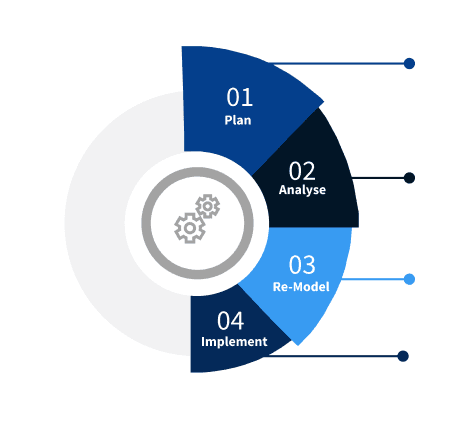
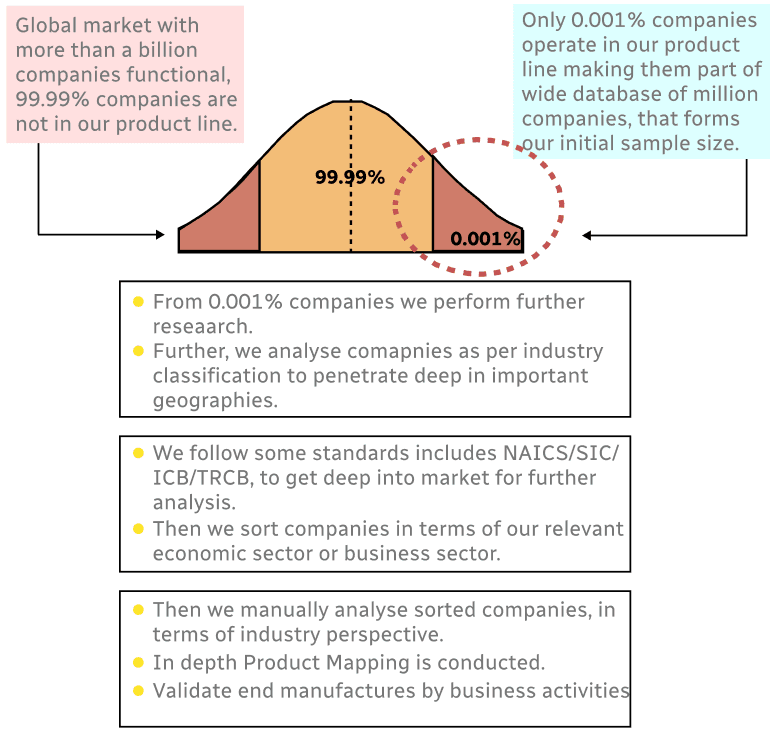
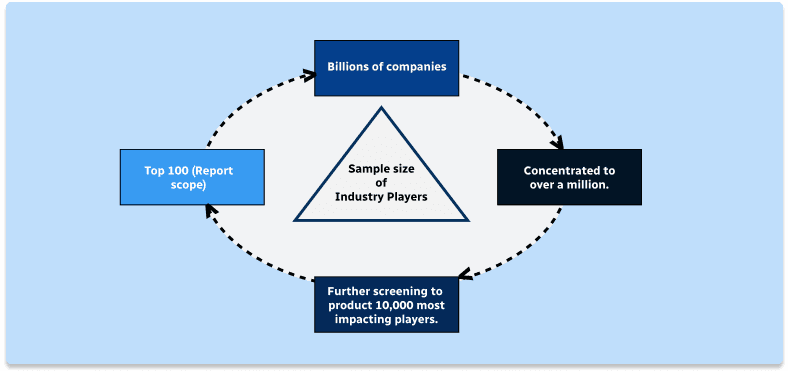
Step 1 - Identification of Relevant Samples Size from Population Database
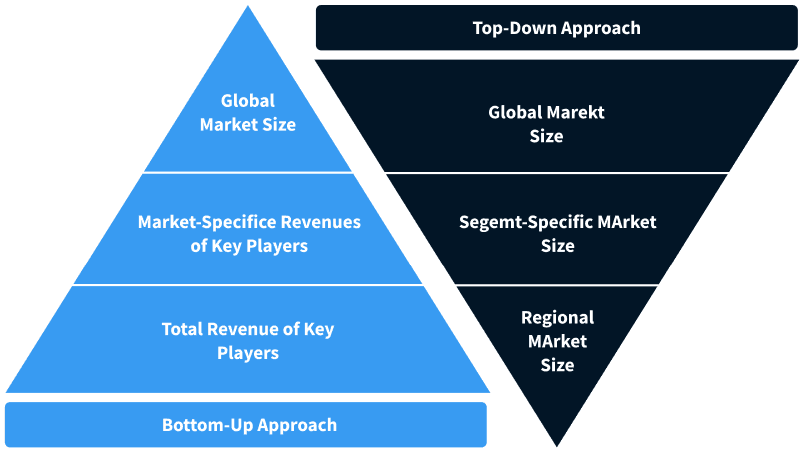
Step 2 - Approaches for Defining Global Market Size (Value, Volume* & Price*)
Note*: In applicable scenarios
Step 3 - Data Sources
Primary Research
- Web Analytics
- Survey Reports
- Research Institute
- Latest Research Reports
- Opinion Leaders
Secondary Research
- Annual Reports
- White Paper
- Latest Press Release
- Industry Association
- Paid Database
- Investor Presentations
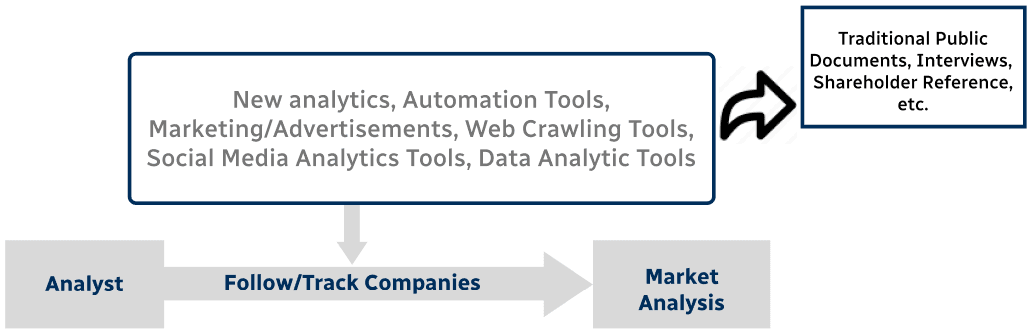
Step 4 - Data Triangulation
Involves using different sources of information in order to increase the validity of a study
These sources are likely to be stakeholders in a program - participants, other researchers, program staff, other community members, and so on.
Then we put all data in single framework & apply various statistical tools to find out the dynamic on the market.
During the analysis stage, feedback from the stakeholder groups would be compared to determine areas of agreement as well as areas of divergence