

Key Insights
The North American medical nutrition market, valued at $29.88 billion in 2025, is projected to experience robust growth, driven by several key factors. An aging population, increasing prevalence of chronic diseases like diabetes, obesity, and cancer, and rising healthcare expenditure are major contributors to this expansion. The rising incidence of malnutrition and metabolic disorders, particularly in the elderly and individuals with compromised health, fuels demand for specialized medical nutrition products. Advancements in nutritional formulations, such as those tailored to specific dietary needs and disease states, are also driving market growth. Furthermore, increasing awareness among healthcare professionals and patients regarding the importance of proper nutrition in managing chronic conditions is contributing to market expansion. The oral and enteral administration route currently dominates the market, reflecting the preference for convenient and less invasive methods of nutrient delivery. However, the parenteral route is expected to witness substantial growth due to its efficacy in managing critical conditions. The adult segment holds a significant market share, driven by a larger patient pool. However, the pediatric segment shows potential for accelerated growth, driven by the increasing awareness of the importance of nutritional support in child development and the management of childhood diseases.
Competition in the North American medical nutrition market is intense, with established players like Baxter, Fresenius Kabi, Abbott Nutrition, and Nestle Health Science dominating the landscape. These companies are actively engaged in research and development to introduce innovative products and expand their market reach. Strategic partnerships, mergers, and acquisitions are also frequent strategies employed to gain a competitive edge. While the market exhibits substantial growth potential, challenges remain. Regulatory hurdles, stringent product approvals, and pricing pressures could potentially hamper market expansion. However, the long-term outlook remains positive, with a projected Compound Annual Growth Rate (CAGR) of 6.19% from 2025 to 2033. This growth will be further propelled by continuous innovation in nutritional therapies and increasing healthcare investment in the region. Future growth hinges on effectively addressing the challenges associated with affordability and access to medical nutrition products for all segments of the population.

North America Medical Nutrition Market: A Comprehensive Report (2019-2033)
This comprehensive report provides a detailed analysis of the North America medical nutrition market, encompassing market dynamics, growth trends, regional dominance, product landscape, and key players. The study period covers 2019-2033, with 2025 as the base year and a forecast period of 2025-2033. The report segments the market by route of administration (oral & enteral, parenteral), application (malnutrition, metabolic disorders, gastrointestinal diseases, neurological diseases, cancer, other indications), and end-user (pediatric, adult). Expect detailed insights into market size (in million units), CAGR, and market share for each segment. This report is essential for industry professionals, investors, and strategic decision-makers seeking a thorough understanding of this dynamic market.
North America Medical Nutrition Market Dynamics & Structure
The North America medical nutrition market is characterized by moderate concentration, with key players holding significant market share. Technological innovation, particularly in specialized formulas and delivery systems, is a major driver. Stringent regulatory frameworks, including FDA approvals, impact product development and market entry. Competition from substitute products, such as home-prepared diets, exists but is limited due to the specialized nutritional needs addressed by medical nutrition products. The aging population and increasing prevalence of chronic diseases fuel market growth. M&A activity is relatively frequent, reflecting consolidation within the industry.
- Market Concentration: Moderately concentrated, with top 5 players holding approximately xx% market share in 2024.
- Technological Innovation: Focus on personalized nutrition, advanced delivery systems (e.g., ready-to-use liquid formulas), and improved palatability.
- Regulatory Landscape: Stringent FDA regulations govern product safety and efficacy, posing both challenges and opportunities for innovation.
- Competitive Substitutes: Limited due to specialized nutritional needs; home-prepared diets pose a minor competitive threat.
- End-User Demographics: Aging population and increasing prevalence of chronic diseases are key drivers of market growth.
- M&A Trends: Moderate M&A activity, driven by strategic expansion and market consolidation. Approximately xx M&A deals were recorded between 2019 and 2024.
North America Medical Nutrition Market Growth Trends & Insights
The North America medical nutrition market experienced significant growth during the historical period (2019-2024), driven by factors such as rising prevalence of chronic diseases, an aging population, and increased awareness of the importance of nutritional support in healthcare. The market is projected to maintain a steady growth trajectory during the forecast period (2025-2033), albeit at a slightly moderated pace compared to the historical period. Technological advancements, such as the development of specialized formulas and convenient delivery systems, are further stimulating market expansion. Shifting consumer preferences towards convenient and easy-to-administer products are also impacting market dynamics. The market is expected to reach xx million units by 2033, exhibiting a CAGR of xx% during the forecast period. Market penetration in specific segments, such as specialized nutritional support for metabolic disorders, is expected to increase significantly. Specific data on adoption rates and consumer behavior shifts will be presented within the full report.

Dominant Regions, Countries, or Segments in North America Medical Nutrition Market
The United States dominates the North American medical nutrition market, holding the largest market share. This dominance is attributed to several key factors: significantly higher healthcare expenditure compared to Canada, a more advanced healthcare infrastructure, and a substantial aging population. Within the U.S., California, Florida, and Texas are particularly strong growth markets. The oral and enteral route of administration segment commands a substantial market share due to its ease of use and broad applicability. In terms of application, nutritional support for malnutrition and metabolic disorders represent significant segments, driven by the high prevalence of these conditions. The adult segment constitutes the largest portion of the end-user market, reflecting the increased incidence of chronic diseases within this demographic.
Market Segmentation Analysis: A deeper dive into market segmentation reveals further opportunities. For example, the pediatric segment is experiencing growth driven by increased awareness of nutritional needs in children with specific health conditions. Similarly, specialized formulas for specific diseases (e.g., renal disease, liver disease) are witnessing increased adoption. Furthermore, the home healthcare segment is showing significant promise, driven by increasing patient preference for at-home care and the growing availability of remote monitoring capabilities.
- Key Growth Drivers (US): High healthcare expenditure, advanced healthcare infrastructure, aging population, rising prevalence of chronic diseases, and increasing adoption of home healthcare.
- Market Share (US): The US holds approximately [Insert Percentage]% of the total North American market. [Consider adding a source for this statistic].
- Regional Variations: Growth rates exhibit regional variations influenced by factors such as population demographics, healthcare access, disease prevalence, and government healthcare initiatives.
- Segment Dominance: Oral & Enteral route of administration, nutritional support for malnutrition and metabolic disorders, and specialized formulas for specific diseases are leading segments.
North America Medical Nutrition Market Product Landscape
The medical nutrition product landscape is characterized by a wide range of products catering to diverse nutritional needs. Innovations focus on improving product palatability, ease of administration, and specialized formulations for specific conditions. Ready-to-use liquid formulas, modular systems, and specialized products for specific metabolic conditions are gaining popularity. Unique selling propositions often revolve around improved taste, enhanced nutrient bioavailability, and targeted therapeutic benefits. Technological advancements include the use of advanced processing techniques to enhance nutrient stability and the incorporation of functional ingredients with therapeutic properties.
Key Drivers, Barriers & Challenges in North America Medical Nutrition Market
Key Drivers:
- Rising prevalence of chronic diseases (diabetes, cancer, cardiovascular disease, obesity, etc.)
- Aging population leading to increased demand for geriatric nutrition.
- Increased healthcare expenditure and insurance coverage for medical nutrition therapies.
- Technological advancements in product development (e.g., personalized nutrition, improved palatability), delivery systems (e.g., smart pumps, automated dispensing systems), and data analytics (e.g., patient monitoring and outcomes assessment).
- Growing awareness among healthcare professionals and consumers about the benefits of medical nutrition therapy.
Key Challenges & Restraints:
- Stringent regulatory approvals (FDA) impacting time-to-market and increasing development costs.
- High cost of specialized medical nutrition products, limiting accessibility, particularly for uninsured or underinsured individuals.
- Intense competition among established multinational corporations and emerging biotech companies.
- Supply chain disruptions impacting product availability and pricing. (Quantifiable impact: [Insert Percentage]% increase in prices in 2023 due to supply chain issues. Source needed here).
- Reimbursement challenges and variations in insurance coverage across different regions and payers.
Emerging Opportunities in North America Medical Nutrition Market
- Growing demand for personalized nutrition solutions tailored to individual patient needs and genetic predispositions.
- Expansion into untapped markets, such as telehealth and home healthcare settings, utilizing remote patient monitoring technologies.
- Development of innovative products targeting specific unmet needs (e.g., solutions for rare metabolic disorders, improved taste and texture in specialized formulas).
- Growing interest in plant-based and functional food-based medical nutrition solutions, catering to consumer preferences and health trends.
- Increased use of data analytics and predictive modeling to improve patient outcomes and optimize treatment plans.
Growth Accelerators in the North America Medical Nutrition Market Industry
Technological breakthroughs, particularly in personalized nutrition (nutrigenomics), advanced delivery systems (e.g., smart pumps, wearable sensors), innovative formulations (e.g., improved taste and texture), and predictive modeling are key growth catalysts. Strategic partnerships between manufacturers, healthcare providers (hospitals, clinics, long-term care facilities), and research institutions are fostering innovation and market expansion. Expansion into emerging markets (e.g., focusing on underserved populations) and the development of value-added services (e.g., nutritional counseling, remote patient monitoring, educational programs) are further accelerating market growth. Government initiatives promoting preventative healthcare and disease management are also playing an important role.
Key Players Shaping the North America Medical Nutrition Market Market
- Baxter
- Fresenius Kabi
- Abbott Nutrition
- Perrigo Company PLC
- Nestle Health Science
- BASF SE
- Danone S A (Nutricia)
- B Braun Melsungen AG
- Baxter Healthcare
- Reckitt Benckiser
Notable Milestones in North America Medical Nutrition Market Sector
- April 2022: Abbott released limited quantities of metabolic nutrition formulas for infants after FDA approval.
- January 2022: Guardion Health Sciences, Inc. launched a new branded Shopify store to boost sales of its Viactiv line.
In-Depth North America Medical Nutrition Market Outlook
The North America medical nutrition market is poised for continued growth, driven by an aging population, increasing prevalence of chronic diseases, and ongoing technological advancements. Strategic opportunities exist in personalized nutrition, specialized product development, and expanding market access through partnerships with healthcare providers and telehealth platforms. Further consolidation through mergers and acquisitions is anticipated, leading to increased market concentration. The market's future potential is significant, with opportunities for both established players and emerging companies to capitalize on evolving consumer preferences and healthcare needs.
North America Medical Nutrition Market Segmentation
-
1. Route of Administration
- 1.1. Oral and Enteral
- 1.2. Parenteral
-
2. Application
- 2.1. Nutritional Support for Malnutrition
- 2.2. Nutritional Support for Metabolic Disorders
- 2.3. Nutritional Support for Gastrointestinal Diseases
- 2.4. Nutritional Support for Neurological Diseases
- 2.5. Nutritional Support in Cancer
- 2.6. Nutritional Support in Other Indications
-
3. End User
- 3.1. Pediatric
- 3.2. Adult
-
4. Geography
- 4.1. United States
- 4.2. Canada
- 4.3. Mexico
North America Medical Nutrition Market Segmentation By Geography
- 1. United States
- 2. Canada
- 3. Mexico

North America Medical Nutrition Market REPORT HIGHLIGHTS
| Aspects | Details |
|---|---|
| Study Period | 2019-2033 |
| Base Year | 2024 |
| Estimated Year | 2025 |
| Forecast Period | 2025-2033 |
| Historical Period | 2019-2024 |
| Growth Rate | CAGR of 6.19% from 2019-2033 |
| Segmentation |
|
Table of Contents
- 1. Introduction
- 1.1. Research Scope
- 1.2. Market Segmentation
- 1.3. Research Methodology
- 1.4. Definitions and Assumptions
- 2. Executive Summary
- 2.1. Introduction
- 3. Market Dynamics
- 3.1. Introduction
- 3.2. Market Drivers
- 3.2.1. Increasing Prevalence of Metabolic Disorders; High Healthcare Spending by Government and Private Foundations; Growing Aging Population in North American Countries
- 3.3. Market Restrains
- 3.3.1. Imprecise Perception about Clinical Nutrition; Reduction in Birth Rates
- 3.4. Market Trends
- 3.4.1. Pediatric Segment Expects to Register a High CAGR in the North America Clinical Nutrition Market Over the Forecast Period
- 4. Market Factor Analysis
- 4.1. Porters Five Forces
- 4.2. Supply/Value Chain
- 4.3. PESTEL analysis
- 4.4. Market Entropy
- 4.5. Patent/Trademark Analysis
- 5. North America Medical Nutrition Market Analysis, Insights and Forecast, 2019-2031
- 5.1. Market Analysis, Insights and Forecast - by Route of Administration
- 5.1.1. Oral and Enteral
- 5.1.2. Parenteral
- 5.2. Market Analysis, Insights and Forecast - by Application
- 5.2.1. Nutritional Support for Malnutrition
- 5.2.2. Nutritional Support for Metabolic Disorders
- 5.2.3. Nutritional Support for Gastrointestinal Diseases
- 5.2.4. Nutritional Support for Neurological Diseases
- 5.2.5. Nutritional Support in Cancer
- 5.2.6. Nutritional Support in Other Indications
- 5.3. Market Analysis, Insights and Forecast - by End User
- 5.3.1. Pediatric
- 5.3.2. Adult
- 5.4. Market Analysis, Insights and Forecast - by Geography
- 5.4.1. United States
- 5.4.2. Canada
- 5.4.3. Mexico
- 5.5. Market Analysis, Insights and Forecast - by Region
- 5.5.1. United States
- 5.5.2. Canada
- 5.5.3. Mexico
- 5.1. Market Analysis, Insights and Forecast - by Route of Administration
- 6. United States North America Medical Nutrition Market Analysis, Insights and Forecast, 2019-2031
- 6.1. Market Analysis, Insights and Forecast - by Route of Administration
- 6.1.1. Oral and Enteral
- 6.1.2. Parenteral
- 6.2. Market Analysis, Insights and Forecast - by Application
- 6.2.1. Nutritional Support for Malnutrition
- 6.2.2. Nutritional Support for Metabolic Disorders
- 6.2.3. Nutritional Support for Gastrointestinal Diseases
- 6.2.4. Nutritional Support for Neurological Diseases
- 6.2.5. Nutritional Support in Cancer
- 6.2.6. Nutritional Support in Other Indications
- 6.3. Market Analysis, Insights and Forecast - by End User
- 6.3.1. Pediatric
- 6.3.2. Adult
- 6.4. Market Analysis, Insights and Forecast - by Geography
- 6.4.1. United States
- 6.4.2. Canada
- 6.4.3. Mexico
- 6.1. Market Analysis, Insights and Forecast - by Route of Administration
- 7. Canada North America Medical Nutrition Market Analysis, Insights and Forecast, 2019-2031
- 7.1. Market Analysis, Insights and Forecast - by Route of Administration
- 7.1.1. Oral and Enteral
- 7.1.2. Parenteral
- 7.2. Market Analysis, Insights and Forecast - by Application
- 7.2.1. Nutritional Support for Malnutrition
- 7.2.2. Nutritional Support for Metabolic Disorders
- 7.2.3. Nutritional Support for Gastrointestinal Diseases
- 7.2.4. Nutritional Support for Neurological Diseases
- 7.2.5. Nutritional Support in Cancer
- 7.2.6. Nutritional Support in Other Indications
- 7.3. Market Analysis, Insights and Forecast - by End User
- 7.3.1. Pediatric
- 7.3.2. Adult
- 7.4. Market Analysis, Insights and Forecast - by Geography
- 7.4.1. United States
- 7.4.2. Canada
- 7.4.3. Mexico
- 7.1. Market Analysis, Insights and Forecast - by Route of Administration
- 8. Mexico North America Medical Nutrition Market Analysis, Insights and Forecast, 2019-2031
- 8.1. Market Analysis, Insights and Forecast - by Route of Administration
- 8.1.1. Oral and Enteral
- 8.1.2. Parenteral
- 8.2. Market Analysis, Insights and Forecast - by Application
- 8.2.1. Nutritional Support for Malnutrition
- 8.2.2. Nutritional Support for Metabolic Disorders
- 8.2.3. Nutritional Support for Gastrointestinal Diseases
- 8.2.4. Nutritional Support for Neurological Diseases
- 8.2.5. Nutritional Support in Cancer
- 8.2.6. Nutritional Support in Other Indications
- 8.3. Market Analysis, Insights and Forecast - by End User
- 8.3.1. Pediatric
- 8.3.2. Adult
- 8.4. Market Analysis, Insights and Forecast - by Geography
- 8.4.1. United States
- 8.4.2. Canada
- 8.4.3. Mexico
- 8.1. Market Analysis, Insights and Forecast - by Route of Administration
- 9. United States North America Medical Nutrition Market Analysis, Insights and Forecast, 2019-2031
- 10. Canada North America Medical Nutrition Market Analysis, Insights and Forecast, 2019-2031
- 11. Mexico North America Medical Nutrition Market Analysis, Insights and Forecast, 2019-2031
- 12. Competitive Analysis
- 12.1. Market Share Analysis 2024
- 12.2. Company Profiles
- 12.2.1 Baxter*List Not Exhaustive
- 12.2.1.1. Overview
- 12.2.1.2. Products
- 12.2.1.3. SWOT Analysis
- 12.2.1.4. Recent Developments
- 12.2.1.5. Financials (Based on Availability)
- 12.2.2 Fresenius Kabi
- 12.2.2.1. Overview
- 12.2.2.2. Products
- 12.2.2.3. SWOT Analysis
- 12.2.2.4. Recent Developments
- 12.2.2.5. Financials (Based on Availability)
- 12.2.3 Abbott Nutrition
- 12.2.3.1. Overview
- 12.2.3.2. Products
- 12.2.3.3. SWOT Analysis
- 12.2.3.4. Recent Developments
- 12.2.3.5. Financials (Based on Availability)
- 12.2.4 Perrigo Company PLC
- 12.2.4.1. Overview
- 12.2.4.2. Products
- 12.2.4.3. SWOT Analysis
- 12.2.4.4. Recent Developments
- 12.2.4.5. Financials (Based on Availability)
- 12.2.5 Nestle Health Science
- 12.2.5.1. Overview
- 12.2.5.2. Products
- 12.2.5.3. SWOT Analysis
- 12.2.5.4. Recent Developments
- 12.2.5.5. Financials (Based on Availability)
- 12.2.6 BASF SE
- 12.2.6.1. Overview
- 12.2.6.2. Products
- 12.2.6.3. SWOT Analysis
- 12.2.6.4. Recent Developments
- 12.2.6.5. Financials (Based on Availability)
- 12.2.7 Danone S A (Nutricia)
- 12.2.7.1. Overview
- 12.2.7.2. Products
- 12.2.7.3. SWOT Analysis
- 12.2.7.4. Recent Developments
- 12.2.7.5. Financials (Based on Availability)
- 12.2.8 B Braun Melsungen AG
- 12.2.8.1. Overview
- 12.2.8.2. Products
- 12.2.8.3. SWOT Analysis
- 12.2.8.4. Recent Developments
- 12.2.8.5. Financials (Based on Availability)
- 12.2.9 Baxter Healthcare
- 12.2.9.1. Overview
- 12.2.9.2. Products
- 12.2.9.3. SWOT Analysis
- 12.2.9.4. Recent Developments
- 12.2.9.5. Financials (Based on Availability)
- 12.2.10 Reckitt Benckiser
- 12.2.10.1. Overview
- 12.2.10.2. Products
- 12.2.10.3. SWOT Analysis
- 12.2.10.4. Recent Developments
- 12.2.10.5. Financials (Based on Availability)
- 12.2.1 Baxter*List Not Exhaustive
List of Figures
- Figure 1: North America Medical Nutrition Market Revenue Breakdown (Million, %) by Product 2024 & 2032
- Figure 2: North America Medical Nutrition Market Share (%) by Company 2024
List of Tables
- Table 1: North America Medical Nutrition Market Revenue Million Forecast, by Region 2019 & 2032
- Table 2: North America Medical Nutrition Market Revenue Million Forecast, by Route of Administration 2019 & 2032
- Table 3: North America Medical Nutrition Market Revenue Million Forecast, by Application 2019 & 2032
- Table 4: North America Medical Nutrition Market Revenue Million Forecast, by End User 2019 & 2032
- Table 5: North America Medical Nutrition Market Revenue Million Forecast, by Geography 2019 & 2032
- Table 6: North America Medical Nutrition Market Revenue Million Forecast, by Region 2019 & 2032
- Table 7: North America Medical Nutrition Market Revenue Million Forecast, by Country 2019 & 2032
- Table 8: United States North America Medical Nutrition Market Revenue (Million) Forecast, by Application 2019 & 2032
- Table 9: Canada North America Medical Nutrition Market Revenue (Million) Forecast, by Application 2019 & 2032
- Table 10: Mexico North America Medical Nutrition Market Revenue (Million) Forecast, by Application 2019 & 2032
- Table 11: North America Medical Nutrition Market Revenue Million Forecast, by Route of Administration 2019 & 2032
- Table 12: North America Medical Nutrition Market Revenue Million Forecast, by Application 2019 & 2032
- Table 13: North America Medical Nutrition Market Revenue Million Forecast, by End User 2019 & 2032
- Table 14: North America Medical Nutrition Market Revenue Million Forecast, by Geography 2019 & 2032
- Table 15: North America Medical Nutrition Market Revenue Million Forecast, by Country 2019 & 2032
- Table 16: North America Medical Nutrition Market Revenue Million Forecast, by Route of Administration 2019 & 2032
- Table 17: North America Medical Nutrition Market Revenue Million Forecast, by Application 2019 & 2032
- Table 18: North America Medical Nutrition Market Revenue Million Forecast, by End User 2019 & 2032
- Table 19: North America Medical Nutrition Market Revenue Million Forecast, by Geography 2019 & 2032
- Table 20: North America Medical Nutrition Market Revenue Million Forecast, by Country 2019 & 2032
- Table 21: North America Medical Nutrition Market Revenue Million Forecast, by Route of Administration 2019 & 2032
- Table 22: North America Medical Nutrition Market Revenue Million Forecast, by Application 2019 & 2032
- Table 23: North America Medical Nutrition Market Revenue Million Forecast, by End User 2019 & 2032
- Table 24: North America Medical Nutrition Market Revenue Million Forecast, by Geography 2019 & 2032
- Table 25: North America Medical Nutrition Market Revenue Million Forecast, by Country 2019 & 2032
Frequently Asked Questions
1. What is the projected Compound Annual Growth Rate (CAGR) of the North America Medical Nutrition Market?
The projected CAGR is approximately 6.19%.
2. Which companies are prominent players in the North America Medical Nutrition Market?
Key companies in the market include Baxter*List Not Exhaustive, Fresenius Kabi, Abbott Nutrition, Perrigo Company PLC, Nestle Health Science, BASF SE, Danone S A (Nutricia), B Braun Melsungen AG, Baxter Healthcare, Reckitt Benckiser.
3. What are the main segments of the North America Medical Nutrition Market?
The market segments include Route of Administration, Application, End User, Geography.
4. Can you provide details about the market size?
The market size is estimated to be USD 29.88 Million as of 2022.
5. What are some drivers contributing to market growth?
Increasing Prevalence of Metabolic Disorders; High Healthcare Spending by Government and Private Foundations; Growing Aging Population in North American Countries.
6. What are the notable trends driving market growth?
Pediatric Segment Expects to Register a High CAGR in the North America Clinical Nutrition Market Over the Forecast Period.
7. Are there any restraints impacting market growth?
Imprecise Perception about Clinical Nutrition; Reduction in Birth Rates.
8. Can you provide examples of recent developments in the market?
In April 2022, Abbott released limited quantities of metabolic nutrition formulas for infants in the market after the approval of the United States Food and Drug Administration.
9. What pricing options are available for accessing the report?
Pricing options include single-user, multi-user, and enterprise licenses priced at USD 4750, USD 5250, and USD 8750 respectively.
10. Is the market size provided in terms of value or volume?
The market size is provided in terms of value, measured in Million.
11. Are there any specific market keywords associated with the report?
Yes, the market keyword associated with the report is "North America Medical Nutrition Market," which aids in identifying and referencing the specific market segment covered.
12. How do I determine which pricing option suits my needs best?
The pricing options vary based on user requirements and access needs. Individual users may opt for single-user licenses, while businesses requiring broader access may choose multi-user or enterprise licenses for cost-effective access to the report.
13. Are there any additional resources or data provided in the North America Medical Nutrition Market report?
While the report offers comprehensive insights, it's advisable to review the specific contents or supplementary materials provided to ascertain if additional resources or data are available.
14. How can I stay updated on further developments or reports in the North America Medical Nutrition Market?
To stay informed about further developments, trends, and reports in the North America Medical Nutrition Market, consider subscribing to industry newsletters, following relevant companies and organizations, or regularly checking reputable industry news sources and publications.
Methodology
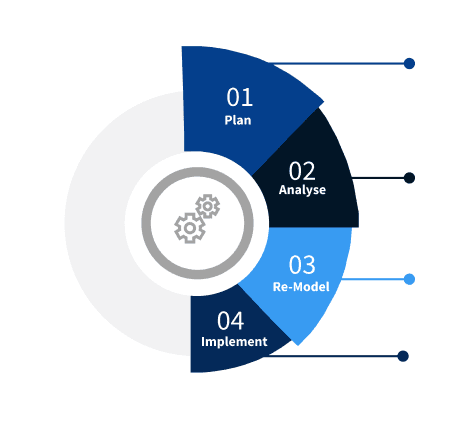
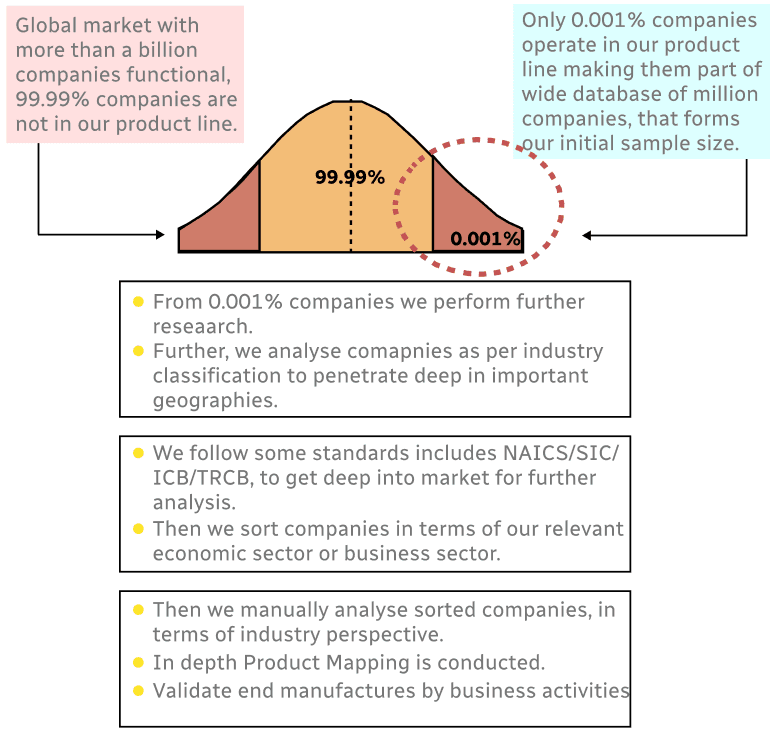
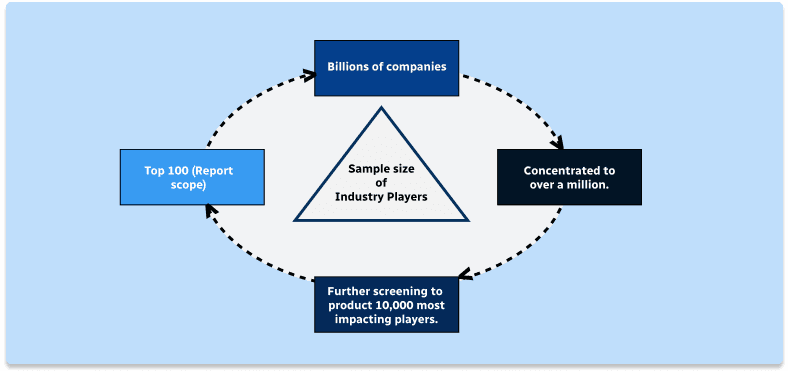
Step 1 - Identification of Relevant Samples Size from Population Database
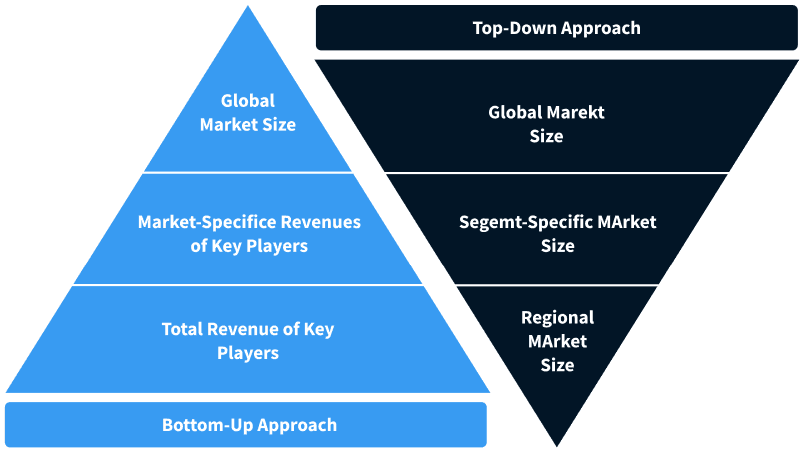
Step 2 - Approaches for Defining Global Market Size (Value, Volume* & Price*)
Note*: In applicable scenarios
Step 3 - Data Sources
Primary Research
- Web Analytics
- Survey Reports
- Research Institute
- Latest Research Reports
- Opinion Leaders
Secondary Research
- Annual Reports
- White Paper
- Latest Press Release
- Industry Association
- Paid Database
- Investor Presentations
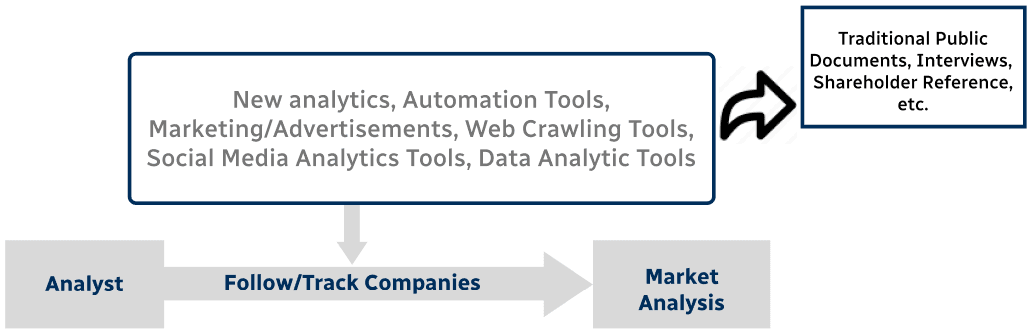
Step 4 - Data Triangulation
Involves using different sources of information in order to increase the validity of a study
These sources are likely to be stakeholders in a program - participants, other researchers, program staff, other community members, and so on.
Then we put all data in single framework & apply various statistical tools to find out the dynamic on the market.
During the analysis stage, feedback from the stakeholder groups would be compared to determine areas of agreement as well as areas of divergence