

Key Insights
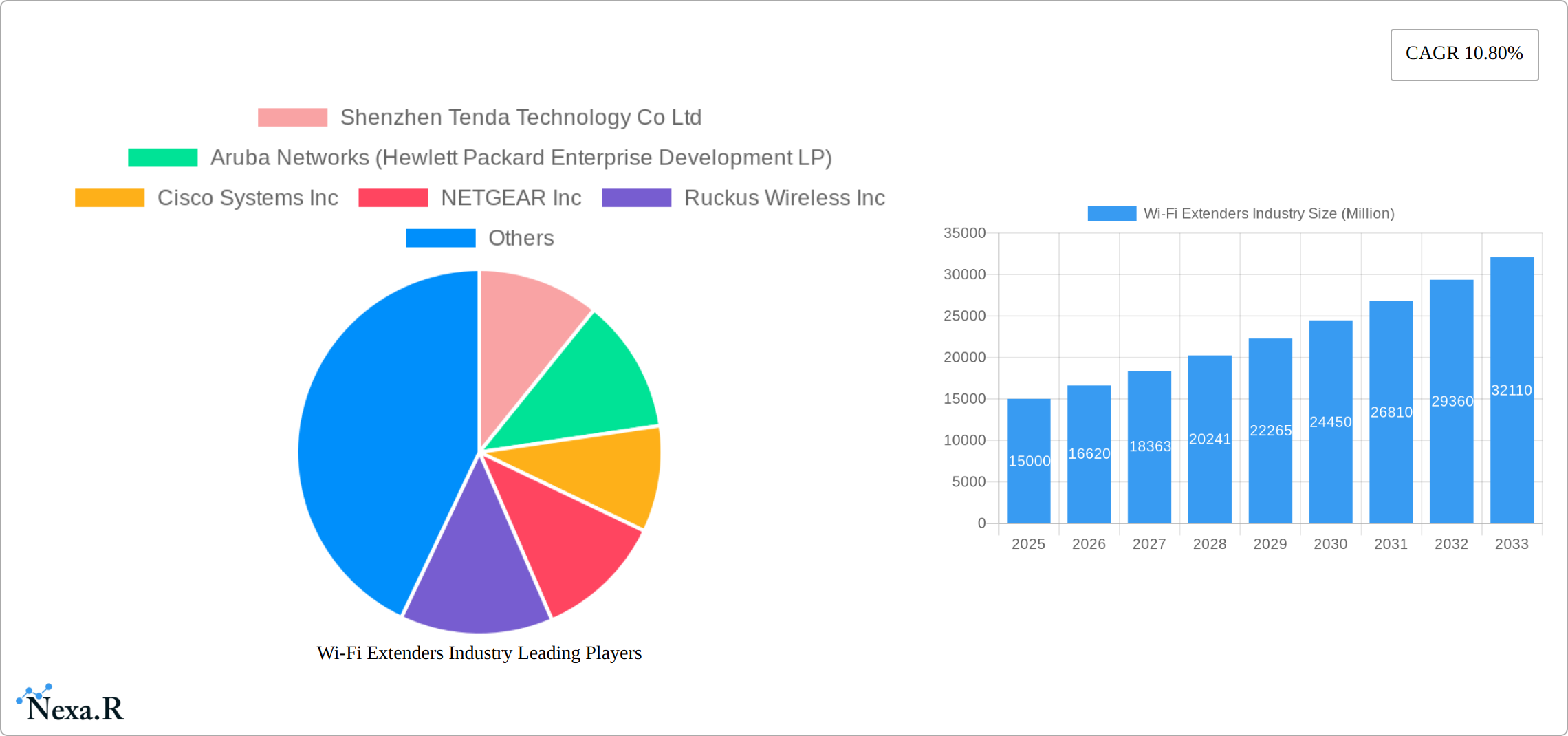
The global Wi-Fi extender market is experiencing robust growth, driven by the increasing demand for seamless internet connectivity across residential, commercial, and public spaces. A Compound Annual Growth Rate (CAGR) of 10.80% from 2019 to 2024 indicates a significant expansion, projected to continue into the forecast period (2025-2033). This growth is fueled by several factors, including the proliferation of smart devices, the rising adoption of high-bandwidth applications like streaming and online gaming, and the increasing need for reliable Wi-Fi in remote work environments. The market segmentation reveals strong performance across various product categories, with Wi-Fi extenders, access points, and antennas leading the way. The residential segment dominates current market share, but significant growth is anticipated in commercial and public sectors due to the increasing demand for reliable and high-speed internet access in businesses and public spaces. Technological advancements, such as the development of mesh Wi-Fi systems and improved Wi-Fi standards (like Wi-Fi 6 and Wi-Fi 6E), are further propelling market expansion. However, challenges remain, including concerns about interference, security vulnerabilities, and the need for ongoing maintenance.
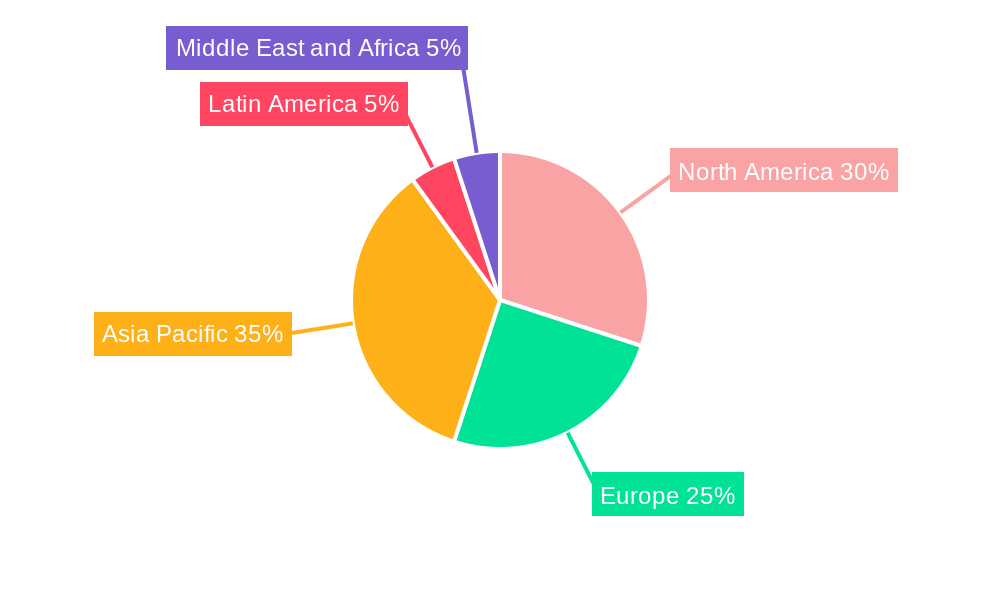
Key players in the market, including Shenzhen Tenda Technology, Aruba Networks, Cisco Systems, NETGEAR, and TP-Link, are continuously innovating to meet evolving consumer and business demands. Competition is fierce, resulting in price reductions and the introduction of feature-rich products. Regional analysis shows a significant contribution from the Asia Pacific region, driven by rapid urbanization and increasing internet penetration. North America and Europe also represent substantial markets, while Latin America and the Middle East and Africa are experiencing steady growth, presenting lucrative opportunities for expansion in the coming years. The overall market outlook is positive, with continued growth projected throughout the forecast period, driven by the ever-increasing demand for reliable and high-speed internet connectivity. Addressing the challenges related to security and interference will be crucial for sustained and responsible market growth.
Wi-Fi Extenders Industry Market Report: 2019-2033
This comprehensive report provides a detailed analysis of the Wi-Fi Extenders industry, encompassing market dynamics, growth trends, competitive landscape, and future outlook. The study period covers 2019-2033, with 2025 as the base and estimated year, and a forecast period of 2025-2033. The report segments the market by product (extenders & repeaters, access points, antennas), end-user (residential, commercial, public, other), and type (indoor, outdoor). Key players analyzed include Shenzhen Tenda Technology Co Ltd, Aruba Networks (Hewlett Packard Enterprise Development LP), Cisco Systems Inc, NETGEAR Inc, Ruckus Wireless Inc, Juniper Networks Inc, Linksys Group Inc, Huawei Technologies Co Ltd, TRENDnet Inc, TP-Link Technologies Co Ltd, D-Link Corporation, and Motorola Solutions Inc. The global market size is estimated at xx million units in 2025.
Wi-Fi Extenders Industry Market Dynamics & Structure
The Wi-Fi Extenders market is characterized by moderate concentration, with several key players holding significant market share. Technological innovation, particularly in Wi-Fi 6 and mesh networking, is a key driver, while regulatory frameworks concerning spectrum allocation and data privacy influence market growth. Competitive substitutes, such as powerline adapters and cellular boosters, pose some challenges. The residential segment dominates, followed by commercial and public sectors. M&A activity has been relatively moderate in recent years, with a reported xx deals in the past 5 years.
- Market Concentration: Moderately concentrated, with top 5 players holding approximately xx% market share in 2025.
- Technological Innovation: Wi-Fi 6/6E adoption, mesh networking, and improved range/performance are key drivers.
- Regulatory Landscape: Varying regulations across regions impact market access and product features.
- Competitive Substitutes: Powerline adapters, cellular boosters compete for market share in specific use cases.
- End-User Demographics: Residential segment accounts for xx million units, dominating the market in 2025.
- M&A Activity: Approximately xx mergers and acquisitions reported between 2020-2025.
Wi-Fi Extenders Industry Growth Trends & Insights
The Wi-Fi Extenders market is experiencing robust and sustained growth, propelled by the escalating global demand for seamless internet connectivity. This surge is primarily attributed to the ever-increasing adoption of internet services, the ubiquitous presence of a diverse range of smart devices in households and businesses, and the non-negotiable need for reliable and expansive Wi-Fi coverage. Historically, the market demonstrated a Compound Annual Growth Rate (CAGR) of approximately XX% between 2019 and 2024. Looking ahead, the market is poised for even more significant expansion, projected to grow at a CAGR of around XX% from 2025 to 2033, with an anticipated market size of XX million units by the end of the forecast period. While developed regions currently boast substantial market penetration (around XX%), developing economies present immense untapped potential for substantial future growth. The rapid evolution and widespread adoption of Wi-Fi 6 and Wi-Fi 6E technologies are acting as powerful catalysts, driving the demand for higher-performance and more capable extenders. Furthermore, evolving consumer lifestyles, characterized by the pervasive trend towards smart homes and the sustained rise in remote work arrangements, are continuously reinforcing the market's upward trajectory.
Dominant Regions, Countries, or Segments in Wi-Fi Extenders Industry
North America and Asia-Pacific currently dominate the Wi-Fi Extenders market, driven by high internet penetration and robust consumer electronics adoption. Within product segments, extenders and repeaters constitute the largest share (xx million units in 2025), followed by access points and antennas. The residential end-user segment is the largest, representing xx million units in 2025, with commercial and public sectors exhibiting significant growth potential. Indoor Wi-Fi extenders currently hold a larger market share compared to outdoor solutions but the latter segment is rapidly expanding.
- Key Drivers: Strong economic growth in key regions, increasing urbanization, expanding infrastructure projects.
- North America: High disposable income, advanced technological adoption, and strong demand from residential and commercial sectors contribute to its market leadership.
- Asia-Pacific: Rapid urbanization, rising internet penetration, and a large consumer base drive significant market growth.
- Residential Segment: High demand from households with multiple devices and streaming services, fueling growth.
Wi-Fi Extenders Industry Product Landscape
The Wi-Fi Extenders market is characterized by a comprehensive and dynamic product portfolio designed to cater to a broad spectrum of user needs. This range spans from fundamental Wi-Fi extenders and repeaters, offering straightforward solutions for dead zones, to sophisticated access points and advanced antenna systems for enhanced network performance. Current innovation is heavily focused on optimizing key performance indicators such as signal range, data transfer speeds, and robust network security. A significant trend is the integration of cutting-edge Wi-Fi 6 and Wi-Fi 6E technologies into new products, alongside the development of seamless mesh networking capabilities. Advanced features like Quality of Service (QoS) management for traffic prioritization and intelligent band steering to optimize device connections are becoming standard. Key competitive differentiators for manufacturers often revolve around intuitive setup processes, broad compatibility with a multitude of devices, and the implementation of strong, multi-layered security protocols to protect user networks.
Key Drivers, Barriers & Challenges in Wi-Fi Extenders Industry
Key Drivers: Increasing demand for high-speed internet, proliferation of smart devices, growth of remote work, and advancements in Wi-Fi technology.
Challenges: Competition from alternative technologies (e.g., powerline adapters), supply chain disruptions impacting component availability, and evolving security threats. Regulatory hurdles in some regions also pose challenges. The market faces intense competition, leading to price pressures and reduced profit margins. These factors collectively restrict the overall market expansion. Specifically, the supply chain disruptions during 2020-2022 caused a xx% decrease in production.
Emerging Opportunities in Wi-Fi Extenders Industry
The Wi-Fi Extenders industry is ripe with emerging opportunities, particularly in expanding its reach into currently underserved markets. This includes strategically targeting rural areas and developing nations where internet infrastructure and penetration are still in their nascent stages, offering a vital solution to bridge the digital divide. The exponential growth of the Internet of Things (IoT) ecosystem presents a significant avenue for development, driving demand for extenders equipped with enhanced capabilities to reliably support a growing number of connected devices. Moreover, there is a considerable opportunity to innovate and develop specialized Wi-Fi extender solutions tailored for specific niche applications. Examples include tailored solutions for expansive smart city initiatives, robust connectivity for industrial IoT (IIoT) deployments requiring industrial-grade reliability, and enhanced network coverage for large public venues and educational institutions.
Growth Accelerators in the Wi-Fi Extenders Industry
The sustained long-term growth trajectory of the Wi-Fi Extenders industry is underpinned by a confluence of powerful accelerating factors. Foremost among these are the continuous and rapid advancements in Wi-Fi technology itself, pushing the boundaries of speed, range, and efficiency. Strategic collaborations and partnerships between leading hardware manufacturers and internet service providers are crucial for wider distribution and bundled offerings. Furthermore, the ongoing effort to expand market penetration into regions with lower existing Wi-Fi coverage will unlock substantial new customer bases. The undeniable and escalating adoption of smart home technologies, which inherently rely on robust and ubiquitous Wi-Fi, alongside the increasing prevalence of sophisticated smart office setups, continue to be significant drivers of demand for reliable network extension solutions.
Key Players Shaping the Wi-Fi Extenders Industry Market
- TP-Link Technologies Co Ltd
- D-Link Corporation
- NETGEAR Inc
- Cisco Systems Inc
- Aruba Networks (Hewlett Packard Enterprise Development LP)
- Shenzhen Tenda Technology Co Ltd
- Ruckus Wireless Inc
- Juniper Networks Inc
- Linksys Group Inc
- Huawei Technologies Co Ltd
- TRENDnet Inc
- Motorola Solutions Inc
Notable Milestones in Wi-Fi Extenders Industry Sector
- May 2022: Linksys launched its Linksys Hydra 6 and Linksys Atlas 6 Wi-Fi 6 mesh systems, targeting home users.
- January 2023: TRENDnet opened new offices in Mexico City, expanding its reach in Latin America.
In-Depth Wi-Fi Extenders Industry Market Outlook
The Wi-Fi Extenders market is poised for sustained growth over the forecast period. The increasing demand for seamless connectivity, fueled by the proliferation of smart devices and the expansion of remote work trends, will be a primary driver. Companies focusing on innovation, strategic partnerships, and expansion into emerging markets will be best positioned to capitalize on the opportunities presented by this dynamic sector. The market is expected to witness continued technological advancements, particularly in Wi-Fi 7 and beyond.
Wi-Fi Extenders Industry Segmentation
-
1. Type
- 1.1. Indoor Wi-Fi
- 1.2. Outdoor Wi-Fi
-
2. Product
- 2.1. Extenders and Repeaters
- 2.2. Access Points
- 2.3. Antennas
-
3. End User
- 3.1. Residential
- 3.2. Commercial
- 3.3. Public
- 3.4. Other End-user Verticals
Wi-Fi Extenders Industry Segmentation By Geography
- 1. North America
- 2. Europe
- 3. Asia Pacific
- 4. Latin America
- 5. Middle East and Africa
Wi-Fi Extenders Industry REPORT HIGHLIGHTS
| Aspects | Details |
|---|---|
| Study Period | 2019-2033 |
| Base Year | 2024 |
| Estimated Year | 2025 |
| Forecast Period | 2025-2033 |
| Historical Period | 2019-2024 |
| Growth Rate | CAGR of 10.80% from 2019-2033 |
| Segmentation |
|
Table of Contents
- 1. Introduction
- 1.1. Research Scope
- 1.2. Market Segmentation
- 1.3. Research Methodology
- 1.4. Definitions and Assumptions
- 2. Executive Summary
- 2.1. Introduction
- 3. Market Dynamics
- 3.1. Introduction
- 3.2. Market Drivers
- 3.2.1. Proliferation of Smart Cities and Smart Homes; Adoption of Bring-Your-Own-Device (BYOD)
- 3.3. Market Restrains
- 3.3.1. Network Security and Complexities Related to Network Management; Susceptibility to Macro-economic Changes; Usage of Mobile Broadband
- 3.4. Market Trends
- 3.4.1. Proliferation of Smart Cities and Smart Homes Drives the Market Growth
- 4. Market Factor Analysis
- 4.1. Porters Five Forces
- 4.2. Supply/Value Chain
- 4.3. PESTEL analysis
- 4.4. Market Entropy
- 4.5. Patent/Trademark Analysis
- 5. Global Wi-Fi Extenders Industry Analysis, Insights and Forecast, 2019-2031
- 5.1. Market Analysis, Insights and Forecast - by Type
- 5.1.1. Indoor Wi-Fi
- 5.1.2. Outdoor Wi-Fi
- 5.2. Market Analysis, Insights and Forecast - by Product
- 5.2.1. Extenders and Repeaters
- 5.2.2. Access Points
- 5.2.3. Antennas
- 5.3. Market Analysis, Insights and Forecast - by End User
- 5.3.1. Residential
- 5.3.2. Commercial
- 5.3.3. Public
- 5.3.4. Other End-user Verticals
- 5.4. Market Analysis, Insights and Forecast - by Region
- 5.4.1. North America
- 5.4.2. Europe
- 5.4.3. Asia Pacific
- 5.4.4. Latin America
- 5.4.5. Middle East and Africa
- 5.1. Market Analysis, Insights and Forecast - by Type
- 6. North America Wi-Fi Extenders Industry Analysis, Insights and Forecast, 2019-2031
- 6.1. Market Analysis, Insights and Forecast - by Type
- 6.1.1. Indoor Wi-Fi
- 6.1.2. Outdoor Wi-Fi
- 6.2. Market Analysis, Insights and Forecast - by Product
- 6.2.1. Extenders and Repeaters
- 6.2.2. Access Points
- 6.2.3. Antennas
- 6.3. Market Analysis, Insights and Forecast - by End User
- 6.3.1. Residential
- 6.3.2. Commercial
- 6.3.3. Public
- 6.3.4. Other End-user Verticals
- 6.1. Market Analysis, Insights and Forecast - by Type
- 7. Europe Wi-Fi Extenders Industry Analysis, Insights and Forecast, 2019-2031
- 7.1. Market Analysis, Insights and Forecast - by Type
- 7.1.1. Indoor Wi-Fi
- 7.1.2. Outdoor Wi-Fi
- 7.2. Market Analysis, Insights and Forecast - by Product
- 7.2.1. Extenders and Repeaters
- 7.2.2. Access Points
- 7.2.3. Antennas
- 7.3. Market Analysis, Insights and Forecast - by End User
- 7.3.1. Residential
- 7.3.2. Commercial
- 7.3.3. Public
- 7.3.4. Other End-user Verticals
- 7.1. Market Analysis, Insights and Forecast - by Type
- 8. Asia Pacific Wi-Fi Extenders Industry Analysis, Insights and Forecast, 2019-2031
- 8.1. Market Analysis, Insights and Forecast - by Type
- 8.1.1. Indoor Wi-Fi
- 8.1.2. Outdoor Wi-Fi
- 8.2. Market Analysis, Insights and Forecast - by Product
- 8.2.1. Extenders and Repeaters
- 8.2.2. Access Points
- 8.2.3. Antennas
- 8.3. Market Analysis, Insights and Forecast - by End User
- 8.3.1. Residential
- 8.3.2. Commercial
- 8.3.3. Public
- 8.3.4. Other End-user Verticals
- 8.1. Market Analysis, Insights and Forecast - by Type
- 9. Latin America Wi-Fi Extenders Industry Analysis, Insights and Forecast, 2019-2031
- 9.1. Market Analysis, Insights and Forecast - by Type
- 9.1.1. Indoor Wi-Fi
- 9.1.2. Outdoor Wi-Fi
- 9.2. Market Analysis, Insights and Forecast - by Product
- 9.2.1. Extenders and Repeaters
- 9.2.2. Access Points
- 9.2.3. Antennas
- 9.3. Market Analysis, Insights and Forecast - by End User
- 9.3.1. Residential
- 9.3.2. Commercial
- 9.3.3. Public
- 9.3.4. Other End-user Verticals
- 9.1. Market Analysis, Insights and Forecast - by Type
- 10. Middle East and Africa Wi-Fi Extenders Industry Analysis, Insights and Forecast, 2019-2031
- 10.1. Market Analysis, Insights and Forecast - by Type
- 10.1.1. Indoor Wi-Fi
- 10.1.2. Outdoor Wi-Fi
- 10.2. Market Analysis, Insights and Forecast - by Product
- 10.2.1. Extenders and Repeaters
- 10.2.2. Access Points
- 10.2.3. Antennas
- 10.3. Market Analysis, Insights and Forecast - by End User
- 10.3.1. Residential
- 10.3.2. Commercial
- 10.3.3. Public
- 10.3.4. Other End-user Verticals
- 10.1. Market Analysis, Insights and Forecast - by Type
- 11. North America Wi-Fi Extenders Industry Analysis, Insights and Forecast, 2019-2031
- 11.1. Market Analysis, Insights and Forecast - By Country/Sub-region
- 11.1.1.
- 12. Europe Wi-Fi Extenders Industry Analysis, Insights and Forecast, 2019-2031
- 12.1. Market Analysis, Insights and Forecast - By Country/Sub-region
- 12.1.1.
- 13. Asia Pacific Wi-Fi Extenders Industry Analysis, Insights and Forecast, 2019-2031
- 13.1. Market Analysis, Insights and Forecast - By Country/Sub-region
- 13.1.1.
- 14. Latin America Wi-Fi Extenders Industry Analysis, Insights and Forecast, 2019-2031
- 14.1. Market Analysis, Insights and Forecast - By Country/Sub-region
- 14.1.1.
- 15. Middle East and Africa Wi-Fi Extenders Industry Analysis, Insights and Forecast, 2019-2031
- 15.1. Market Analysis, Insights and Forecast - By Country/Sub-region
- 15.1.1.
- 16. Competitive Analysis
- 16.1. Global Market Share Analysis 2024
- 16.2. Company Profiles
- 16.2.1 Shenzhen Tenda Technology Co Ltd
- 16.2.1.1. Overview
- 16.2.1.2. Products
- 16.2.1.3. SWOT Analysis
- 16.2.1.4. Recent Developments
- 16.2.1.5. Financials (Based on Availability)
- 16.2.2 Aruba Networks (Hewlett Packard Enterprise Development LP)
- 16.2.2.1. Overview
- 16.2.2.2. Products
- 16.2.2.3. SWOT Analysis
- 16.2.2.4. Recent Developments
- 16.2.2.5. Financials (Based on Availability)
- 16.2.3 Cisco Systems Inc
- 16.2.3.1. Overview
- 16.2.3.2. Products
- 16.2.3.3. SWOT Analysis
- 16.2.3.4. Recent Developments
- 16.2.3.5. Financials (Based on Availability)
- 16.2.4 NETGEAR Inc
- 16.2.4.1. Overview
- 16.2.4.2. Products
- 16.2.4.3. SWOT Analysis
- 16.2.4.4. Recent Developments
- 16.2.4.5. Financials (Based on Availability)
- 16.2.5 Ruckus Wireless Inc
- 16.2.5.1. Overview
- 16.2.5.2. Products
- 16.2.5.3. SWOT Analysis
- 16.2.5.4. Recent Developments
- 16.2.5.5. Financials (Based on Availability)
- 16.2.6 Juniper Networks Inc
- 16.2.6.1. Overview
- 16.2.6.2. Products
- 16.2.6.3. SWOT Analysis
- 16.2.6.4. Recent Developments
- 16.2.6.5. Financials (Based on Availability)
- 16.2.7 Linksys Group Inc
- 16.2.7.1. Overview
- 16.2.7.2. Products
- 16.2.7.3. SWOT Analysis
- 16.2.7.4. Recent Developments
- 16.2.7.5. Financials (Based on Availability)
- 16.2.8 Huawei Technologies Co Ltd
- 16.2.8.1. Overview
- 16.2.8.2. Products
- 16.2.8.3. SWOT Analysis
- 16.2.8.4. Recent Developments
- 16.2.8.5. Financials (Based on Availability)
- 16.2.9 TRENDnet Inc
- 16.2.9.1. Overview
- 16.2.9.2. Products
- 16.2.9.3. SWOT Analysis
- 16.2.9.4. Recent Developments
- 16.2.9.5. Financials (Based on Availability)
- 16.2.10 TP-Link Technologies Co Ltd
- 16.2.10.1. Overview
- 16.2.10.2. Products
- 16.2.10.3. SWOT Analysis
- 16.2.10.4. Recent Developments
- 16.2.10.5. Financials (Based on Availability)
- 16.2.11 D-Link Corporation
- 16.2.11.1. Overview
- 16.2.11.2. Products
- 16.2.11.3. SWOT Analysis
- 16.2.11.4. Recent Developments
- 16.2.11.5. Financials (Based on Availability)
- 16.2.12 Motorola Solutions Inc
- 16.2.12.1. Overview
- 16.2.12.2. Products
- 16.2.12.3. SWOT Analysis
- 16.2.12.4. Recent Developments
- 16.2.12.5. Financials (Based on Availability)
- 16.2.1 Shenzhen Tenda Technology Co Ltd
List of Figures
- Figure 1: Global Wi-Fi Extenders Industry Revenue Breakdown (Million, %) by Region 2024 & 2032
- Figure 2: North America Wi-Fi Extenders Industry Revenue (Million), by Country 2024 & 2032
- Figure 3: North America Wi-Fi Extenders Industry Revenue Share (%), by Country 2024 & 2032
- Figure 4: Europe Wi-Fi Extenders Industry Revenue (Million), by Country 2024 & 2032
- Figure 5: Europe Wi-Fi Extenders Industry Revenue Share (%), by Country 2024 & 2032
- Figure 6: Asia Pacific Wi-Fi Extenders Industry Revenue (Million), by Country 2024 & 2032
- Figure 7: Asia Pacific Wi-Fi Extenders Industry Revenue Share (%), by Country 2024 & 2032
- Figure 8: Latin America Wi-Fi Extenders Industry Revenue (Million), by Country 2024 & 2032
- Figure 9: Latin America Wi-Fi Extenders Industry Revenue Share (%), by Country 2024 & 2032
- Figure 10: Middle East and Africa Wi-Fi Extenders Industry Revenue (Million), by Country 2024 & 2032
- Figure 11: Middle East and Africa Wi-Fi Extenders Industry Revenue Share (%), by Country 2024 & 2032
- Figure 12: North America Wi-Fi Extenders Industry Revenue (Million), by Type 2024 & 2032
- Figure 13: North America Wi-Fi Extenders Industry Revenue Share (%), by Type 2024 & 2032
- Figure 14: North America Wi-Fi Extenders Industry Revenue (Million), by Product 2024 & 2032
- Figure 15: North America Wi-Fi Extenders Industry Revenue Share (%), by Product 2024 & 2032
- Figure 16: North America Wi-Fi Extenders Industry Revenue (Million), by End User 2024 & 2032
- Figure 17: North America Wi-Fi Extenders Industry Revenue Share (%), by End User 2024 & 2032
- Figure 18: North America Wi-Fi Extenders Industry Revenue (Million), by Country 2024 & 2032
- Figure 19: North America Wi-Fi Extenders Industry Revenue Share (%), by Country 2024 & 2032
- Figure 20: Europe Wi-Fi Extenders Industry Revenue (Million), by Type 2024 & 2032
- Figure 21: Europe Wi-Fi Extenders Industry Revenue Share (%), by Type 2024 & 2032
- Figure 22: Europe Wi-Fi Extenders Industry Revenue (Million), by Product 2024 & 2032
- Figure 23: Europe Wi-Fi Extenders Industry Revenue Share (%), by Product 2024 & 2032
- Figure 24: Europe Wi-Fi Extenders Industry Revenue (Million), by End User 2024 & 2032
- Figure 25: Europe Wi-Fi Extenders Industry Revenue Share (%), by End User 2024 & 2032
- Figure 26: Europe Wi-Fi Extenders Industry Revenue (Million), by Country 2024 & 2032
- Figure 27: Europe Wi-Fi Extenders Industry Revenue Share (%), by Country 2024 & 2032
- Figure 28: Asia Pacific Wi-Fi Extenders Industry Revenue (Million), by Type 2024 & 2032
- Figure 29: Asia Pacific Wi-Fi Extenders Industry Revenue Share (%), by Type 2024 & 2032
- Figure 30: Asia Pacific Wi-Fi Extenders Industry Revenue (Million), by Product 2024 & 2032
- Figure 31: Asia Pacific Wi-Fi Extenders Industry Revenue Share (%), by Product 2024 & 2032
- Figure 32: Asia Pacific Wi-Fi Extenders Industry Revenue (Million), by End User 2024 & 2032
- Figure 33: Asia Pacific Wi-Fi Extenders Industry Revenue Share (%), by End User 2024 & 2032
- Figure 34: Asia Pacific Wi-Fi Extenders Industry Revenue (Million), by Country 2024 & 2032
- Figure 35: Asia Pacific Wi-Fi Extenders Industry Revenue Share (%), by Country 2024 & 2032
- Figure 36: Latin America Wi-Fi Extenders Industry Revenue (Million), by Type 2024 & 2032
- Figure 37: Latin America Wi-Fi Extenders Industry Revenue Share (%), by Type 2024 & 2032
- Figure 38: Latin America Wi-Fi Extenders Industry Revenue (Million), by Product 2024 & 2032
- Figure 39: Latin America Wi-Fi Extenders Industry Revenue Share (%), by Product 2024 & 2032
- Figure 40: Latin America Wi-Fi Extenders Industry Revenue (Million), by End User 2024 & 2032
- Figure 41: Latin America Wi-Fi Extenders Industry Revenue Share (%), by End User 2024 & 2032
- Figure 42: Latin America Wi-Fi Extenders Industry Revenue (Million), by Country 2024 & 2032
- Figure 43: Latin America Wi-Fi Extenders Industry Revenue Share (%), by Country 2024 & 2032
- Figure 44: Middle East and Africa Wi-Fi Extenders Industry Revenue (Million), by Type 2024 & 2032
- Figure 45: Middle East and Africa Wi-Fi Extenders Industry Revenue Share (%), by Type 2024 & 2032
- Figure 46: Middle East and Africa Wi-Fi Extenders Industry Revenue (Million), by Product 2024 & 2032
- Figure 47: Middle East and Africa Wi-Fi Extenders Industry Revenue Share (%), by Product 2024 & 2032
- Figure 48: Middle East and Africa Wi-Fi Extenders Industry Revenue (Million), by End User 2024 & 2032
- Figure 49: Middle East and Africa Wi-Fi Extenders Industry Revenue Share (%), by End User 2024 & 2032
- Figure 50: Middle East and Africa Wi-Fi Extenders Industry Revenue (Million), by Country 2024 & 2032
- Figure 51: Middle East and Africa Wi-Fi Extenders Industry Revenue Share (%), by Country 2024 & 2032
List of Tables
- Table 1: Global Wi-Fi Extenders Industry Revenue Million Forecast, by Region 2019 & 2032
- Table 2: Global Wi-Fi Extenders Industry Revenue Million Forecast, by Type 2019 & 2032
- Table 3: Global Wi-Fi Extenders Industry Revenue Million Forecast, by Product 2019 & 2032
- Table 4: Global Wi-Fi Extenders Industry Revenue Million Forecast, by End User 2019 & 2032
- Table 5: Global Wi-Fi Extenders Industry Revenue Million Forecast, by Region 2019 & 2032
- Table 6: Global Wi-Fi Extenders Industry Revenue Million Forecast, by Country 2019 & 2032
- Table 7: Wi-Fi Extenders Industry Revenue (Million) Forecast, by Application 2019 & 2032
- Table 8: Global Wi-Fi Extenders Industry Revenue Million Forecast, by Country 2019 & 2032
- Table 9: Wi-Fi Extenders Industry Revenue (Million) Forecast, by Application 2019 & 2032
- Table 10: Global Wi-Fi Extenders Industry Revenue Million Forecast, by Country 2019 & 2032
- Table 11: Wi-Fi Extenders Industry Revenue (Million) Forecast, by Application 2019 & 2032
- Table 12: Global Wi-Fi Extenders Industry Revenue Million Forecast, by Country 2019 & 2032
- Table 13: Wi-Fi Extenders Industry Revenue (Million) Forecast, by Application 2019 & 2032
- Table 14: Global Wi-Fi Extenders Industry Revenue Million Forecast, by Country 2019 & 2032
- Table 15: Wi-Fi Extenders Industry Revenue (Million) Forecast, by Application 2019 & 2032
- Table 16: Global Wi-Fi Extenders Industry Revenue Million Forecast, by Type 2019 & 2032
- Table 17: Global Wi-Fi Extenders Industry Revenue Million Forecast, by Product 2019 & 2032
- Table 18: Global Wi-Fi Extenders Industry Revenue Million Forecast, by End User 2019 & 2032
- Table 19: Global Wi-Fi Extenders Industry Revenue Million Forecast, by Country 2019 & 2032
- Table 20: Global Wi-Fi Extenders Industry Revenue Million Forecast, by Type 2019 & 2032
- Table 21: Global Wi-Fi Extenders Industry Revenue Million Forecast, by Product 2019 & 2032
- Table 22: Global Wi-Fi Extenders Industry Revenue Million Forecast, by End User 2019 & 2032
- Table 23: Global Wi-Fi Extenders Industry Revenue Million Forecast, by Country 2019 & 2032
- Table 24: Global Wi-Fi Extenders Industry Revenue Million Forecast, by Type 2019 & 2032
- Table 25: Global Wi-Fi Extenders Industry Revenue Million Forecast, by Product 2019 & 2032
- Table 26: Global Wi-Fi Extenders Industry Revenue Million Forecast, by End User 2019 & 2032
- Table 27: Global Wi-Fi Extenders Industry Revenue Million Forecast, by Country 2019 & 2032
- Table 28: Global Wi-Fi Extenders Industry Revenue Million Forecast, by Type 2019 & 2032
- Table 29: Global Wi-Fi Extenders Industry Revenue Million Forecast, by Product 2019 & 2032
- Table 30: Global Wi-Fi Extenders Industry Revenue Million Forecast, by End User 2019 & 2032
- Table 31: Global Wi-Fi Extenders Industry Revenue Million Forecast, by Country 2019 & 2032
- Table 32: Global Wi-Fi Extenders Industry Revenue Million Forecast, by Type 2019 & 2032
- Table 33: Global Wi-Fi Extenders Industry Revenue Million Forecast, by Product 2019 & 2032
- Table 34: Global Wi-Fi Extenders Industry Revenue Million Forecast, by End User 2019 & 2032
- Table 35: Global Wi-Fi Extenders Industry Revenue Million Forecast, by Country 2019 & 2032
Frequently Asked Questions
1. What is the projected Compound Annual Growth Rate (CAGR) of the Wi-Fi Extenders Industry?
The projected CAGR is approximately 10.80%.
2. Which companies are prominent players in the Wi-Fi Extenders Industry?
Key companies in the market include Shenzhen Tenda Technology Co Ltd, Aruba Networks (Hewlett Packard Enterprise Development LP), Cisco Systems Inc, NETGEAR Inc, Ruckus Wireless Inc, Juniper Networks Inc, Linksys Group Inc, Huawei Technologies Co Ltd, TRENDnet Inc, TP-Link Technologies Co Ltd, D-Link Corporation, Motorola Solutions Inc .
3. What are the main segments of the Wi-Fi Extenders Industry?
The market segments include Type, Product, End User.
4. Can you provide details about the market size?
The market size is estimated to be USD XX Million as of 2022.
5. What are some drivers contributing to market growth?
Proliferation of Smart Cities and Smart Homes; Adoption of Bring-Your-Own-Device (BYOD).
6. What are the notable trends driving market growth?
Proliferation of Smart Cities and Smart Homes Drives the Market Growth.
7. Are there any restraints impacting market growth?
Network Security and Complexities Related to Network Management; Susceptibility to Macro-economic Changes; Usage of Mobile Broadband.
8. Can you provide examples of recent developments in the market?
January 2023: TRENDnet, one of the global pioneers in reliable SMB and consumer networking and surveillance solutions, is announced the opening of new offices in Mexico City's financial center. TRENDnet's new consolidated headquarters helps it better service partners in Mexico and other regions of Latin America.
9. What pricing options are available for accessing the report?
Pricing options include single-user, multi-user, and enterprise licenses priced at USD 4750, USD 5250, and USD 8750 respectively.
10. Is the market size provided in terms of value or volume?
The market size is provided in terms of value, measured in Million.
11. Are there any specific market keywords associated with the report?
Yes, the market keyword associated with the report is "Wi-Fi Extenders Industry," which aids in identifying and referencing the specific market segment covered.
12. How do I determine which pricing option suits my needs best?
The pricing options vary based on user requirements and access needs. Individual users may opt for single-user licenses, while businesses requiring broader access may choose multi-user or enterprise licenses for cost-effective access to the report.
13. Are there any additional resources or data provided in the Wi-Fi Extenders Industry report?
While the report offers comprehensive insights, it's advisable to review the specific contents or supplementary materials provided to ascertain if additional resources or data are available.
14. How can I stay updated on further developments or reports in the Wi-Fi Extenders Industry?
To stay informed about further developments, trends, and reports in the Wi-Fi Extenders Industry, consider subscribing to industry newsletters, following relevant companies and organizations, or regularly checking reputable industry news sources and publications.
Methodology
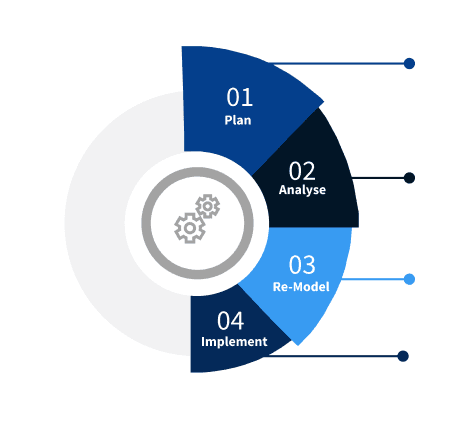
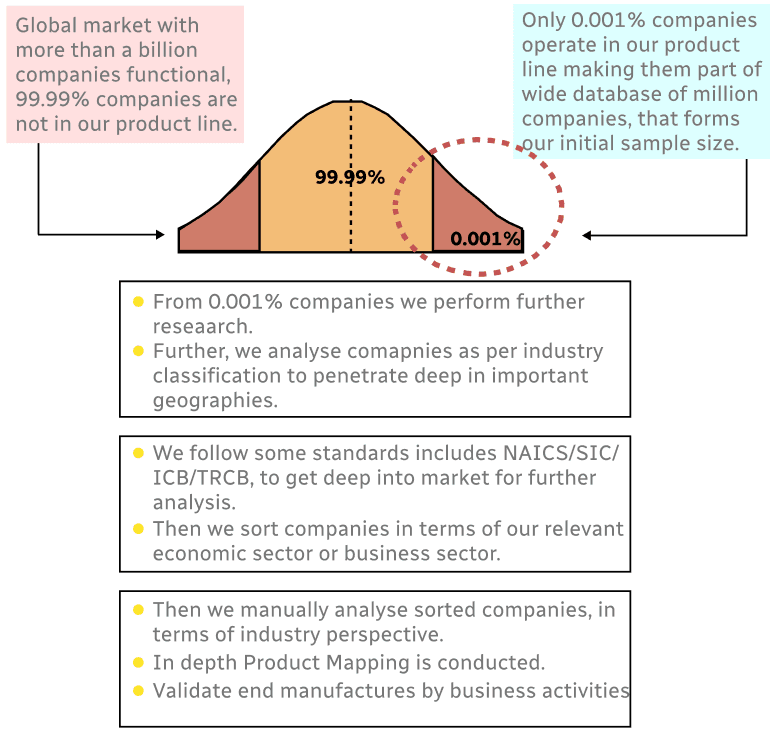
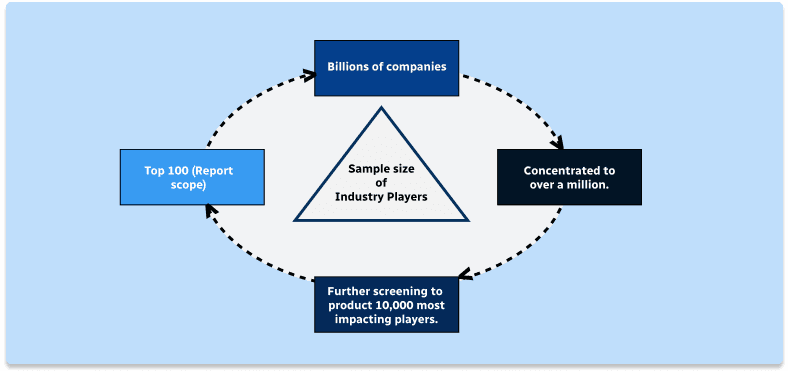
Step 1 - Identification of Relevant Samples Size from Population Database
Step 2 - Approaches for Defining Global Market Size (Value, Volume* & Price*)
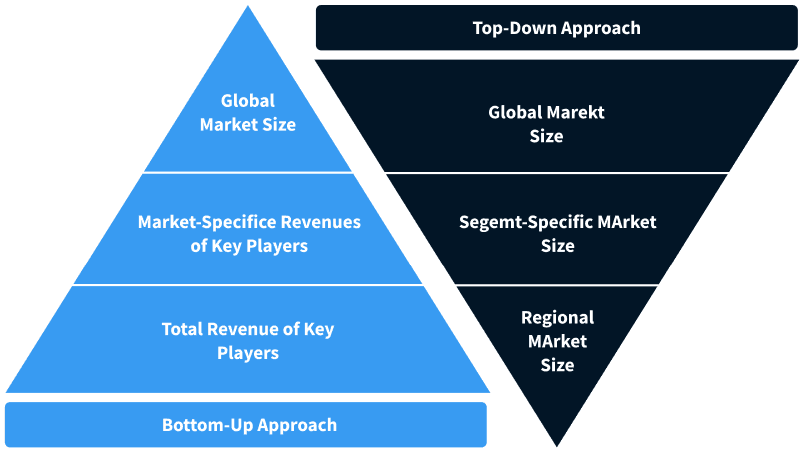
Note*: In applicable scenarios
Step 3 - Data Sources
Primary Research
- Web Analytics
- Survey Reports
- Research Institute
- Latest Research Reports
- Opinion Leaders
Secondary Research
- Annual Reports
- White Paper
- Latest Press Release
- Industry Association
- Paid Database
- Investor Presentations
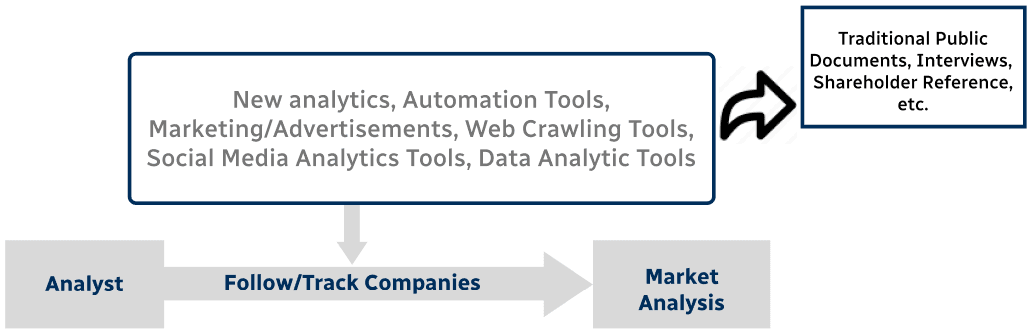
Step 4 - Data Triangulation
Involves using different sources of information in order to increase the validity of a study
These sources are likely to be stakeholders in a program - participants, other researchers, program staff, other community members, and so on.
Then we put all data in single framework & apply various statistical tools to find out the dynamic on the market.
During the analysis stage, feedback from the stakeholder groups would be compared to determine areas of agreement as well as areas of divergence