


Key Insights
The global canned meat market is poised for significant expansion, projected to reach 33.93 billion by 2033, driven by a robust compound annual growth rate (CAGR) of 4.72% from the base year 2025. This growth is fueled by increasing consumer demand for convenient, ready-to-eat protein solutions, particularly among urbanized populations with evolving lifestyles. The sustained popularity of portable snacks and meals incorporating canned meats, combined with their extended shelf life and affordability, solidifies their appeal across diverse economic landscapes, including regions with limited cold chain infrastructure. Strategic product development focusing on healthier formulations, such as reduced sodium content and enhanced nutritional profiles, alongside commitments to sustainable sourcing, are key factors influencing market evolution. While raw material price volatility and health considerations associated with sodium remain challenges, the industry is proactively addressing these through reformulation and enhanced transparency. The market is segmented by product type (seafood, poultry, red meat, etc.) and distribution channels, with distinct regional consumption trends. Leading entities such as Thai Union Group, JBS S.A., and Conagra Brands are leveraging their established networks and brand equity to drive innovation and secure market positions.
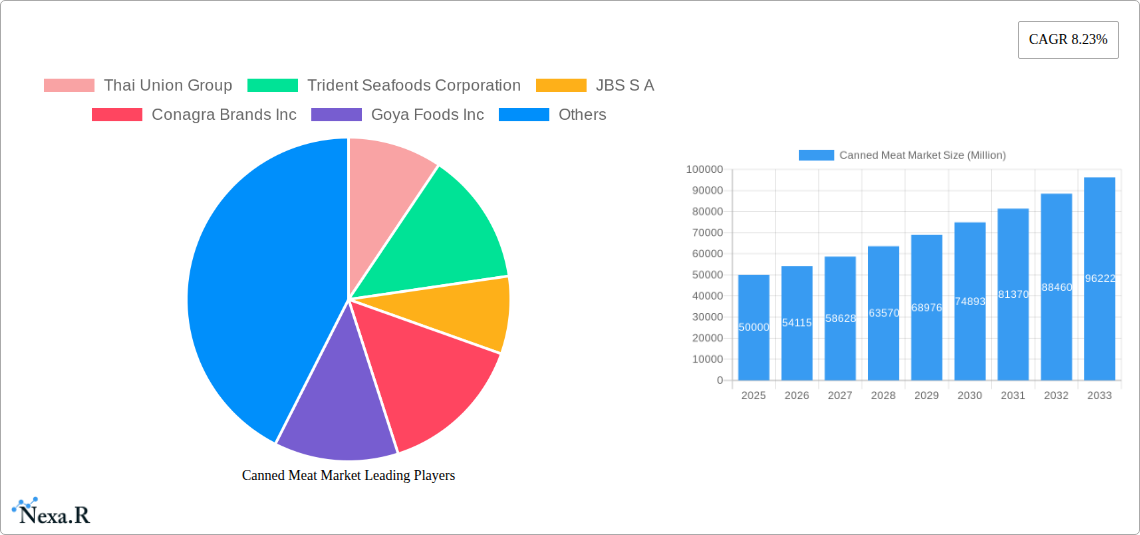
Canned Meat Market Market Size (In Billion)

Geographically, the canned meat market exhibits varied growth trajectories. North America and Europe, mature markets with established canned food consumption, retain substantial market shares, though growth may be outpaced by the dynamic Asia-Pacific and South American regions. These emerging economies offer significant untapped potential, driven by rising disposable incomes, population growth, and a strong demand for accessible and convenient food products. The competitive landscape is characterized by intense rivalry between global corporations and regional enterprises. Strategic priorities for market players include portfolio diversification, supply chain optimization, and enhanced brand presence to achieve competitive advantages. The overall forecast for the canned meat market remains optimistic, supported by enduring consumer demand and continuous industry adaptation to evolving consumer preferences and market dynamics.
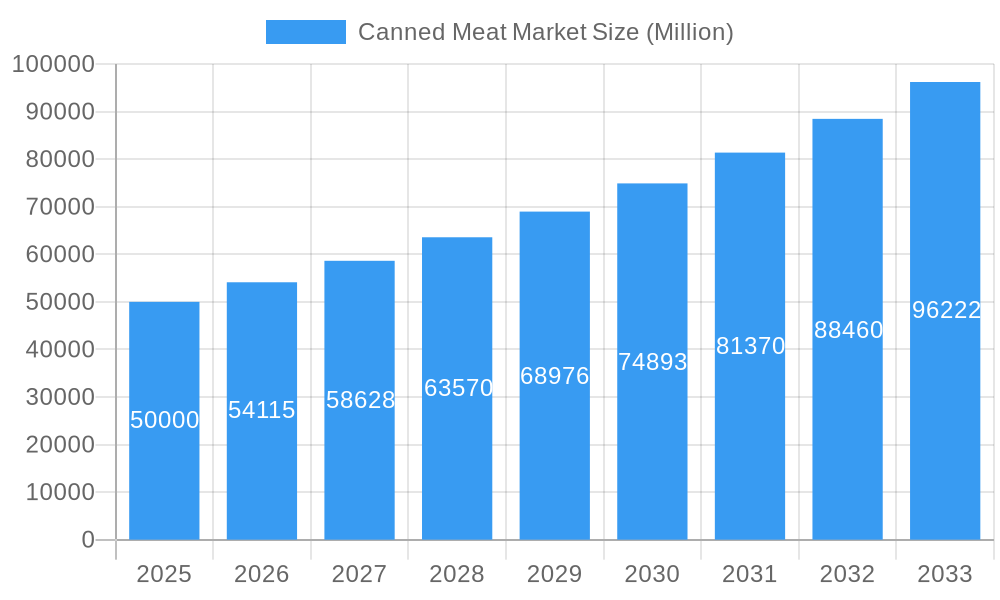
Canned Meat Market Company Market Share
Canned Meat Market: A Comprehensive Market Analysis (2019-2033)
This in-depth report provides a comprehensive analysis of the Canned Meat Market, encompassing market dynamics, growth trends, regional performance, product landscape, key players, and future outlook. The study period covers 2019-2033, with 2025 as the base year and forecast period from 2025-2033. The report offers invaluable insights for industry professionals, investors, and strategists seeking to navigate this dynamic market. The market size is estimated to be xx Million units in 2025.
Canned Meat Market Dynamics & Structure
This section analyzes the competitive landscape, technological advancements, and regulatory influences shaping the Canned Meat Market. The market is characterized by a moderate level of concentration, with key players such as Thai Union Group, Trident Seafoods Corporation, JBS S.A., and Hormel Foods Corporation holding significant market share. However, the presence of numerous regional and smaller players contributes to a competitive dynamic.
Market Concentration: The Herfindahl-Hirschman Index (HHI) is estimated at xx, suggesting a moderately concentrated market. Larger players command approximately xx% of the total market share, leaving room for smaller players to compete in niche segments.
Technological Innovation: Technological advancements in canning processes, packaging materials, and preservation techniques are key drivers of market growth. Innovations in automation and energy efficiency contribute to cost reduction and improved product quality. However, high initial investment costs for advanced technologies can act as a barrier for smaller players.
Regulatory Framework: Government regulations concerning food safety, labeling, and sustainable sourcing significantly influence market operations. Compliance requirements vary across regions, creating both challenges and opportunities for businesses. Stringent regulations in certain markets drive the adoption of sustainable practices but also add to operational costs.
Competitive Substitutes: Fresh and frozen meats, along with other protein sources, present significant competition. The canned meat market needs to offer competitive pricing, extended shelf life, and convenient packaging to maintain its share.
End-User Demographics: Changing consumer preferences and demographics significantly impact the market. The rise of health-conscious consumers influences demand for low-sodium, reduced-fat options, and sustainably sourced products.
M&A Trends: The canned meat market has witnessed a moderate level of mergers and acquisitions (M&A) activity in recent years. Approximately xx M&A deals were recorded in the period 2019-2024, primarily driven by strategies to expand market reach and product portfolio.
Canned Meat Market Growth Trends & Insights
The Canned Meat Market exhibits steady growth driven by factors like increasing urbanization, changing lifestyles, and the rising demand for convenient and shelf-stable food products. The market has shown a Compound Annual Growth Rate (CAGR) of xx% during the historical period (2019-2024), and is projected to maintain a CAGR of xx% during the forecast period (2025-2033). This growth is influenced by several factors: rising disposable incomes, particularly in developing economies, fuels increased consumption of processed foods; advancements in packaging technology extend product shelf life and enhance convenience; and the growing adoption of online grocery shopping channels has widened market reach. Technological disruptions like improved canning processes and novel preservation methods are also contributing to this growth. Consumer behavior is shifting towards greater health consciousness and sustainability concerns, which influences the demand for products with reduced sodium, fat, and sustainable sourcing practices. These shifting preferences present opportunities for manufacturers who offer healthier and more environmentally friendly options within the canned meat category.
Dominant Regions, Countries, or Segments in Canned Meat Market
The canned meat market is geographically diverse, with different regions and segments exhibiting varying growth patterns. North America and Europe currently hold significant market share, driven by established consumer preferences and robust distribution networks. However, Asia-Pacific is expected to show substantial growth in the coming years, fueled by rising incomes and population growth.
Product Type: Seafood meats (like tuna and sardines) are currently the dominant segment, owing to high demand and widespread acceptance across various regions. However, poultry meats are gaining traction, boosted by health and cost considerations.
Distribution Channel: Off-trade channels (supermarkets, hypermarkets, and convenience stores) dominate market distribution, but online sales are gaining momentum.
Key Drivers by Region:
- North America: Established market with high consumption rates. Strong retail infrastructure, and high brand recognition contribute to high market penetration.
- Europe: Similar to North America, Europe benefits from mature markets and established supply chains. However, increasing health awareness influences demand for healthier options.
- Asia-Pacific: Rapid economic growth, urbanization, and a growing middle class are driving significant market expansion.
- Latin America: Growing middle class contributes to consumption increase.
- Rest of the World: This segment will display consistent growth due to expanding retail networks.
Canned Meat Market Product Landscape
The canned meat product landscape is characterized by continuous innovation in product formulation and packaging. Manufacturers focus on improving taste, texture, and nutritional value to appeal to diverse consumer preferences. Novel packaging formats such as pouches and retort-ready meals provide added convenience. The trend towards healthier options is evident in the proliferation of low-sodium, reduced-fat, and organic canned meat products. Technological advancements in sterilization and preservation methods enhance food safety and extend shelf life. Unique selling propositions (USPs) often center on sustainable sourcing, unique flavor profiles, or added health benefits.
Key Drivers, Barriers & Challenges in Canned Meat Market
Key Drivers: Increasing demand for convenient, shelf-stable food; rising disposable incomes; expanding retail infrastructure; and technological advancements in canning and preservation.
Challenges: Fluctuating raw material prices; stringent food safety regulations; growing concerns about health and sustainability; and intense competition from fresh and frozen meat alternatives. Supply chain disruptions can lead to significant production delays and increased costs. For example, a xx% increase in raw material costs could result in a xx% rise in final product prices, impacting sales. Regulatory hurdles for obtaining food safety certifications across different markets create added complexities and costs.
Emerging Opportunities in Canned Meat Market
The market presents several emerging opportunities. Growing demand for convenience and ready-to-eat meals drive the growth of single-serve and ready-to-heat packaging formats. Rising health consciousness fuels demand for organic, low-sodium, and sustainably sourced canned meat products. Expansion into untapped markets in developing economies offers significant potential. Innovative product development, such as fusion flavors and functional ingredients, can cater to evolving consumer tastes. These factors contribute to overall market growth.
Growth Accelerators in the Canned Meat Market Industry
Technological advancements in automation and energy efficiency will significantly reduce production costs, enhancing profitability. Strategic partnerships and acquisitions broaden market reach and product portfolios, improving the overall competitive edge. Expanding into new geographical regions and diversifying product offerings caters to a wider consumer base and mitigates regional risks. These growth accelerators have the potential to further drive the expansion of the canned meat market.
Key Players Shaping the Canned Meat Market Market
- Thai Union Group
- Trident Seafoods Corporation
- JBS S.A.
- Conagra Brands Inc
- Goya Foods Inc
- Dongwon Enterprise Co Ltd
- Bolton Group
- Hormel Foods Corporation
- Century Pacific Group Inc
- The Jim Pattison Group
- List Not Exhaustive
Notable Milestones in Canned Meat Market Sector
- September 2022: The Jim Pattison Group launched Ocean's range of inexpensive canned seafood in the US, expanding its market reach and introducing a new product line.
- May 2022: Trident Seafood Corporation's investment in a next-generation processing plant demonstrates technological innovation and growth strategy.
- January 2022: Thai Union Group's joint venture with Pacific Cold Storage Co., Ltd. expands its cold storage capacity and potentially improves supply chain efficiency.
In-Depth Canned Meat Market Market Outlook
The canned meat market is poised for sustained growth, driven by various factors. Technological innovations, strategic partnerships, and expanding distribution channels will enhance market dynamics. The continued focus on health-conscious product development and sustainable sourcing will drive market expansion. Future market potential lies in adapting to evolving consumer preferences and expanding into untapped markets. Strategic acquisitions and investment in research and development will play a vital role in driving long-term market growth.
Canned Meat Market Segmentation
-
1. Product Type
- 1.1. Seafood Meats
- 1.2. Poultry Meats
- 1.3. Red Meat
- 1.4. Other Product Types
-
2. Distribution Channel
-
2.1. Off-trade
- 2.1.1. Supermarket/Hypermarket
- 2.1.2. Specialty Store
- 2.1.3. Online Retail Store
- 2.1.4. Other Off-trade Channels
- 2.2. On-trade
-
2.1. Off-trade
Canned Meat Market Segmentation By Geography
-
1. North America
- 1.1. United States
- 1.2. Canada
- 1.3. Mexico
- 1.4. Rest of North America
-
2. Europe
- 2.1. United Kingdom
- 2.2. Germany
- 2.3. France
- 2.4. Russia
- 2.5. Italy
- 2.6. Spain
- 2.7. Rest of Europe
-
3. Asia Pacific
- 3.1. India
- 3.2. China
- 3.3. Japan
- 3.4. Australia
- 3.5. Rest of Asia Pacific
-
4. South America
- 4.1. Brazil
- 4.2. Argentina
- 4.3. Rest of South America
- 5. Middle East
-
6. South Africa
- 6.1. Saudi Arabia
- 6.2. Rest of Middle East
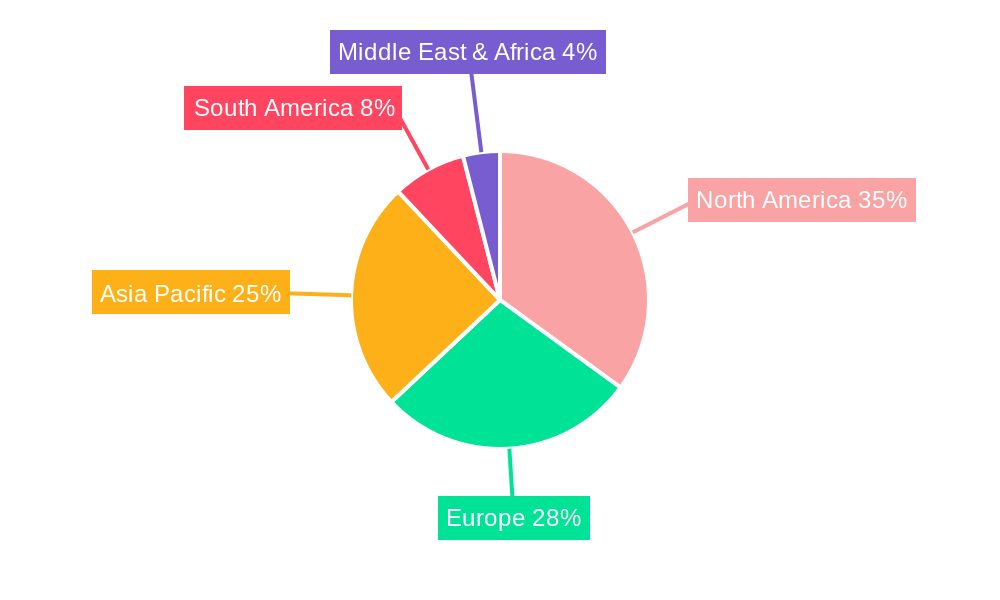
Canned Meat Market Regional Market Share
Geographic Coverage of Canned Meat Market
Canned Meat Market REPORT HIGHLIGHTS
| Aspects | Details |
|---|---|
| Study Period | 2020-2034 |
| Base Year | 2025 |
| Estimated Year | 2026 |
| Forecast Period | 2026-2034 |
| Historical Period | 2020-2025 |
| Growth Rate | CAGR of 4.72% from 2020-2034 |
| Segmentation |
|
Table of Contents
- 1. Introduction
- 1.1. Research Scope
- 1.2. Market Segmentation
- 1.3. Research Methodology
- 1.4. Definitions and Assumptions
- 2. Executive Summary
- 2.1. Introduction
- 3. Market Dynamics
- 3.1. Introduction
- 3.2. Market Drivers
- 3.2.1. Health Benefits Promoting Apple Cider Vinegar Demand; Unfiltered Apple Cider Vinegar Being Popular
- 3.3. Market Restrains
- 3.3.1. Rising Demand for Other Vinegar Types
- 3.4. Market Trends
- 3.4.1. Increasing Demand for Canned Seafood
- 4. Market Factor Analysis
- 4.1. Porters Five Forces
- 4.2. Supply/Value Chain
- 4.3. PESTEL analysis
- 4.4. Market Entropy
- 4.5. Patent/Trademark Analysis
- 5. Global Canned Meat Market Analysis, Insights and Forecast, 2020-2032
- 5.1. Market Analysis, Insights and Forecast - by Product Type
- 5.1.1. Seafood Meats
- 5.1.2. Poultry Meats
- 5.1.3. Red Meat
- 5.1.4. Other Product Types
- 5.2. Market Analysis, Insights and Forecast - by Distribution Channel
- 5.2.1. Off-trade
- 5.2.1.1. Supermarket/Hypermarket
- 5.2.1.2. Specialty Store
- 5.2.1.3. Online Retail Store
- 5.2.1.4. Other Off-trade Channels
- 5.2.2. On-trade
- 5.2.1. Off-trade
- 5.3. Market Analysis, Insights and Forecast - by Region
- 5.3.1. North America
- 5.3.2. Europe
- 5.3.3. Asia Pacific
- 5.3.4. South America
- 5.3.5. Middle East
- 5.3.6. South Africa
- 5.1. Market Analysis, Insights and Forecast - by Product Type
- 6. North America Canned Meat Market Analysis, Insights and Forecast, 2020-2032
- 6.1. Market Analysis, Insights and Forecast - by Product Type
- 6.1.1. Seafood Meats
- 6.1.2. Poultry Meats
- 6.1.3. Red Meat
- 6.1.4. Other Product Types
- 6.2. Market Analysis, Insights and Forecast - by Distribution Channel
- 6.2.1. Off-trade
- 6.2.1.1. Supermarket/Hypermarket
- 6.2.1.2. Specialty Store
- 6.2.1.3. Online Retail Store
- 6.2.1.4. Other Off-trade Channels
- 6.2.2. On-trade
- 6.2.1. Off-trade
- 6.1. Market Analysis, Insights and Forecast - by Product Type
- 7. Europe Canned Meat Market Analysis, Insights and Forecast, 2020-2032
- 7.1. Market Analysis, Insights and Forecast - by Product Type
- 7.1.1. Seafood Meats
- 7.1.2. Poultry Meats
- 7.1.3. Red Meat
- 7.1.4. Other Product Types
- 7.2. Market Analysis, Insights and Forecast - by Distribution Channel
- 7.2.1. Off-trade
- 7.2.1.1. Supermarket/Hypermarket
- 7.2.1.2. Specialty Store
- 7.2.1.3. Online Retail Store
- 7.2.1.4. Other Off-trade Channels
- 7.2.2. On-trade
- 7.2.1. Off-trade
- 7.1. Market Analysis, Insights and Forecast - by Product Type
- 8. Asia Pacific Canned Meat Market Analysis, Insights and Forecast, 2020-2032
- 8.1. Market Analysis, Insights and Forecast - by Product Type
- 8.1.1. Seafood Meats
- 8.1.2. Poultry Meats
- 8.1.3. Red Meat
- 8.1.4. Other Product Types
- 8.2. Market Analysis, Insights and Forecast - by Distribution Channel
- 8.2.1. Off-trade
- 8.2.1.1. Supermarket/Hypermarket
- 8.2.1.2. Specialty Store
- 8.2.1.3. Online Retail Store
- 8.2.1.4. Other Off-trade Channels
- 8.2.2. On-trade
- 8.2.1. Off-trade
- 8.1. Market Analysis, Insights and Forecast - by Product Type
- 9. South America Canned Meat Market Analysis, Insights and Forecast, 2020-2032
- 9.1. Market Analysis, Insights and Forecast - by Product Type
- 9.1.1. Seafood Meats
- 9.1.2. Poultry Meats
- 9.1.3. Red Meat
- 9.1.4. Other Product Types
- 9.2. Market Analysis, Insights and Forecast - by Distribution Channel
- 9.2.1. Off-trade
- 9.2.1.1. Supermarket/Hypermarket
- 9.2.1.2. Specialty Store
- 9.2.1.3. Online Retail Store
- 9.2.1.4. Other Off-trade Channels
- 9.2.2. On-trade
- 9.2.1. Off-trade
- 9.1. Market Analysis, Insights and Forecast - by Product Type
- 10. Middle East Canned Meat Market Analysis, Insights and Forecast, 2020-2032
- 10.1. Market Analysis, Insights and Forecast - by Product Type
- 10.1.1. Seafood Meats
- 10.1.2. Poultry Meats
- 10.1.3. Red Meat
- 10.1.4. Other Product Types
- 10.2. Market Analysis, Insights and Forecast - by Distribution Channel
- 10.2.1. Off-trade
- 10.2.1.1. Supermarket/Hypermarket
- 10.2.1.2. Specialty Store
- 10.2.1.3. Online Retail Store
- 10.2.1.4. Other Off-trade Channels
- 10.2.2. On-trade
- 10.2.1. Off-trade
- 10.1. Market Analysis, Insights and Forecast - by Product Type
- 11. South Africa Canned Meat Market Analysis, Insights and Forecast, 2020-2032
- 11.1. Market Analysis, Insights and Forecast - by Product Type
- 11.1.1. Seafood Meats
- 11.1.2. Poultry Meats
- 11.1.3. Red Meat
- 11.1.4. Other Product Types
- 11.2. Market Analysis, Insights and Forecast - by Distribution Channel
- 11.2.1. Off-trade
- 11.2.1.1. Supermarket/Hypermarket
- 11.2.1.2. Specialty Store
- 11.2.1.3. Online Retail Store
- 11.2.1.4. Other Off-trade Channels
- 11.2.2. On-trade
- 11.2.1. Off-trade
- 11.1. Market Analysis, Insights and Forecast - by Product Type
- 12. Competitive Analysis
- 12.1. Global Market Share Analysis 2025
- 12.2. Company Profiles
- 12.2.1 Thai Union Group
- 12.2.1.1. Overview
- 12.2.1.2. Products
- 12.2.1.3. SWOT Analysis
- 12.2.1.4. Recent Developments
- 12.2.1.5. Financials (Based on Availability)
- 12.2.2 Trident Seafoods Corporation
- 12.2.2.1. Overview
- 12.2.2.2. Products
- 12.2.2.3. SWOT Analysis
- 12.2.2.4. Recent Developments
- 12.2.2.5. Financials (Based on Availability)
- 12.2.3 JBS S A
- 12.2.3.1. Overview
- 12.2.3.2. Products
- 12.2.3.3. SWOT Analysis
- 12.2.3.4. Recent Developments
- 12.2.3.5. Financials (Based on Availability)
- 12.2.4 Conagra Brands Inc
- 12.2.4.1. Overview
- 12.2.4.2. Products
- 12.2.4.3. SWOT Analysis
- 12.2.4.4. Recent Developments
- 12.2.4.5. Financials (Based on Availability)
- 12.2.5 Goya Foods Inc
- 12.2.5.1. Overview
- 12.2.5.2. Products
- 12.2.5.3. SWOT Analysis
- 12.2.5.4. Recent Developments
- 12.2.5.5. Financials (Based on Availability)
- 12.2.6 Dongwon Enterprise Co Ltd
- 12.2.6.1. Overview
- 12.2.6.2. Products
- 12.2.6.3. SWOT Analysis
- 12.2.6.4. Recent Developments
- 12.2.6.5. Financials (Based on Availability)
- 12.2.7 Bolton Group
- 12.2.7.1. Overview
- 12.2.7.2. Products
- 12.2.7.3. SWOT Analysis
- 12.2.7.4. Recent Developments
- 12.2.7.5. Financials (Based on Availability)
- 12.2.8 Hormel Foods Corporation
- 12.2.8.1. Overview
- 12.2.8.2. Products
- 12.2.8.3. SWOT Analysis
- 12.2.8.4. Recent Developments
- 12.2.8.5. Financials (Based on Availability)
- 12.2.9 Century Pacific Group Inc
- 12.2.9.1. Overview
- 12.2.9.2. Products
- 12.2.9.3. SWOT Analysis
- 12.2.9.4. Recent Developments
- 12.2.9.5. Financials (Based on Availability)
- 12.2.10 The Jim Pattison Group *List Not Exhaustive
- 12.2.10.1. Overview
- 12.2.10.2. Products
- 12.2.10.3. SWOT Analysis
- 12.2.10.4. Recent Developments
- 12.2.10.5. Financials (Based on Availability)
- 12.2.1 Thai Union Group
List of Figures
- Figure 1: Global Canned Meat Market Revenue Breakdown (billion, %) by Region 2025 & 2033
- Figure 2: North America Canned Meat Market Revenue (billion), by Product Type 2025 & 2033
- Figure 3: North America Canned Meat Market Revenue Share (%), by Product Type 2025 & 2033
- Figure 4: North America Canned Meat Market Revenue (billion), by Distribution Channel 2025 & 2033
- Figure 5: North America Canned Meat Market Revenue Share (%), by Distribution Channel 2025 & 2033
- Figure 6: North America Canned Meat Market Revenue (billion), by Country 2025 & 2033
- Figure 7: North America Canned Meat Market Revenue Share (%), by Country 2025 & 2033
- Figure 8: Europe Canned Meat Market Revenue (billion), by Product Type 2025 & 2033
- Figure 9: Europe Canned Meat Market Revenue Share (%), by Product Type 2025 & 2033
- Figure 10: Europe Canned Meat Market Revenue (billion), by Distribution Channel 2025 & 2033
- Figure 11: Europe Canned Meat Market Revenue Share (%), by Distribution Channel 2025 & 2033
- Figure 12: Europe Canned Meat Market Revenue (billion), by Country 2025 & 2033
- Figure 13: Europe Canned Meat Market Revenue Share (%), by Country 2025 & 2033
- Figure 14: Asia Pacific Canned Meat Market Revenue (billion), by Product Type 2025 & 2033
- Figure 15: Asia Pacific Canned Meat Market Revenue Share (%), by Product Type 2025 & 2033
- Figure 16: Asia Pacific Canned Meat Market Revenue (billion), by Distribution Channel 2025 & 2033
- Figure 17: Asia Pacific Canned Meat Market Revenue Share (%), by Distribution Channel 2025 & 2033
- Figure 18: Asia Pacific Canned Meat Market Revenue (billion), by Country 2025 & 2033
- Figure 19: Asia Pacific Canned Meat Market Revenue Share (%), by Country 2025 & 2033
- Figure 20: South America Canned Meat Market Revenue (billion), by Product Type 2025 & 2033
- Figure 21: South America Canned Meat Market Revenue Share (%), by Product Type 2025 & 2033
- Figure 22: South America Canned Meat Market Revenue (billion), by Distribution Channel 2025 & 2033
- Figure 23: South America Canned Meat Market Revenue Share (%), by Distribution Channel 2025 & 2033
- Figure 24: South America Canned Meat Market Revenue (billion), by Country 2025 & 2033
- Figure 25: South America Canned Meat Market Revenue Share (%), by Country 2025 & 2033
- Figure 26: Middle East Canned Meat Market Revenue (billion), by Product Type 2025 & 2033
- Figure 27: Middle East Canned Meat Market Revenue Share (%), by Product Type 2025 & 2033
- Figure 28: Middle East Canned Meat Market Revenue (billion), by Distribution Channel 2025 & 2033
- Figure 29: Middle East Canned Meat Market Revenue Share (%), by Distribution Channel 2025 & 2033
- Figure 30: Middle East Canned Meat Market Revenue (billion), by Country 2025 & 2033
- Figure 31: Middle East Canned Meat Market Revenue Share (%), by Country 2025 & 2033
- Figure 32: South Africa Canned Meat Market Revenue (billion), by Product Type 2025 & 2033
- Figure 33: South Africa Canned Meat Market Revenue Share (%), by Product Type 2025 & 2033
- Figure 34: South Africa Canned Meat Market Revenue (billion), by Distribution Channel 2025 & 2033
- Figure 35: South Africa Canned Meat Market Revenue Share (%), by Distribution Channel 2025 & 2033
- Figure 36: South Africa Canned Meat Market Revenue (billion), by Country 2025 & 2033
- Figure 37: South Africa Canned Meat Market Revenue Share (%), by Country 2025 & 2033
List of Tables
- Table 1: Global Canned Meat Market Revenue billion Forecast, by Product Type 2020 & 2033
- Table 2: Global Canned Meat Market Revenue billion Forecast, by Distribution Channel 2020 & 2033
- Table 3: Global Canned Meat Market Revenue billion Forecast, by Region 2020 & 2033
- Table 4: Global Canned Meat Market Revenue billion Forecast, by Product Type 2020 & 2033
- Table 5: Global Canned Meat Market Revenue billion Forecast, by Distribution Channel 2020 & 2033
- Table 6: Global Canned Meat Market Revenue billion Forecast, by Country 2020 & 2033
- Table 7: United States Canned Meat Market Revenue (billion) Forecast, by Application 2020 & 2033
- Table 8: Canada Canned Meat Market Revenue (billion) Forecast, by Application 2020 & 2033
- Table 9: Mexico Canned Meat Market Revenue (billion) Forecast, by Application 2020 & 2033
- Table 10: Rest of North America Canned Meat Market Revenue (billion) Forecast, by Application 2020 & 2033
- Table 11: Global Canned Meat Market Revenue billion Forecast, by Product Type 2020 & 2033
- Table 12: Global Canned Meat Market Revenue billion Forecast, by Distribution Channel 2020 & 2033
- Table 13: Global Canned Meat Market Revenue billion Forecast, by Country 2020 & 2033
- Table 14: United Kingdom Canned Meat Market Revenue (billion) Forecast, by Application 2020 & 2033
- Table 15: Germany Canned Meat Market Revenue (billion) Forecast, by Application 2020 & 2033
- Table 16: France Canned Meat Market Revenue (billion) Forecast, by Application 2020 & 2033
- Table 17: Russia Canned Meat Market Revenue (billion) Forecast, by Application 2020 & 2033
- Table 18: Italy Canned Meat Market Revenue (billion) Forecast, by Application 2020 & 2033
- Table 19: Spain Canned Meat Market Revenue (billion) Forecast, by Application 2020 & 2033
- Table 20: Rest of Europe Canned Meat Market Revenue (billion) Forecast, by Application 2020 & 2033
- Table 21: Global Canned Meat Market Revenue billion Forecast, by Product Type 2020 & 2033
- Table 22: Global Canned Meat Market Revenue billion Forecast, by Distribution Channel 2020 & 2033
- Table 23: Global Canned Meat Market Revenue billion Forecast, by Country 2020 & 2033
- Table 24: India Canned Meat Market Revenue (billion) Forecast, by Application 2020 & 2033
- Table 25: China Canned Meat Market Revenue (billion) Forecast, by Application 2020 & 2033
- Table 26: Japan Canned Meat Market Revenue (billion) Forecast, by Application 2020 & 2033
- Table 27: Australia Canned Meat Market Revenue (billion) Forecast, by Application 2020 & 2033
- Table 28: Rest of Asia Pacific Canned Meat Market Revenue (billion) Forecast, by Application 2020 & 2033
- Table 29: Global Canned Meat Market Revenue billion Forecast, by Product Type 2020 & 2033
- Table 30: Global Canned Meat Market Revenue billion Forecast, by Distribution Channel 2020 & 2033
- Table 31: Global Canned Meat Market Revenue billion Forecast, by Country 2020 & 2033
- Table 32: Brazil Canned Meat Market Revenue (billion) Forecast, by Application 2020 & 2033
- Table 33: Argentina Canned Meat Market Revenue (billion) Forecast, by Application 2020 & 2033
- Table 34: Rest of South America Canned Meat Market Revenue (billion) Forecast, by Application 2020 & 2033
- Table 35: Global Canned Meat Market Revenue billion Forecast, by Product Type 2020 & 2033
- Table 36: Global Canned Meat Market Revenue billion Forecast, by Distribution Channel 2020 & 2033
- Table 37: Global Canned Meat Market Revenue billion Forecast, by Country 2020 & 2033
- Table 38: Global Canned Meat Market Revenue billion Forecast, by Product Type 2020 & 2033
- Table 39: Global Canned Meat Market Revenue billion Forecast, by Distribution Channel 2020 & 2033
- Table 40: Global Canned Meat Market Revenue billion Forecast, by Country 2020 & 2033
- Table 41: Saudi Arabia Canned Meat Market Revenue (billion) Forecast, by Application 2020 & 2033
- Table 42: Rest of Middle East Canned Meat Market Revenue (billion) Forecast, by Application 2020 & 2033
Frequently Asked Questions
1. What is the projected Compound Annual Growth Rate (CAGR) of the Canned Meat Market?
The projected CAGR is approximately 4.72%.
2. Which companies are prominent players in the Canned Meat Market?
Key companies in the market include Thai Union Group, Trident Seafoods Corporation, JBS S A, Conagra Brands Inc, Goya Foods Inc, Dongwon Enterprise Co Ltd, Bolton Group, Hormel Foods Corporation, Century Pacific Group Inc, The Jim Pattison Group *List Not Exhaustive.
3. What are the main segments of the Canned Meat Market?
The market segments include Product Type, Distribution Channel.
4. Can you provide details about the market size?
The market size is estimated to be USD 33.93 billion as of 2022.
5. What are some drivers contributing to market growth?
Health Benefits Promoting Apple Cider Vinegar Demand; Unfiltered Apple Cider Vinegar Being Popular.
6. What are the notable trends driving market growth?
Increasing Demand for Canned Seafood.
7. Are there any restraints impacting market growth?
Rising Demand for Other Vinegar Types.
8. Can you provide examples of recent developments in the market?
September 2022: The Jim Pattison Group's Ocean Brands, a prominent brand of sustainably harvested fish in Canada for over half a century, launched its Ocean's range of inexpensive canned seafood in the United States. In collaboration with the Matiz team, Ocean's introduced eight varieties of succulent Brisling sardines and Mackerel fillets.Using sustainable fishing practices, Ocean's fish are wild-caught in their prime, without artificial ingredients.
9. What pricing options are available for accessing the report?
Pricing options include single-user, multi-user, and enterprise licenses priced at USD 4750, USD 5250, and USD 8750 respectively.
10. Is the market size provided in terms of value or volume?
The market size is provided in terms of value, measured in billion.
11. Are there any specific market keywords associated with the report?
Yes, the market keyword associated with the report is "Canned Meat Market," which aids in identifying and referencing the specific market segment covered.
12. How do I determine which pricing option suits my needs best?
The pricing options vary based on user requirements and access needs. Individual users may opt for single-user licenses, while businesses requiring broader access may choose multi-user or enterprise licenses for cost-effective access to the report.
13. Are there any additional resources or data provided in the Canned Meat Market report?
While the report offers comprehensive insights, it's advisable to review the specific contents or supplementary materials provided to ascertain if additional resources or data are available.
14. How can I stay updated on further developments or reports in the Canned Meat Market?
To stay informed about further developments, trends, and reports in the Canned Meat Market, consider subscribing to industry newsletters, following relevant companies and organizations, or regularly checking reputable industry news sources and publications.
Methodology
Step 1 - Identification of Relevant Samples Size from Population Database



Step 2 - Approaches for Defining Global Market Size (Value, Volume* & Price*)

Note*: In applicable scenarios
Step 3 - Data Sources
Primary Research
- Web Analytics
- Survey Reports
- Research Institute
- Latest Research Reports
- Opinion Leaders
Secondary Research
- Annual Reports
- White Paper
- Latest Press Release
- Industry Association
- Paid Database
- Investor Presentations

Step 4 - Data Triangulation
Involves using different sources of information in order to increase the validity of a study
These sources are likely to be stakeholders in a program - participants, other researchers, program staff, other community members, and so on.
Then we put all data in single framework & apply various statistical tools to find out the dynamic on the market.
During the analysis stage, feedback from the stakeholder groups would be compared to determine areas of agreement as well as areas of divergence