
Key Insights
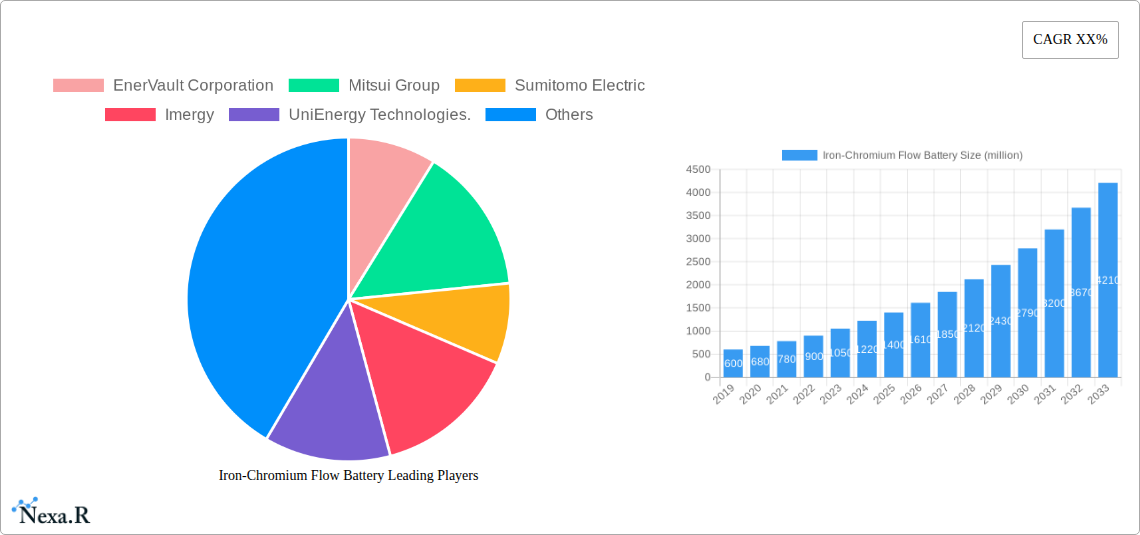
The global Iron-Chromium Flow Battery market is poised for substantial growth, projected to reach approximately USD 1,500 million by 2025, with a robust Compound Annual Growth Rate (CAGR) of around 15% anticipated over the forecast period extending to 2033. This remarkable expansion is primarily fueled by the escalating demand for reliable and scalable energy storage solutions across various sectors. Power stations are a dominant application, driven by the need to integrate renewable energy sources like solar and wind, which are inherently intermittent. The inherent advantages of iron-chromium flow batteries, including their long lifespan, deep discharge capabilities, and non-flammable electrolyte, make them an ideal choice for grid-scale energy storage, load leveling, and grid stabilization. Furthermore, the burgeoning energy storage sector, encompassing both utility-scale and behind-the-meter applications, presents a significant growth avenue. Industrial applications, from manufacturing plants seeking to optimize energy consumption and manage peak demand charges to critical infrastructure requiring uninterruptible power, are also contributing to market expansion. The increasing adoption of independent power generation systems, particularly in remote areas or regions with unstable grids, further bolsters the market.
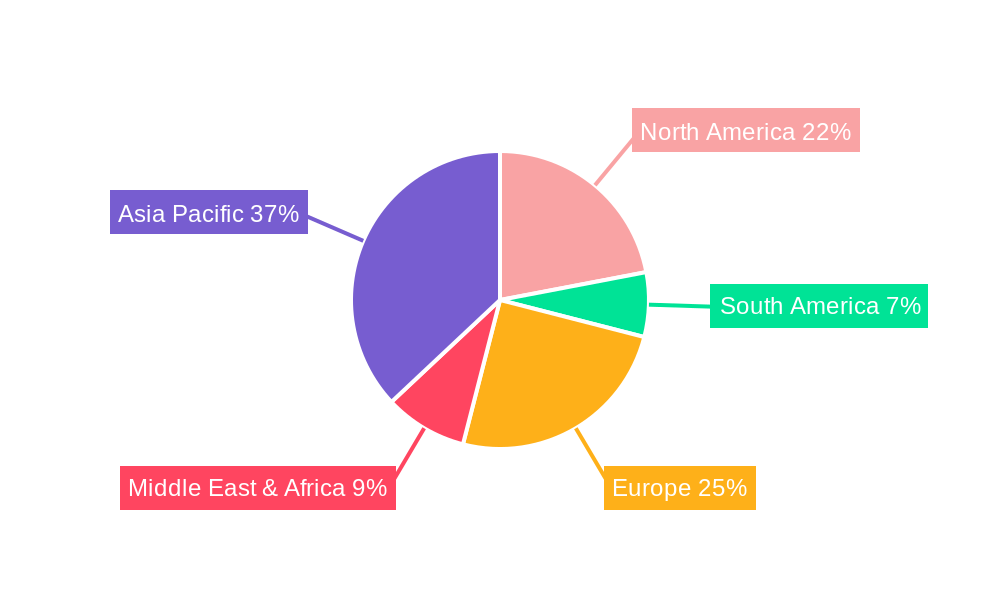
While the market exhibits strong upward momentum, certain factors could influence its trajectory. High initial capital expenditure for large-scale installations, although decreasing with technological advancements and economies of scale, can present a restrain. However, the long-term cost-effectiveness and reduced operational expenses compared to other battery technologies are expected to outweigh these initial investments. Emerging trends indicate a significant focus on improving power density and energy efficiency of iron-chromium flow batteries, with ongoing research and development targeting higher current densities such as 80 mA/cm² and 160 mA/cm². This innovation aims to reduce the physical footprint of these systems, making them more versatile for a wider range of applications. Regional market dynamics reveal Asia Pacific, led by China and India, as a key growth engine, owing to substantial investments in renewable energy infrastructure and supportive government policies. North America and Europe also represent significant markets, driven by stringent environmental regulations and a strong push towards decarbonization. Key players like EnerVault Corporation, Mitsui Group, and Sumitomo Electric are actively investing in R&D and expanding their manufacturing capabilities to meet the growing global demand.
Iron-Chromium Flow Battery Market Research Report: Dynamics, Trends, and Outlook 2019-2033
This comprehensive report offers an in-depth analysis of the global Iron-Chromium Flow Battery market, covering a critical study period from 2019 to 2033. With 2025 as the base and estimated year, and a forecast period extending from 2025 to 2033, this research provides actionable insights for stakeholders seeking to understand and capitalize on the evolving landscape of this vital energy storage technology. The report delves into market dynamics, growth trends, regional dominance, product innovation, key drivers and barriers, emerging opportunities, growth accelerators, leading players, notable milestones, and a detailed market outlook. All monetary values are presented in million units.
Iron-Chromium Flow Battery Market Dynamics & Structure
The Iron-Chromium Flow Battery market is characterized by a moderate concentration, with a few prominent players and a growing number of emerging companies vying for market share. Technological innovation is the primary driver, fueled by the increasing demand for grid-scale energy storage solutions. Advancements in electrolyte chemistry, cell design, and system integration are continuously improving performance metrics like energy density and lifespan. Regulatory frameworks, particularly those promoting renewable energy integration and carbon emission reduction targets, are significantly influencing market adoption. Competitive product substitutes, including lithium-ion batteries and other flow battery chemistries, present both a challenge and an opportunity for Iron-Chromium flow batteries to differentiate themselves through cost-effectiveness and long-duration storage capabilities. End-user demographics are shifting towards utility companies, independent power producers, and industrial facilities seeking reliable and scalable energy storage. Mergers and acquisitions (M&A) activity is nascent but expected to increase as larger energy corporations seek to integrate advanced storage technologies. The market is also influenced by government incentives and subsidies for energy storage projects, which are critical for initial deployment and cost reduction.
- Market Concentration: Moderate, with a few established leaders and emerging innovators.
- Technological Innovation Drivers: Enhanced energy density, improved lifespan, cost reduction, grid integration capabilities.
- Regulatory Frameworks: Government mandates for renewable energy storage, carbon pricing, grid stability regulations.
- Competitive Product Substitutes: Lithium-ion batteries, Vanadium redox flow batteries, Zinc-bromine flow batteries.
- End-User Demographics: Utilities, industrial manufacturers, data centers, microgrid operators, renewable energy developers.
- M&A Trends: Early stages, with potential for consolidation and strategic partnerships.
Iron-Chromium Flow Battery Growth Trends & Insights
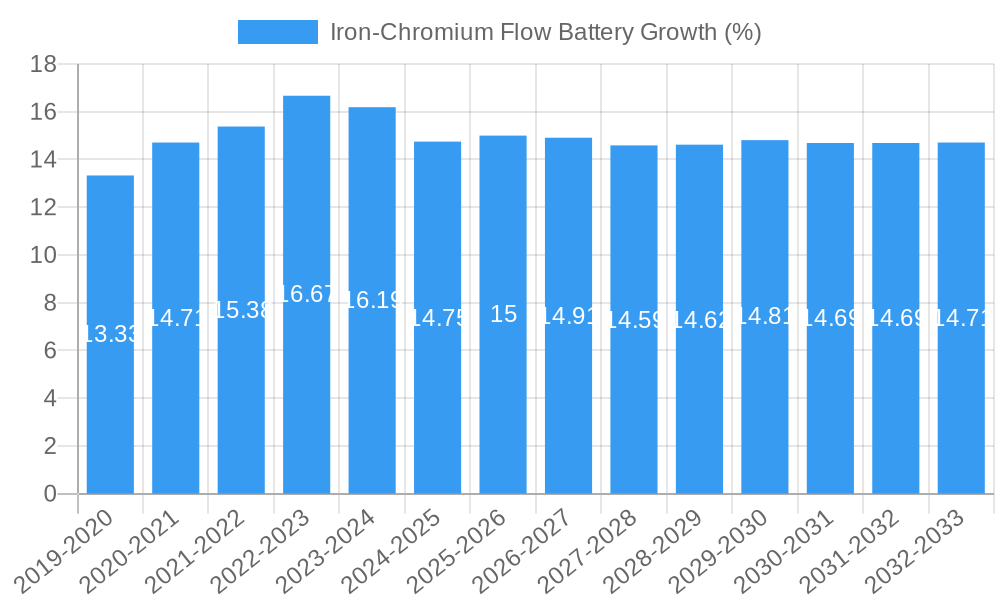
The Iron-Chromium Flow Battery market is poised for substantial growth, driven by the global imperative to decarbonize energy systems and enhance grid reliability. Market size is projected to expand significantly, with a projected Compound Annual Growth Rate (CAGR) of approximately 15% over the forecast period. Adoption rates are accelerating as utilities and industrial sectors recognize the long-duration storage capabilities and cost-effectiveness of this technology compared to alternatives for specific applications. Technological disruptions, such as advancements in materials science for electrode coatings and improved membrane technologies, are contributing to enhanced performance and reduced operational costs. Consumer behavior is shifting towards a greater appreciation for reliable and sustainable energy solutions, with a growing demand for integrated energy storage systems that can support renewable energy sources like solar and wind power. The decreasing cost of raw materials, particularly iron and chromium, further bolsters the economic viability of these systems. Furthermore, the increasing deployment of smart grids and the need for grid-scale energy storage to manage intermittency are creating a robust demand environment. The market penetration is expected to rise as pilot projects demonstrate successful large-scale deployments and as manufacturing scales up, leading to further cost efficiencies.
Dominant Regions, Countries, or Segments in Iron-Chromium Flow Battery
The Energy Storage segment, within the Application category, is anticipated to be the dominant force driving growth in the Iron-Chromium Flow Battery market globally. This dominance is rooted in the inherent advantages of Iron-Chromium flow batteries for grid-scale energy storage, including their long lifespan, inherent safety, and cost-effectiveness for extended discharge durations.
Key Drivers for Dominance in Energy Storage Segment:
- Grid Modernization and Stability: Utilities worldwide are investing heavily in upgrading their grids to accommodate a higher penetration of intermittent renewable energy sources. Iron-Chromium flow batteries provide essential grid services such as frequency regulation, peak shaving, and load shifting, ensuring grid stability and reliability.
- Renewable Energy Integration: The increasing deployment of solar and wind power necessitates efficient energy storage solutions to capture excess generation and discharge it when demand is high or renewable output is low. Iron-Chromium flow batteries are well-suited for this long-duration storage requirement.
- Economic Competitiveness for Long-Duration Storage: Compared to lithium-ion batteries, Iron-Chromium flow batteries offer a lower cost per kilowatt-hour for applications requiring discharge durations of four hours or more, making them a more financially attractive option for utility-scale projects.
- Safety and Environmental Profile: The non-flammable nature of the electrolyte and the use of abundant materials contribute to a favorable safety and environmental profile, which is increasingly important for public acceptance and regulatory approval of large-scale energy storage projects.
Dominant Countries and Regions:
- China: Exhibiting rapid growth due to strong government support for energy storage, ambitious renewable energy targets, and a robust manufacturing base. Companies like HERUI POWER INVESTMENT ENERGY STORAGE TECHNOLOGY CO.,LTD and Huadian Power International Corporation Limited are actively involved.
- North America: Driven by policy incentives, growing renewable energy capacity, and increasing demand for grid resilience from utilities and industrial clients. Companies such as EnerVault Corporation and UniEnergy Technologies are key players.
- Europe: Benefiting from supportive EU energy policies, a focus on sustainability, and significant investments in grid modernization projects. Mitsui Group and Sumitomo Electric are active in this region.
Within the Types category, the 80 mA/cm² and 160 mA/cm² current densities are emerging as key performance benchmarks, representing significant advancements in power density and efficiency, enabling more compact and cost-effective system designs.
Iron-Chromium Flow Battery Product Landscape
The Iron-Chromium Flow Battery product landscape is rapidly evolving with a focus on enhancing performance, reducing costs, and expanding application scope. Innovations are centered around improving electrolyte formulation for higher energy density and extended cycle life, optimizing membrane selectivity to minimize crossover and degradation, and developing more robust and scalable stack designs. Current product offerings typically range from kilowatt-scale systems for industrial backup power to megawatt-scale solutions for utility grid support. Key performance metrics such as power density (kW/m³), energy density (kWh/m³), round-trip efficiency, and operational lifespan (years/cycles) are continuously being improved. The unique selling proposition of Iron-Chromium flow batteries lies in their inherent safety, non-flammability, scalability for long-duration storage, and use of abundant, low-cost materials, positioning them as a compelling alternative to other energy storage technologies for specific market needs.
Key Drivers, Barriers & Challenges in Iron-Chromium Flow Battery
Key Drivers:
- Increasing Demand for Grid-Scale Energy Storage: The global transition to renewable energy sources and the need for grid stability are paramount drivers.
- Cost-Effectiveness for Long-Duration Storage: Iron-Chromium flow batteries offer a competitive cost per kilowatt-hour for applications requiring extended discharge periods.
- Environmental and Safety Advantages: Non-flammable electrolytes and the use of abundant materials contribute to a favorable safety and sustainability profile.
- Government Policies and Incentives: Supportive regulations and financial incentives for energy storage deployment accelerate market growth.
Key Barriers & Challenges:
- Lower Energy Density Compared to Lithium-Ion: For certain mobile or space-constrained applications, lower energy density can be a limitation, impacting market penetration.
- Electrolyte Management and Maintenance: While improving, maintaining electrolyte purity and managing potential precipitation can still pose operational challenges.
- Supply Chain Development: Scaling up manufacturing and ensuring a stable supply chain for key components can be a hurdle.
- Competition from Established Technologies: Lithium-ion batteries benefit from mature manufacturing and widespread adoption, posing significant competitive pressure.
- Initial Capital Investment: Although costs are decreasing, the upfront capital expenditure for large-scale installations can still be substantial, impacting adoption rates in some markets.
- Market Awareness and Education: Further educating potential customers about the unique benefits and applications of Iron-Chromium flow batteries is crucial for wider acceptance.
Emerging Opportunities in Iron-Chromium Flow Battery
Emerging opportunities in the Iron-Chromium Flow Battery market lie in the expansion of microgrid solutions for remote communities and industrial complexes, providing reliable backup power and facilitating local energy independence. The integration of these batteries with distributed energy resources, such as rooftop solar and electric vehicle charging infrastructure, presents a significant avenue for growth. Furthermore, there is a growing opportunity in providing grid-scale energy storage services for ancillary markets, including frequency regulation and voltage support, where their long-duration capabilities offer a distinct advantage. The potential for repurposing retired grid infrastructure for flow battery installations also presents an innovative and cost-effective deployment strategy. The development of hybrid systems combining Iron-Chromium flow batteries with other storage technologies to optimize performance and cost for specific grid needs also represents a promising area.
Growth Accelerators in the Iron-Chromium Flow Battery Industry
Several catalysts are accelerating long-term growth in the Iron-Chromium Flow Battery industry. Significant technological breakthroughs in electrolyte chemistry and membrane science are continuously enhancing energy density, efficiency, and lifespan, making the technology more competitive. Strategic partnerships between battery manufacturers, energy developers, and utility companies are crucial for project financing, de-risking investments, and facilitating large-scale deployments. Market expansion strategies, including targeting emerging economies with significant renewable energy potential and increasing grid modernization needs, are driving demand. The development of standardized manufacturing processes and modular designs is also contributing to cost reductions and faster deployment times. Furthermore, the growing emphasis on long-duration energy storage as a critical component of a resilient and decarbonized energy future is a fundamental growth accelerator for this technology.
Key Players Shaping the Iron-Chromium Flow Battery Market
- EnerVault Corporation
- Mitsui Group
- Sumitomo Electric
- Imergy
- UniEnergy Technologies.
- HERUI POWER INVESTMENT ENERGY STORAGE TECHNOLOGY CO.,LTD
- Huadian Power International Corporation Limited
- Hubei Zhenhua Chemical CO.,LTD
- Dalian Rongke Power
Notable Milestones in Iron-Chromium Flow Battery Sector
- 2020: Successful demonstration of a multi-megawatt Iron-Chromium flow battery for grid stabilization by a leading utility in China.
- 2021: Breakthrough in electrolyte chemistry by a research institution, promising a 20% increase in energy density.
- 2022: Major manufacturing expansion announced by HERUI POWER INVESTMENT ENERGY STORAGE TECHNOLOGY CO.,LTD, aiming to significantly reduce production costs.
- 2023 (Q3): UniEnergy Technologies secures a substantial order for a utility-scale energy storage project in North America.
- 2024 (Q1): EnerVault Corporation announces the successful completion of a commercial pilot project demonstrating extended operational lifespan exceeding 15 years.
In-Depth Iron-Chromium Flow Battery Market Outlook
The future market outlook for Iron-Chromium Flow Batteries is exceptionally bright, driven by the continued global push for grid decarbonization and energy resilience. Growth accelerators such as technological advancements in materials and system design, coupled with favorable government policies and the increasing economic viability for long-duration storage, are expected to propel significant market expansion. Strategic partnerships and evolving market awareness will further fuel adoption across utility, industrial, and microgrid applications. The increasing focus on sustainable and safe energy storage solutions positions Iron-Chromium flow batteries as a critical technology for the future energy landscape.
Iron-Chromium Flow Battery Segmentation
-
1. Application
- 1.1. Power Stations
- 1.2. Energy Storage
- 1.3. Industrial
- 1.4. Independent Power Generation Systems
- 1.5. Others
-
2. Types
- 2.1. 50 mA/cm²
- 2.2. 80 mA/cm²
- 2.3. 160 mA/cm²
- 2.4. Others
Iron-Chromium Flow Battery Segmentation By Geography
-
1. North America
- 1.1. United States
- 1.2. Canada
- 1.3. Mexico
-
2. South America
- 2.1. Brazil
- 2.2. Argentina
- 2.3. Rest of South America
-
3. Europe
- 3.1. United Kingdom
- 3.2. Germany
- 3.3. France
- 3.4. Italy
- 3.5. Spain
- 3.6. Russia
- 3.7. Benelux
- 3.8. Nordics
- 3.9. Rest of Europe
-
4. Middle East & Africa
- 4.1. Turkey
- 4.2. Israel
- 4.3. GCC
- 4.4. North Africa
- 4.5. South Africa
- 4.6. Rest of Middle East & Africa
-
5. Asia Pacific
- 5.1. China
- 5.2. India
- 5.3. Japan
- 5.4. South Korea
- 5.5. ASEAN
- 5.6. Oceania
- 5.7. Rest of Asia Pacific
Iron-Chromium Flow Battery REPORT HIGHLIGHTS
| Aspects | Details |
|---|---|
| Study Period | 2019-2033 |
| Base Year | 2024 |
| Estimated Year | 2025 |
| Forecast Period | 2025-2033 |
| Historical Period | 2019-2024 |
| Growth Rate | CAGR of XX% from 2019-2033 |
| Segmentation |
|
Table of Contents
- 1. Introduction
- 1.1. Research Scope
- 1.2. Market Segmentation
- 1.3. Research Methodology
- 1.4. Definitions and Assumptions
- 2. Executive Summary
- 2.1. Introduction
- 3. Market Dynamics
- 3.1. Introduction
- 3.2. Market Drivers
- 3.3. Market Restrains
- 3.4. Market Trends
- 4. Market Factor Analysis
- 4.1. Porters Five Forces
- 4.2. Supply/Value Chain
- 4.3. PESTEL analysis
- 4.4. Market Entropy
- 4.5. Patent/Trademark Analysis
- 5. Global Iron-Chromium Flow Battery Analysis, Insights and Forecast, 2019-2031
- 5.1. Market Analysis, Insights and Forecast - by Application
- 5.1.1. Power Stations
- 5.1.2. Energy Storage
- 5.1.3. Industrial
- 5.1.4. Independent Power Generation Systems
- 5.1.5. Others
- 5.2. Market Analysis, Insights and Forecast - by Types
- 5.2.1. 50 mA/cm²
- 5.2.2. 80 mA/cm²
- 5.2.3. 160 mA/cm²
- 5.2.4. Others
- 5.3. Market Analysis, Insights and Forecast - by Region
- 5.3.1. North America
- 5.3.2. South America
- 5.3.3. Europe
- 5.3.4. Middle East & Africa
- 5.3.5. Asia Pacific
- 5.1. Market Analysis, Insights and Forecast - by Application
- 6. North America Iron-Chromium Flow Battery Analysis, Insights and Forecast, 2019-2031
- 6.1. Market Analysis, Insights and Forecast - by Application
- 6.1.1. Power Stations
- 6.1.2. Energy Storage
- 6.1.3. Industrial
- 6.1.4. Independent Power Generation Systems
- 6.1.5. Others
- 6.2. Market Analysis, Insights and Forecast - by Types
- 6.2.1. 50 mA/cm²
- 6.2.2. 80 mA/cm²
- 6.2.3. 160 mA/cm²
- 6.2.4. Others
- 6.1. Market Analysis, Insights and Forecast - by Application
- 7. South America Iron-Chromium Flow Battery Analysis, Insights and Forecast, 2019-2031
- 7.1. Market Analysis, Insights and Forecast - by Application
- 7.1.1. Power Stations
- 7.1.2. Energy Storage
- 7.1.3. Industrial
- 7.1.4. Independent Power Generation Systems
- 7.1.5. Others
- 7.2. Market Analysis, Insights and Forecast - by Types
- 7.2.1. 50 mA/cm²
- 7.2.2. 80 mA/cm²
- 7.2.3. 160 mA/cm²
- 7.2.4. Others
- 7.1. Market Analysis, Insights and Forecast - by Application
- 8. Europe Iron-Chromium Flow Battery Analysis, Insights and Forecast, 2019-2031
- 8.1. Market Analysis, Insights and Forecast - by Application
- 8.1.1. Power Stations
- 8.1.2. Energy Storage
- 8.1.3. Industrial
- 8.1.4. Independent Power Generation Systems
- 8.1.5. Others
- 8.2. Market Analysis, Insights and Forecast - by Types
- 8.2.1. 50 mA/cm²
- 8.2.2. 80 mA/cm²
- 8.2.3. 160 mA/cm²
- 8.2.4. Others
- 8.1. Market Analysis, Insights and Forecast - by Application
- 9. Middle East & Africa Iron-Chromium Flow Battery Analysis, Insights and Forecast, 2019-2031
- 9.1. Market Analysis, Insights and Forecast - by Application
- 9.1.1. Power Stations
- 9.1.2. Energy Storage
- 9.1.3. Industrial
- 9.1.4. Independent Power Generation Systems
- 9.1.5. Others
- 9.2. Market Analysis, Insights and Forecast - by Types
- 9.2.1. 50 mA/cm²
- 9.2.2. 80 mA/cm²
- 9.2.3. 160 mA/cm²
- 9.2.4. Others
- 9.1. Market Analysis, Insights and Forecast - by Application
- 10. Asia Pacific Iron-Chromium Flow Battery Analysis, Insights and Forecast, 2019-2031
- 10.1. Market Analysis, Insights and Forecast - by Application
- 10.1.1. Power Stations
- 10.1.2. Energy Storage
- 10.1.3. Industrial
- 10.1.4. Independent Power Generation Systems
- 10.1.5. Others
- 10.2. Market Analysis, Insights and Forecast - by Types
- 10.2.1. 50 mA/cm²
- 10.2.2. 80 mA/cm²
- 10.2.3. 160 mA/cm²
- 10.2.4. Others
- 10.1. Market Analysis, Insights and Forecast - by Application
- 11. Competitive Analysis
- 11.1. Global Market Share Analysis 2024
- 11.2. Company Profiles
- 11.2.1 EnerVault Corporation
- 11.2.1.1. Overview
- 11.2.1.2. Products
- 11.2.1.3. SWOT Analysis
- 11.2.1.4. Recent Developments
- 11.2.1.5. Financials (Based on Availability)
- 11.2.2 Mitsui Group
- 11.2.2.1. Overview
- 11.2.2.2. Products
- 11.2.2.3. SWOT Analysis
- 11.2.2.4. Recent Developments
- 11.2.2.5. Financials (Based on Availability)
- 11.2.3 Sumitomo Electric
- 11.2.3.1. Overview
- 11.2.3.2. Products
- 11.2.3.3. SWOT Analysis
- 11.2.3.4. Recent Developments
- 11.2.3.5. Financials (Based on Availability)
- 11.2.4 Imergy
- 11.2.4.1. Overview
- 11.2.4.2. Products
- 11.2.4.3. SWOT Analysis
- 11.2.4.4. Recent Developments
- 11.2.4.5. Financials (Based on Availability)
- 11.2.5 UniEnergy Technologies.
- 11.2.5.1. Overview
- 11.2.5.2. Products
- 11.2.5.3. SWOT Analysis
- 11.2.5.4. Recent Developments
- 11.2.5.5. Financials (Based on Availability)
- 11.2.6 HERUI POWER INVESTMENT ENERGY STORAGE TECHNOLOGY CO.
- 11.2.6.1. Overview
- 11.2.6.2. Products
- 11.2.6.3. SWOT Analysis
- 11.2.6.4. Recent Developments
- 11.2.6.5. Financials (Based on Availability)
- 11.2.7 LTD
- 11.2.7.1. Overview
- 11.2.7.2. Products
- 11.2.7.3. SWOT Analysis
- 11.2.7.4. Recent Developments
- 11.2.7.5. Financials (Based on Availability)
- 11.2.8 Huadian Power International Corporation Limited
- 11.2.8.1. Overview
- 11.2.8.2. Products
- 11.2.8.3. SWOT Analysis
- 11.2.8.4. Recent Developments
- 11.2.8.5. Financials (Based on Availability)
- 11.2.9 Hubei Zhenhua Chemical CO.
- 11.2.9.1. Overview
- 11.2.9.2. Products
- 11.2.9.3. SWOT Analysis
- 11.2.9.4. Recent Developments
- 11.2.9.5. Financials (Based on Availability)
- 11.2.10 LTD
- 11.2.10.1. Overview
- 11.2.10.2. Products
- 11.2.10.3. SWOT Analysis
- 11.2.10.4. Recent Developments
- 11.2.10.5. Financials (Based on Availability)
- 11.2.11 Dalian Rongke Power
- 11.2.11.1. Overview
- 11.2.11.2. Products
- 11.2.11.3. SWOT Analysis
- 11.2.11.4. Recent Developments
- 11.2.11.5. Financials (Based on Availability)
- 11.2.1 EnerVault Corporation
List of Figures
- Figure 1: Global Iron-Chromium Flow Battery Revenue Breakdown (million, %) by Region 2024 & 2032
- Figure 2: North America Iron-Chromium Flow Battery Revenue (million), by Application 2024 & 2032
- Figure 3: North America Iron-Chromium Flow Battery Revenue Share (%), by Application 2024 & 2032
- Figure 4: North America Iron-Chromium Flow Battery Revenue (million), by Types 2024 & 2032
- Figure 5: North America Iron-Chromium Flow Battery Revenue Share (%), by Types 2024 & 2032
- Figure 6: North America Iron-Chromium Flow Battery Revenue (million), by Country 2024 & 2032
- Figure 7: North America Iron-Chromium Flow Battery Revenue Share (%), by Country 2024 & 2032
- Figure 8: South America Iron-Chromium Flow Battery Revenue (million), by Application 2024 & 2032
- Figure 9: South America Iron-Chromium Flow Battery Revenue Share (%), by Application 2024 & 2032
- Figure 10: South America Iron-Chromium Flow Battery Revenue (million), by Types 2024 & 2032
- Figure 11: South America Iron-Chromium Flow Battery Revenue Share (%), by Types 2024 & 2032
- Figure 12: South America Iron-Chromium Flow Battery Revenue (million), by Country 2024 & 2032
- Figure 13: South America Iron-Chromium Flow Battery Revenue Share (%), by Country 2024 & 2032
- Figure 14: Europe Iron-Chromium Flow Battery Revenue (million), by Application 2024 & 2032
- Figure 15: Europe Iron-Chromium Flow Battery Revenue Share (%), by Application 2024 & 2032
- Figure 16: Europe Iron-Chromium Flow Battery Revenue (million), by Types 2024 & 2032
- Figure 17: Europe Iron-Chromium Flow Battery Revenue Share (%), by Types 2024 & 2032
- Figure 18: Europe Iron-Chromium Flow Battery Revenue (million), by Country 2024 & 2032
- Figure 19: Europe Iron-Chromium Flow Battery Revenue Share (%), by Country 2024 & 2032
- Figure 20: Middle East & Africa Iron-Chromium Flow Battery Revenue (million), by Application 2024 & 2032
- Figure 21: Middle East & Africa Iron-Chromium Flow Battery Revenue Share (%), by Application 2024 & 2032
- Figure 22: Middle East & Africa Iron-Chromium Flow Battery Revenue (million), by Types 2024 & 2032
- Figure 23: Middle East & Africa Iron-Chromium Flow Battery Revenue Share (%), by Types 2024 & 2032
- Figure 24: Middle East & Africa Iron-Chromium Flow Battery Revenue (million), by Country 2024 & 2032
- Figure 25: Middle East & Africa Iron-Chromium Flow Battery Revenue Share (%), by Country 2024 & 2032
- Figure 26: Asia Pacific Iron-Chromium Flow Battery Revenue (million), by Application 2024 & 2032
- Figure 27: Asia Pacific Iron-Chromium Flow Battery Revenue Share (%), by Application 2024 & 2032
- Figure 28: Asia Pacific Iron-Chromium Flow Battery Revenue (million), by Types 2024 & 2032
- Figure 29: Asia Pacific Iron-Chromium Flow Battery Revenue Share (%), by Types 2024 & 2032
- Figure 30: Asia Pacific Iron-Chromium Flow Battery Revenue (million), by Country 2024 & 2032
- Figure 31: Asia Pacific Iron-Chromium Flow Battery Revenue Share (%), by Country 2024 & 2032
List of Tables
- Table 1: Global Iron-Chromium Flow Battery Revenue million Forecast, by Region 2019 & 2032
- Table 2: Global Iron-Chromium Flow Battery Revenue million Forecast, by Application 2019 & 2032
- Table 3: Global Iron-Chromium Flow Battery Revenue million Forecast, by Types 2019 & 2032
- Table 4: Global Iron-Chromium Flow Battery Revenue million Forecast, by Region 2019 & 2032
- Table 5: Global Iron-Chromium Flow Battery Revenue million Forecast, by Application 2019 & 2032
- Table 6: Global Iron-Chromium Flow Battery Revenue million Forecast, by Types 2019 & 2032
- Table 7: Global Iron-Chromium Flow Battery Revenue million Forecast, by Country 2019 & 2032
- Table 8: United States Iron-Chromium Flow Battery Revenue (million) Forecast, by Application 2019 & 2032
- Table 9: Canada Iron-Chromium Flow Battery Revenue (million) Forecast, by Application 2019 & 2032
- Table 10: Mexico Iron-Chromium Flow Battery Revenue (million) Forecast, by Application 2019 & 2032
- Table 11: Global Iron-Chromium Flow Battery Revenue million Forecast, by Application 2019 & 2032
- Table 12: Global Iron-Chromium Flow Battery Revenue million Forecast, by Types 2019 & 2032
- Table 13: Global Iron-Chromium Flow Battery Revenue million Forecast, by Country 2019 & 2032
- Table 14: Brazil Iron-Chromium Flow Battery Revenue (million) Forecast, by Application 2019 & 2032
- Table 15: Argentina Iron-Chromium Flow Battery Revenue (million) Forecast, by Application 2019 & 2032
- Table 16: Rest of South America Iron-Chromium Flow Battery Revenue (million) Forecast, by Application 2019 & 2032
- Table 17: Global Iron-Chromium Flow Battery Revenue million Forecast, by Application 2019 & 2032
- Table 18: Global Iron-Chromium Flow Battery Revenue million Forecast, by Types 2019 & 2032
- Table 19: Global Iron-Chromium Flow Battery Revenue million Forecast, by Country 2019 & 2032
- Table 20: United Kingdom Iron-Chromium Flow Battery Revenue (million) Forecast, by Application 2019 & 2032
- Table 21: Germany Iron-Chromium Flow Battery Revenue (million) Forecast, by Application 2019 & 2032
- Table 22: France Iron-Chromium Flow Battery Revenue (million) Forecast, by Application 2019 & 2032
- Table 23: Italy Iron-Chromium Flow Battery Revenue (million) Forecast, by Application 2019 & 2032
- Table 24: Spain Iron-Chromium Flow Battery Revenue (million) Forecast, by Application 2019 & 2032
- Table 25: Russia Iron-Chromium Flow Battery Revenue (million) Forecast, by Application 2019 & 2032
- Table 26: Benelux Iron-Chromium Flow Battery Revenue (million) Forecast, by Application 2019 & 2032
- Table 27: Nordics Iron-Chromium Flow Battery Revenue (million) Forecast, by Application 2019 & 2032
- Table 28: Rest of Europe Iron-Chromium Flow Battery Revenue (million) Forecast, by Application 2019 & 2032
- Table 29: Global Iron-Chromium Flow Battery Revenue million Forecast, by Application 2019 & 2032
- Table 30: Global Iron-Chromium Flow Battery Revenue million Forecast, by Types 2019 & 2032
- Table 31: Global Iron-Chromium Flow Battery Revenue million Forecast, by Country 2019 & 2032
- Table 32: Turkey Iron-Chromium Flow Battery Revenue (million) Forecast, by Application 2019 & 2032
- Table 33: Israel Iron-Chromium Flow Battery Revenue (million) Forecast, by Application 2019 & 2032
- Table 34: GCC Iron-Chromium Flow Battery Revenue (million) Forecast, by Application 2019 & 2032
- Table 35: North Africa Iron-Chromium Flow Battery Revenue (million) Forecast, by Application 2019 & 2032
- Table 36: South Africa Iron-Chromium Flow Battery Revenue (million) Forecast, by Application 2019 & 2032
- Table 37: Rest of Middle East & Africa Iron-Chromium Flow Battery Revenue (million) Forecast, by Application 2019 & 2032
- Table 38: Global Iron-Chromium Flow Battery Revenue million Forecast, by Application 2019 & 2032
- Table 39: Global Iron-Chromium Flow Battery Revenue million Forecast, by Types 2019 & 2032
- Table 40: Global Iron-Chromium Flow Battery Revenue million Forecast, by Country 2019 & 2032
- Table 41: China Iron-Chromium Flow Battery Revenue (million) Forecast, by Application 2019 & 2032
- Table 42: India Iron-Chromium Flow Battery Revenue (million) Forecast, by Application 2019 & 2032
- Table 43: Japan Iron-Chromium Flow Battery Revenue (million) Forecast, by Application 2019 & 2032
- Table 44: South Korea Iron-Chromium Flow Battery Revenue (million) Forecast, by Application 2019 & 2032
- Table 45: ASEAN Iron-Chromium Flow Battery Revenue (million) Forecast, by Application 2019 & 2032
- Table 46: Oceania Iron-Chromium Flow Battery Revenue (million) Forecast, by Application 2019 & 2032
- Table 47: Rest of Asia Pacific Iron-Chromium Flow Battery Revenue (million) Forecast, by Application 2019 & 2032
Frequently Asked Questions
1. What is the projected Compound Annual Growth Rate (CAGR) of the Iron-Chromium Flow Battery?
The projected CAGR is approximately XX%.
2. Which companies are prominent players in the Iron-Chromium Flow Battery?
Key companies in the market include EnerVault Corporation, Mitsui Group, Sumitomo Electric, Imergy, UniEnergy Technologies., HERUI POWER INVESTMENT ENERGY STORAGE TECHNOLOGY CO., LTD, Huadian Power International Corporation Limited, Hubei Zhenhua Chemical CO., LTD, Dalian Rongke Power.
3. What are the main segments of the Iron-Chromium Flow Battery?
The market segments include Application, Types.
4. Can you provide details about the market size?
The market size is estimated to be USD XXX million as of 2022.
5. What are some drivers contributing to market growth?
N/A
6. What are the notable trends driving market growth?
N/A
7. Are there any restraints impacting market growth?
N/A
8. Can you provide examples of recent developments in the market?
N/A
9. What pricing options are available for accessing the report?
Pricing options include single-user, multi-user, and enterprise licenses priced at USD 4900.00, USD 7350.00, and USD 9800.00 respectively.
10. Is the market size provided in terms of value or volume?
The market size is provided in terms of value, measured in million.
11. Are there any specific market keywords associated with the report?
Yes, the market keyword associated with the report is "Iron-Chromium Flow Battery," which aids in identifying and referencing the specific market segment covered.
12. How do I determine which pricing option suits my needs best?
The pricing options vary based on user requirements and access needs. Individual users may opt for single-user licenses, while businesses requiring broader access may choose multi-user or enterprise licenses for cost-effective access to the report.
13. Are there any additional resources or data provided in the Iron-Chromium Flow Battery report?
While the report offers comprehensive insights, it's advisable to review the specific contents or supplementary materials provided to ascertain if additional resources or data are available.
14. How can I stay updated on further developments or reports in the Iron-Chromium Flow Battery?
To stay informed about further developments, trends, and reports in the Iron-Chromium Flow Battery, consider subscribing to industry newsletters, following relevant companies and organizations, or regularly checking reputable industry news sources and publications.
Methodology
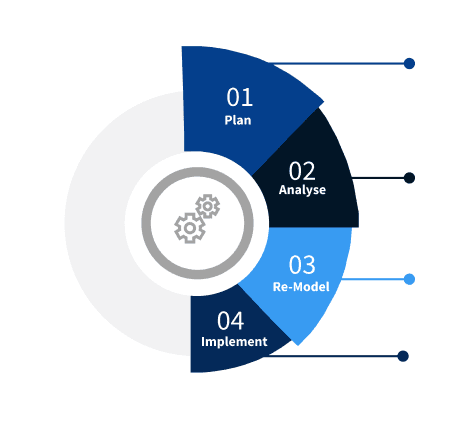
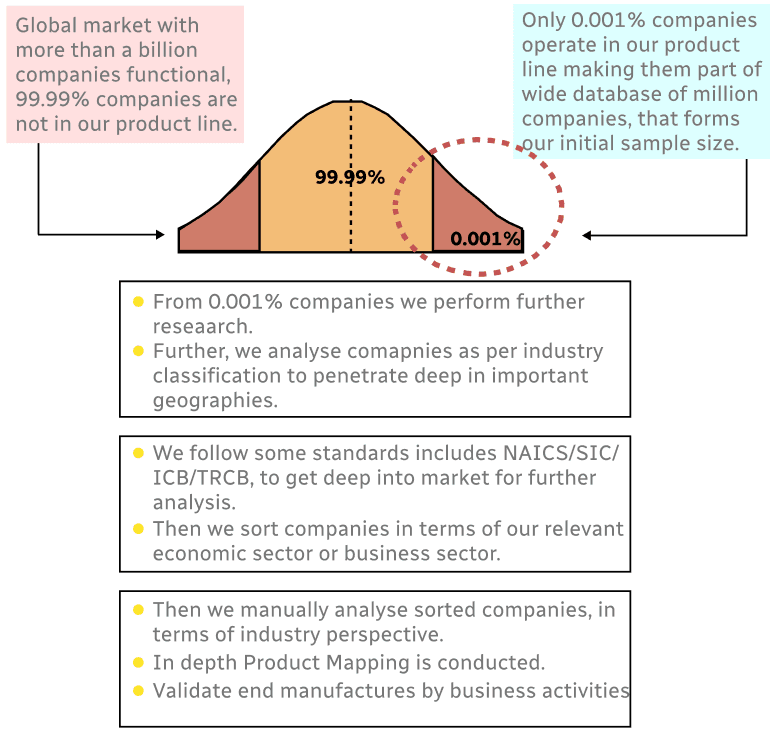
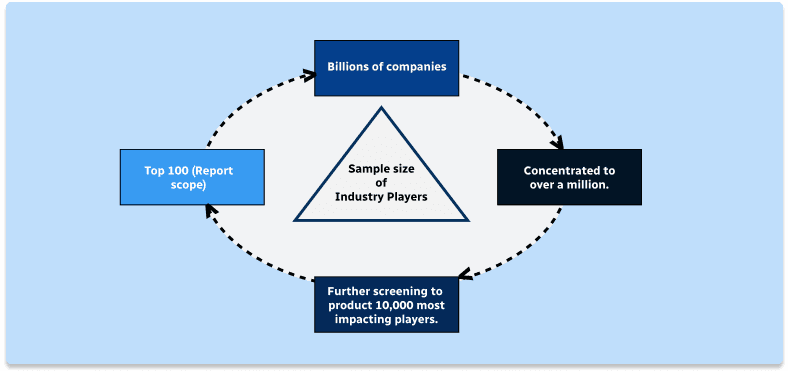
Step 1 - Identification of Relevant Samples Size from Population Database
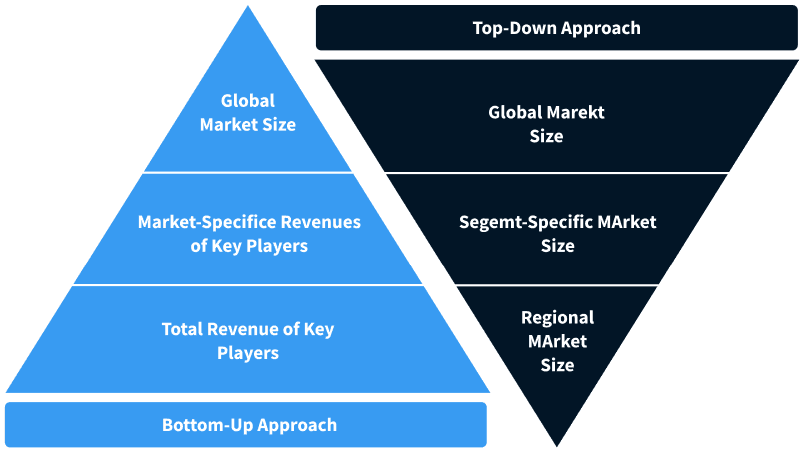
Step 2 - Approaches for Defining Global Market Size (Value, Volume* & Price*)
Note*: In applicable scenarios
Step 3 - Data Sources
Primary Research
- Web Analytics
- Survey Reports
- Research Institute
- Latest Research Reports
- Opinion Leaders
Secondary Research
- Annual Reports
- White Paper
- Latest Press Release
- Industry Association
- Paid Database
- Investor Presentations
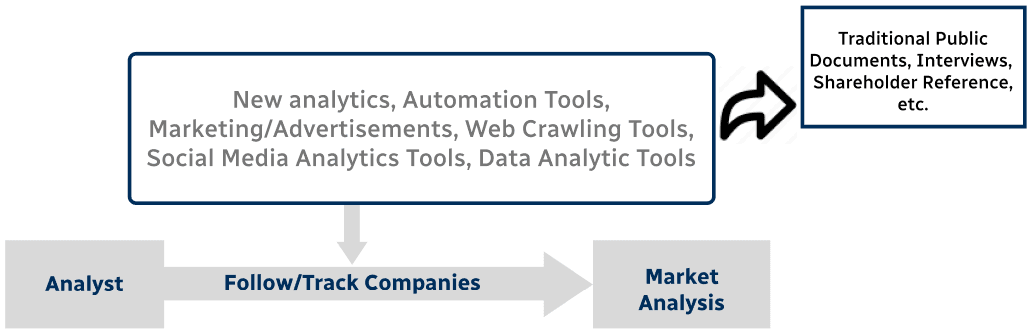
Step 4 - Data Triangulation
Involves using different sources of information in order to increase the validity of a study
These sources are likely to be stakeholders in a program - participants, other researchers, program staff, other community members, and so on.
Then we put all data in single framework & apply various statistical tools to find out the dynamic on the market.
During the analysis stage, feedback from the stakeholder groups would be compared to determine areas of agreement as well as areas of divergence